
Partners in Action
2025: The year Regenera consolidated its positive impact

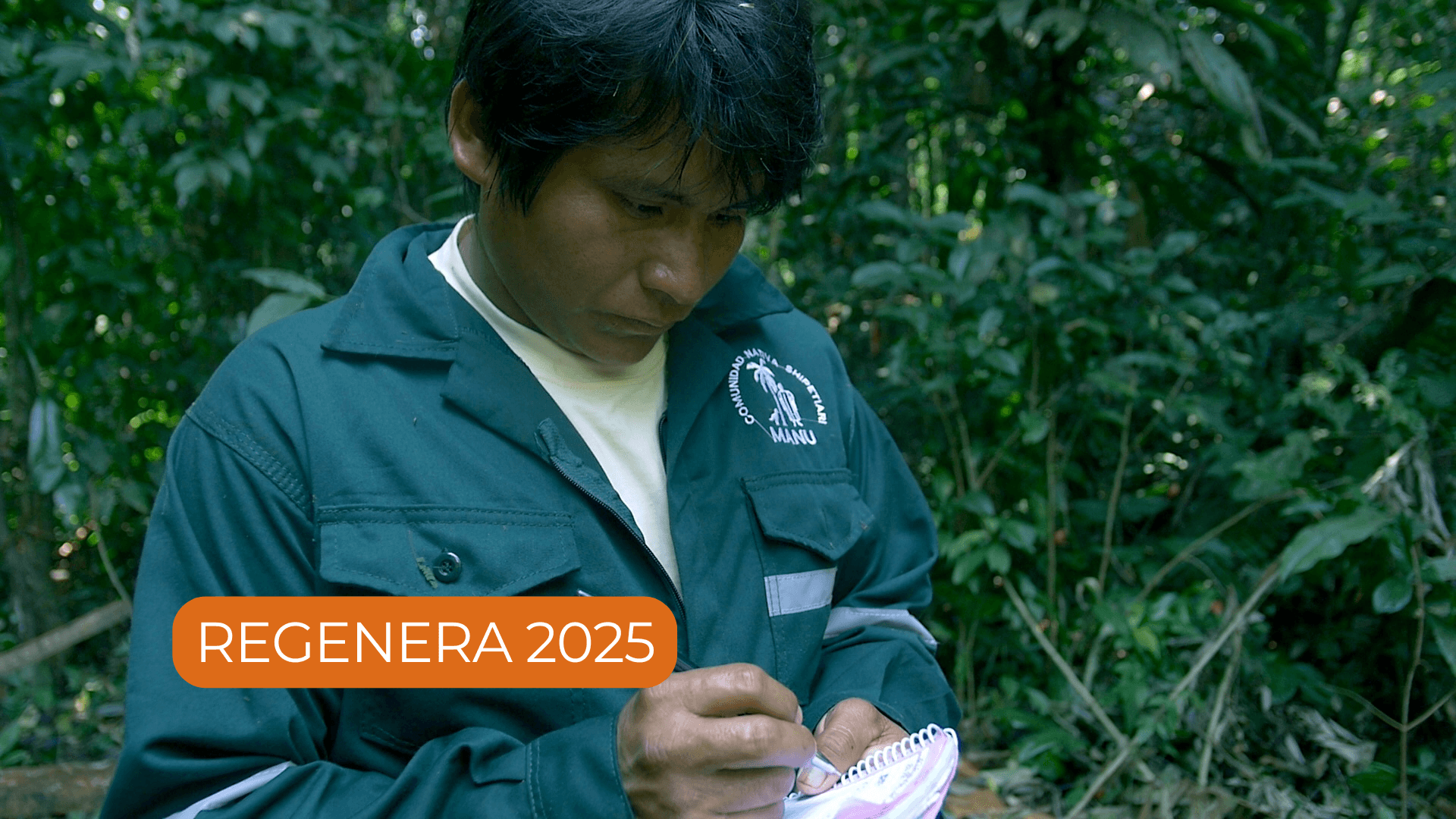
At Regenera, we understand that footprint management is not an accounting exercise, but a strategy for transformation. The year 2025 marked a milestone for our network: not only did we grow in scale, but it was also the first year in which we achieved a net positive climate impact. The difference was not simply adding more organisations, but in how companies began integrating greenhouse gas emissions management and the regeneration of Nature into their value chains (internal compensation, or “insetting”).
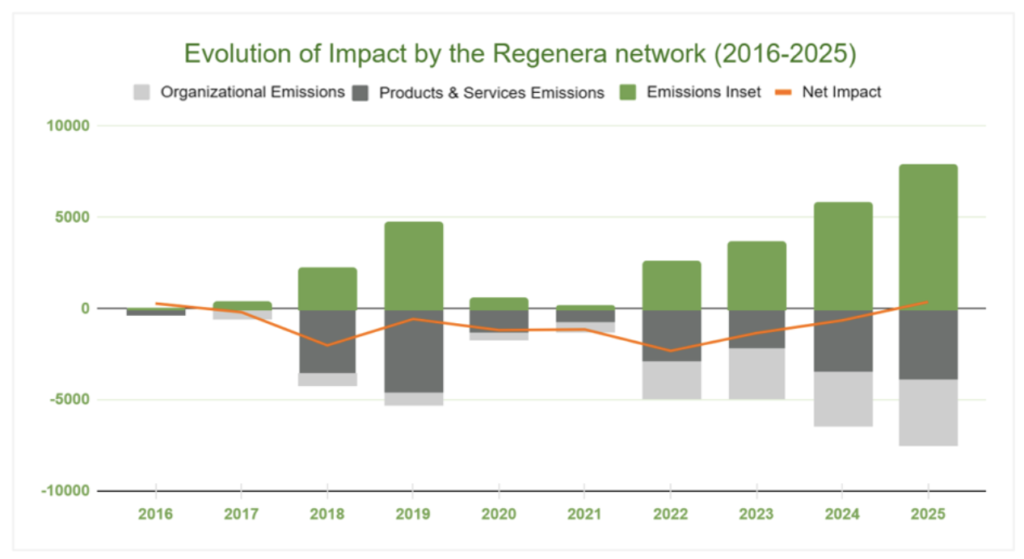
During 2025, 19 organisations initiated compensation processes, generating a combined impact of 7,803 tCO₂e regenerated. Compared to 2024, this represents a +36% increase. This growth is not only due to the rise in the number of Partners, but also to the evolution of the model. More and more organisations are managing not only their organisational footprint, but also the footprint of the products and services they offer, as well as the experience they provide to their clients.
This milestone is not an endpoint—it is an invitation. The year 2025 confirms that Regenera’s partnership model works when measurement, action, and nature are combined with transparency and follow-up. For 2026, the objective is clear: to build new partnerships to transform climate and environmental footprint management into greater verifiable results and more shared value with our Guardians.
What Net Positive Climate Impact Means
Achieving net positive climate impact means the total CO₂e regenerated
by Regenera’s partner network exceeded the combined organisational
footprints of all participating companies. Most corporate sustainability
programmes aim for net zero — net positive means the landscape is actually
recovering more carbon than the network produces.
This was made possible by the conservation work carried out by our guardian communities across Latin America — from the Andean forests of Abancay to the biodiversity hotspots of the Manu and Machu Picchu landscapes. Each hectare protected contributes directly to the CO₂e regeneration figures that made 2025 historic.
From Offsetting to Insetting: The Climate Impact Regeneration Model
Traditional carbon offsetting places emission reductions outside a company’s value chain. Insetting integrates climate impact regeneration directly into the supply chain. For a travel company operating in Peru, it means protecting the forests their clients visit. The result is a more verifiable and durable form of climate action — one where nature and business become genuinely interdependent.
According to the World Resources Institute, nature-based solutions could provide up to 30% of the climate mitigation needed by 2030. Regenera’s insetting model channels private finance directly toward that goal.
What Climate Impact Regeneration Looks Like on the Ground
Behind every tonne of CO₂e regenerated is a community. In the Abancay Landscape, guardian communities protect high Andean forests that function as natural water towers. In Manu, indigenous-led conservation protects one of the most biodiverse regions on Earth. Regenera’s partner organisations are the financial backbone that makes this sustained climate impact regeneration possible.
If your organisation is ready to move beyond offsetting, explore our partnership plans or
get in touch with the team. The 2025 results show that when measurement, nature, and community align — net positive is repeatable.
Tags
- Nature positive
- Peru
- Collective action
Related articles
- Partners in Action
- Machu Picchu
Read articleStrategik x regenera: a partnership for Nature
Margony Palacios

- Partners in Action
- Machu Picchu
- Manu
Read articleHow can we reduce the impact of construction? The question behind a new hotel in Machu Picchu
Margony Palacios

- Partners in Action
- Manu
- Machu Picchu