
Regenerate Together
From offsetting to insetting: A model for long-term environmental regeneration

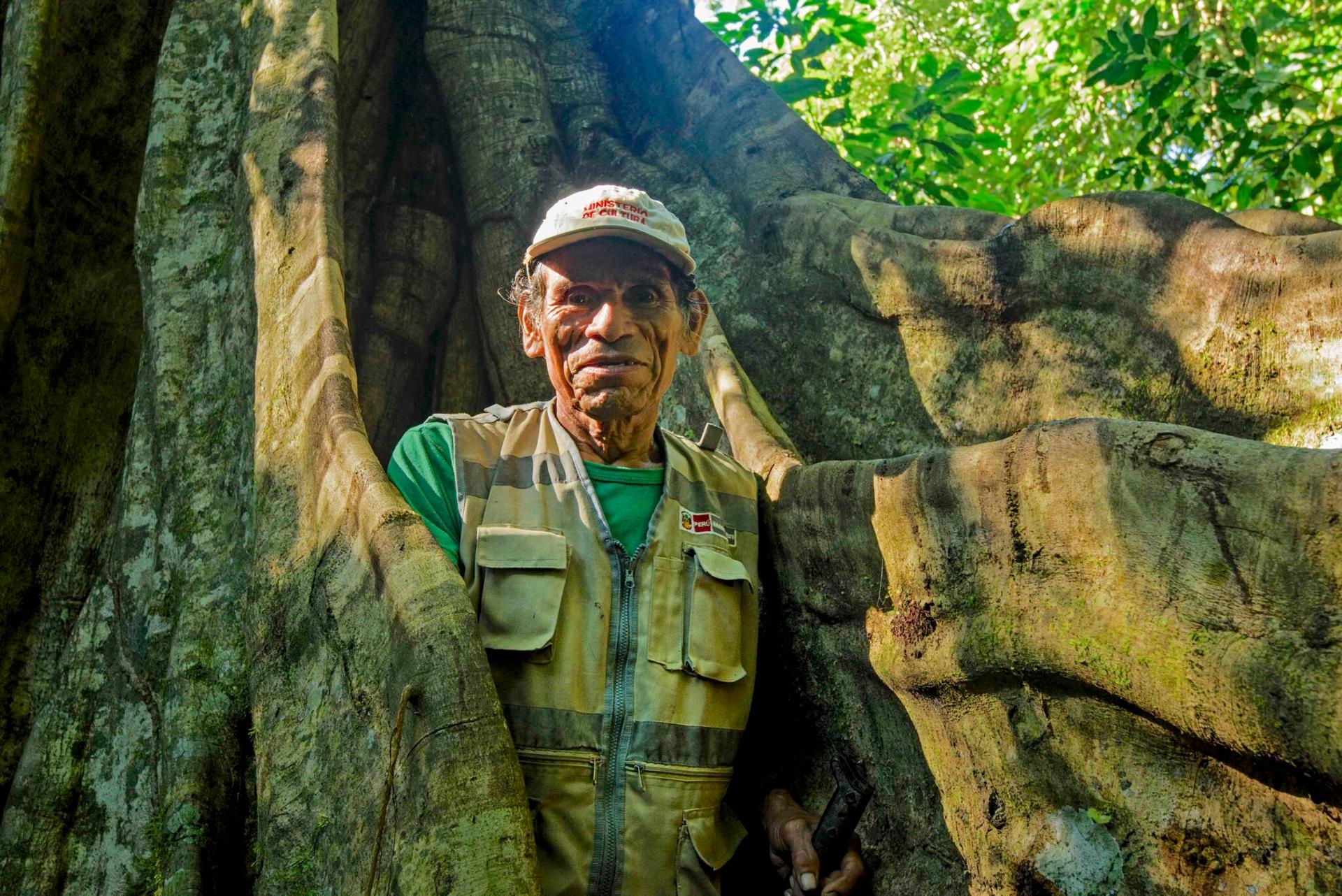
When we at Regenera talk about carbon insetting in Peru and turning an organisation’s environmental impact positive, we start from the understanding that this is a medium- to long-term process. It is not only about offsetting impacts, but about transforming an organisation’s contributions into drivers that strengthen the regeneration of Peru’s most valuable landscapes.
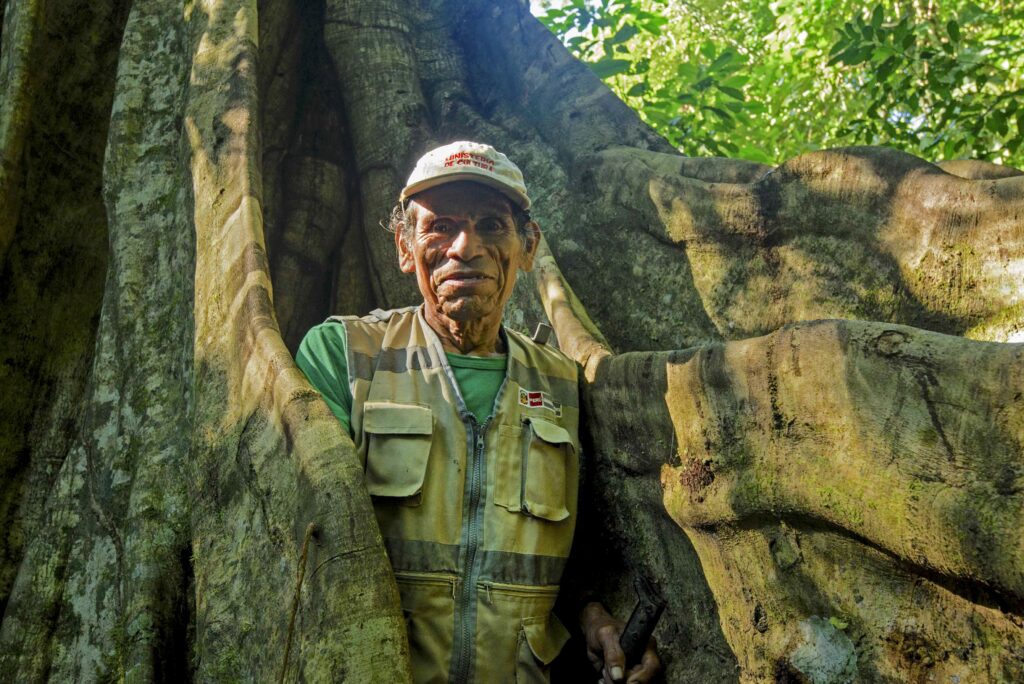
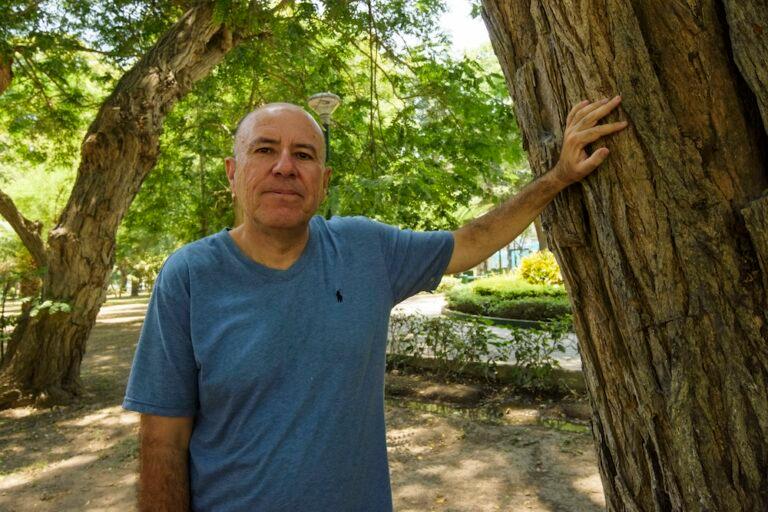
David Rios, local Guardian in the Manu Landscape
Regenera primarily promotes internal compensation, or insetting, defined as a transformative process to reduce or eliminate emissions within the organisation’s value chain. This includes actions related to productive practices, supply chains, and land management that directly generate the impacts.
Only when emissions cannot be reduced or compensated internally does Regenera consider external compensation (offsetting), which involves balancing specific impacts through financial contributions. However, these contributions are not seen as an isolated or immediate solution, but rather as part of a broader, ongoing support process.
In this sense, regenerating is not about declaring neutrality through distant transactions, but about consistently supporting actions that protect, restore, and strengthen both people and Nature. The difference lies not in the intentions of those contributing, but in territorial coherence and the continuity of commitment over time.
Carbon Insetting in Peru: A Good Example of Landscape Regeneration
In the Manu Landscape, the communities of Shipetiari and Palotoa Teparo began organising to protect their forests in the late 1980s. By 2010, they had started patrols to safeguard their territory against excessive resource extraction. At the same time, some private guardians recognised the need to pursue more sustainable livelihoods that would not harm their forests in the long term. These guardians independently initiated reforestation and natural regeneration efforts to restore biodiversity and maintain ecosystem balance.
Over the years, various institutional allies have supported this process of territorial strengthening. Today, Regenera continues to consolidate a landscape network organised as follows:
1. The native communities of Palotoa Teparo and Shipetiari.
2. Six private guardians actively caring for their lands: Isidro Coila, Modesto Challco, Rosberg Challco, Epifanio Quispe, Gladys Alegre, and Ruperto Mejía.
3. SE Perú as a landscape ally, supporting coordination of actions on the ground.
4. Four allies providing monthly contributions to offset their impacts: Amazonas Explorer, SA Luxury Expeditions, Rainforest Expeditions, and the Cocha Cashu Biological Station.
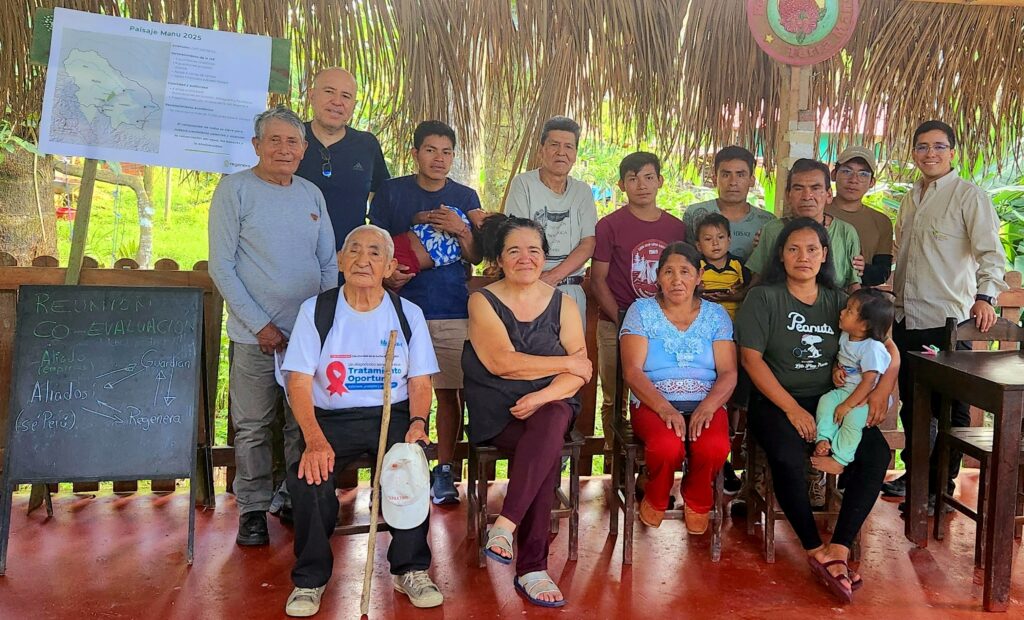
2025 co-evaluation meeting of the Manu Landscape. Guardians gathered together with Patricio Zanabria (Sé Perú) and Enrique Zúñiga (Regenera).
Although this network still faces challenges, it has progressively consolidated thanks to the ongoing commitment of its participants and the trust built over time.
Financial contributions from allies help ensure that the guardians’ actions endure. In Shipetiari and Palotoa, for example, resources support active surveillance teams as well as operational management and coordination among actors. These are not isolated actions but continuous support that builds stability and trust in the territory, in accordance with the Communities’ Life Plans.
Over time, communities and allies have come to understand that Regenera does not operate as a charitable organisation but rather as a network coordinating diverse efforts. The value of financial contributions is complemented by the opportunity to be part of a collective learning process, where alliances and continuity are as important as the amount of the contribution.
Actions for Regeneration
One of the main lines of action in this landscape is avoided deforestation, achieved by providing alternatives that support guardians’ decisions to pursue sustainable livelihoods and reject both extractive practices and projects that could harm the local ecosystem.
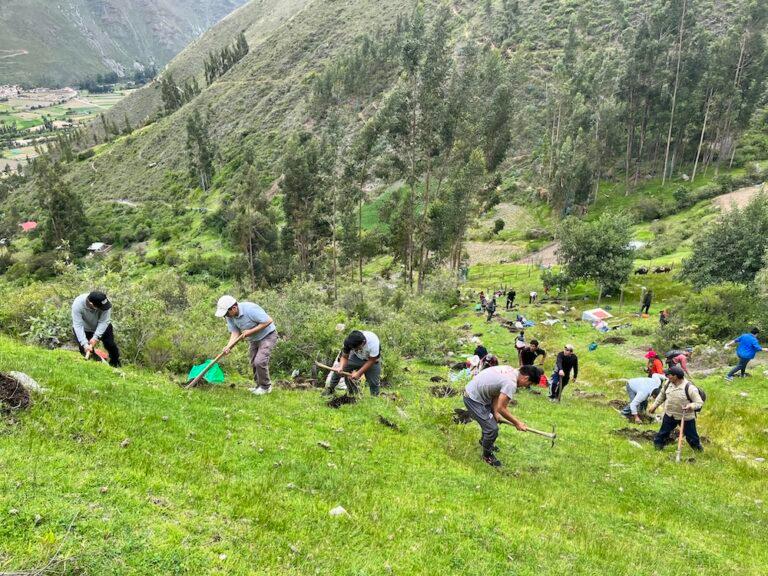
This is complemented by reforestation and conservation efforts to maintain ecosystem integrity and restore degraded areas. These activities are not isolated interventions, but part of plans implemented progressively and cumulatively.
Another key dimension is monitoring and controlling access to territories through patrols to prevent intruders and the overexploitation of forest resources.
Finally, the landscape promotes experiential and sustainable tourism, as well as other non-extractive activities. For communities and private guardians, tourism has become an opportunity to generate income compatible with conservation, strengthening the link between the local economy and territorial stewardship.
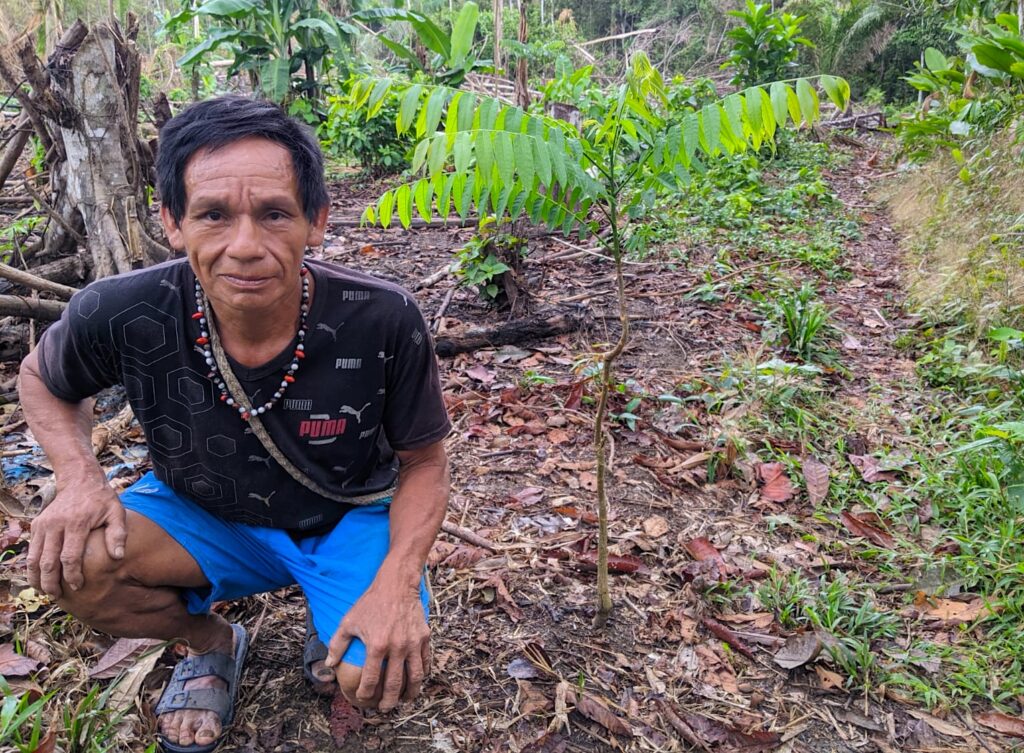
Andrés Sapona, a member of the Shipetiari community and former Manu park ranger, next to a newly planted cedar (Cedrela odorata) in his agroforestry plot.
Regenerating Is Sustaining
The experience of the Manu Landscape shows that real environmental impact is not immediate, but cumulative. Regenerating is about persistence: supporting ongoing processes and allowing actions to deepen over time. For companies choosing to contribute, the key is not to seek quick results, but to sustain their commitment and recognise that this is where regeneration becomes visible.
———————————————————————————————————————————————————–
Conceptual Distinction
Offsetting (external compensation)
– Compensates impacts externally; does not directly address structural changes in the company’s production chain.
– Useful for residual emissions that cannot yet be eliminated internally, in line with initiatives like the Science Based Targets initiative (SBTi).
Insetting (internal compensation)
– Seeks reductions within the company’s value chain, particularly for indirect emissions, which account for a large share of many organisations’ footprints.
– Considered a more integrated and transformative approach, as it promotes operational and environmental management changes within the production systems themselves.
Tags
- Insetting
- Forest Guardians
- Peru
Related articles
- Regenerate Together
- Manu
Read articleTen years of learning from the forest: What the landscape taught a Landscape Partner
Margony Palacios
- Regenerate Together
- Abancay
- Machu Picchu
- Regenerate Together
- Abancay
- Machu Picchu
Read articleThe environmental roadmap: how we accompany this process
Margony Palacios