

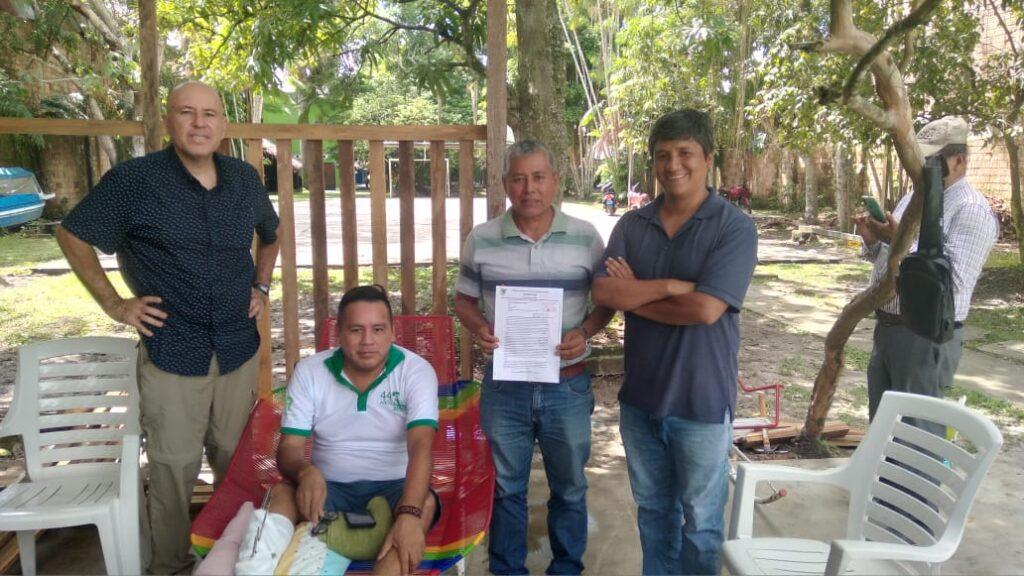
Three new guardian communities and the support of the Regional Organisation of Indigenous Peoples of the East (ORPIO), strengthen Regenera’s work in the Requena Landscape. Throughout its history, the inhabitants of this region have witnessed a succession of efforts to occupy their territories in order to exploit the resources of their diverse forests.Today, they are creating a fierce line of defence that will allow them to protect their natural heritage and thus fulfil the promise of a better future.
“If FECORITAYB did not exist, this territory would no longer exist, it would be taken over by invaders.” This is how categorical Roberto Tafur, president for the last eight years of this combative indigenous federation that groups 26 communities of the Tapiche and Blanco rivers, one of the areas of greatest natural and cultural diversity in the Peruvian Amazon, states the matter.
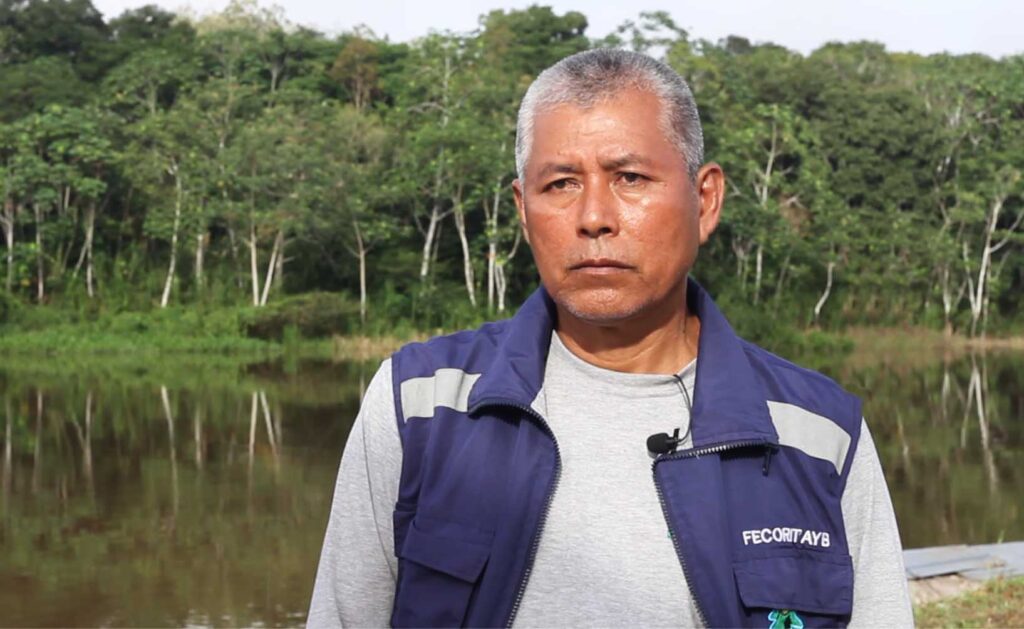
Roberto Tafur, President of FECORITAYB
Since its creation in 2016, the Federation of Native Communities of the Tapiche and Blanco River has sought the recognition of the ancestral territories of the ethnic groups that inhabit that territory and have been a retaining wall that has stopped the uncontrolled advance of extractive activities and illegal economies.
One of the main achievements of the communities organised in FECORITAYB was the establishment of the Matsés Communal Reserve in 2009, thanks to a joint effort with the Center for the Development of the Amazonian Indigenous (CEDIA). With more than 420,000 hectares, this protected natural area not only ensures the preservation of the Matsés ancestral territory, but also provides an extensive bi-national biological corridor with Brazil that totals three million hectares.
A shared future
Currently, the efforts of the populations of the Requena Landscape have been positioned in the surveillance and control of their territories in the face of the persistent threat of extractors of fish, wild meat, aguaje palm fruits and timber.
Supported by different institutions, especially CEDIA and FECORITAYB, the communities of this landscape have established forms of organization based on assemblies and boards of directors that allow them to make collective decisions as well as have legal representation, coordination and management.
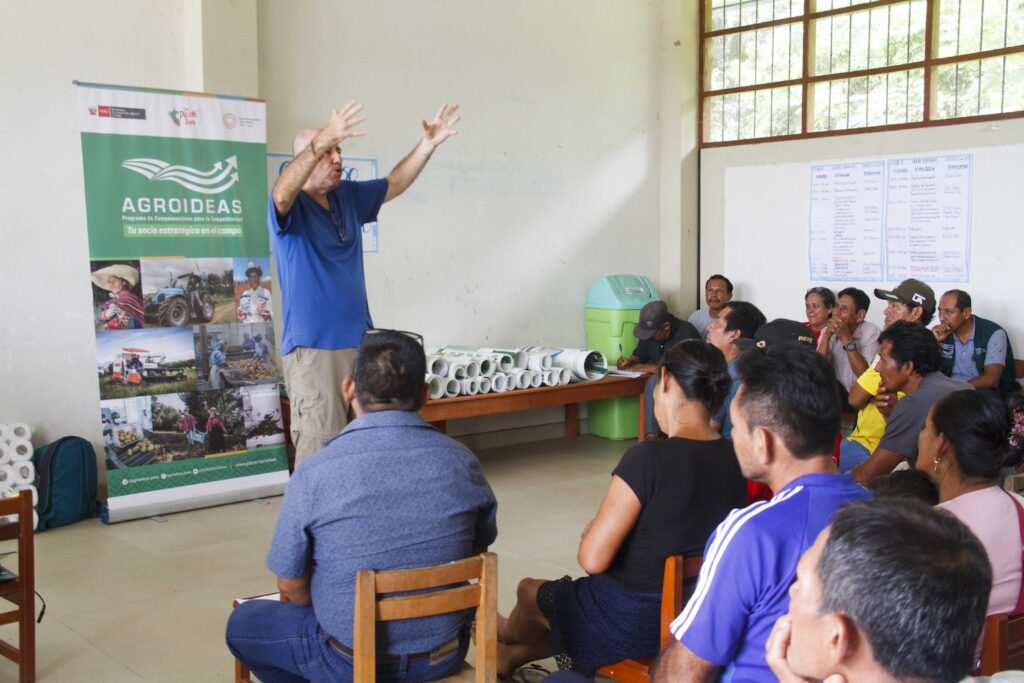
Patricio Zanabria at the FECORITAYB congress
As Patricio Zanabria, a member of SePerú, points out: “One of the main reflections of their community organisations is that, after many decades of extractivism, no one has achieved material prosperity, not even those who served as patrons during the timber boom. Thanks to the titling of their communities, they have been able to acquire control over their land and thus prevent loggers from extracting the last remaining commercially valuable trees in their forests.”
With increasing sensitivity to the conservation of their territories, the communities of the Requena Landscape are strongly supporting the creation of the Tapiche-Blanco Regional Conservation Area, which so far has not received the backing of the regional government, which has an interest in facilitating hydrocarbon extraction in the region.
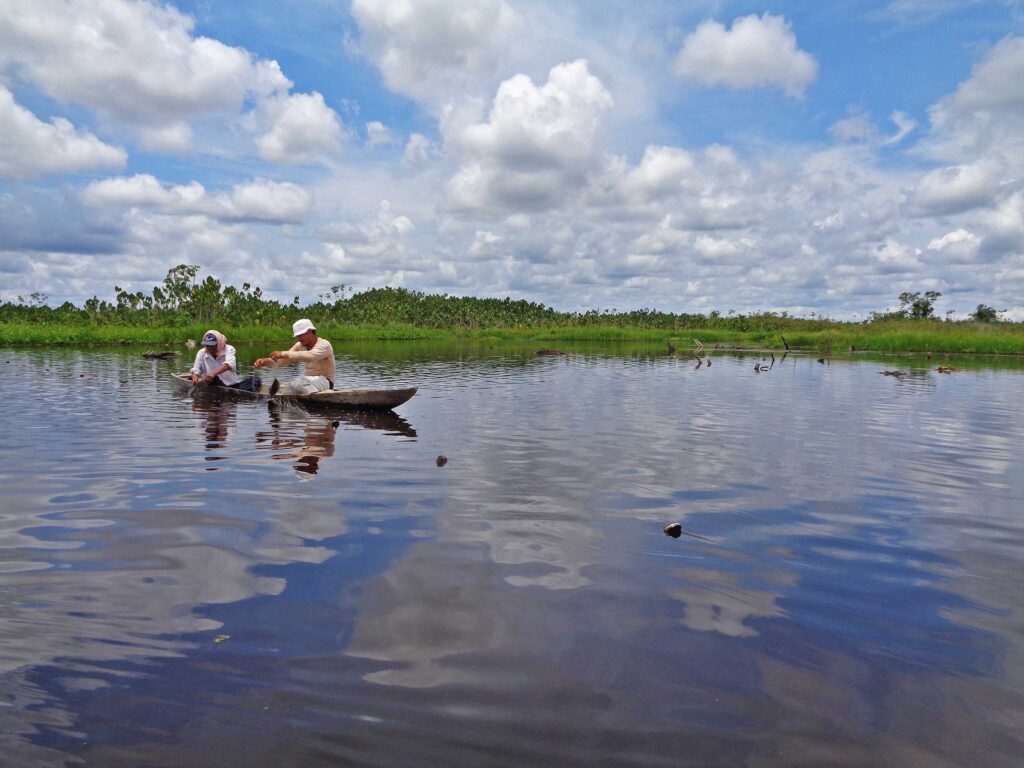
Fishing in one of the oxbow lakes of Wicungo
Although the wildlife has recovered in recent times thanks to better protection from the communities, the presence of foreign fishermen is a latent threat. Each fisherman can move up to 500 kilos of meat per week to the Requena and Iquitos markets. It is estimated that there are up to thirty boats that make at least one trip per week.
The forests of tomorrow
Along with Wicungo and Nueva Esperanza, three new communities have joined Regenera’s Requena Landscape: Curinga, España and Frontera, located in the Blanco River watershed. Empowered communities, well organised and receiving income for the care of their forests can be a barrier against the entry of extractors and illegal economies to this territory. This is why Regenera’s income can be vital for the conservation and self-management of their natural heritage.
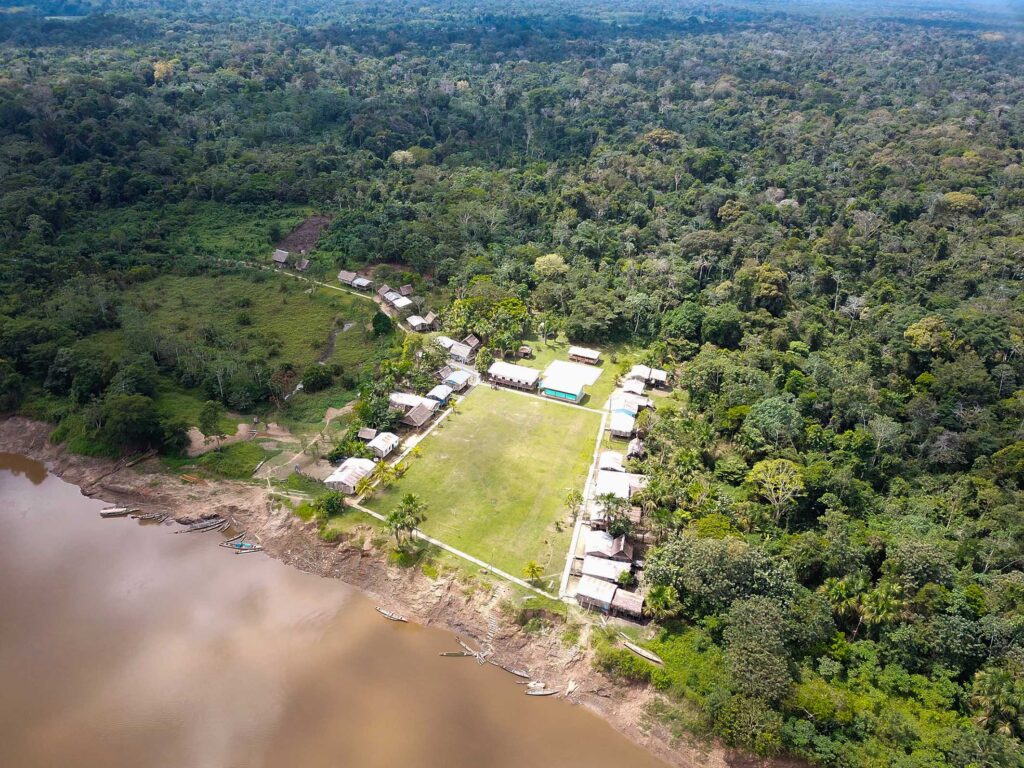
Nueva Esperanza Community
Betty Cárdenas, or “Mamá Betty” as she is affectionately called by her coterráneos, has been living in Curinga for more than two decades, where she claims to have found tranquility. As head of her community, she addresses the problems that afflict them, and demands that the Vigilance Committee halt the fish and wild meat extractors. She says that: “seeking the common good requires sacrifice, that is why there are very few people who are willing to accept a position like mine because they believe that this can only be done if they were paid.”
Miguel Yaicate, head of the Wicungo community, says that thanks to Regenera, they can improve the surveillance of their forests. Twice a month, committee members patrol their trails to avoid the presence of loggers. As part of their economic activities, the community members are sustainably collecting wild fruits from the aguaje, wicungo, huasaí and shapaja palms, which are sold in the markets of Requena and Iquitos. “These activities we carry out do not damage the forest and allow us to sustain the needs of the community and our families,” he comments.
Raul Perez, head of the community of Nueva Esperanza, tells that they work together with the Regional Management of Forestry and Wildlife Development (GERFOR) and with the Regional Directorate of Production (DIREPRO) in the protection and surveillance of their forests, as well as with the National Service of Protected Areas (SERNANP). “Being close to Requena, we have much more pressure from violators than the rest of the communities; they come for the aguaje, meat, fishing and they were even coming in to extract wood. But we go and get them out. That is why Regenera is a support for us, because we can receive income that allows us to improve our vigilance and thus confront the threats to our resources.”
Recognising efforts to protect the Amazon forests and the ecosystem services they provide is a sure way forward for the communities of the Requena Landscape. Organised, with a shared development plan and allied with biodiversity through sustainable activities, they can look forward to a better future for themselves and generations to come.
Tags
- Amazon
- Nature
Related articles
- Regenerate Together
- Abancay
- Machu Picchu
- Regenerate Together
- Abancay
- Machu Picchu
Read articleThe environmental roadmap: how we accompany this process
Margony Palacios