
Stories from Earth
Trails as memory: Two communities protecting the forest and the history of the Machu Picchu Landscape

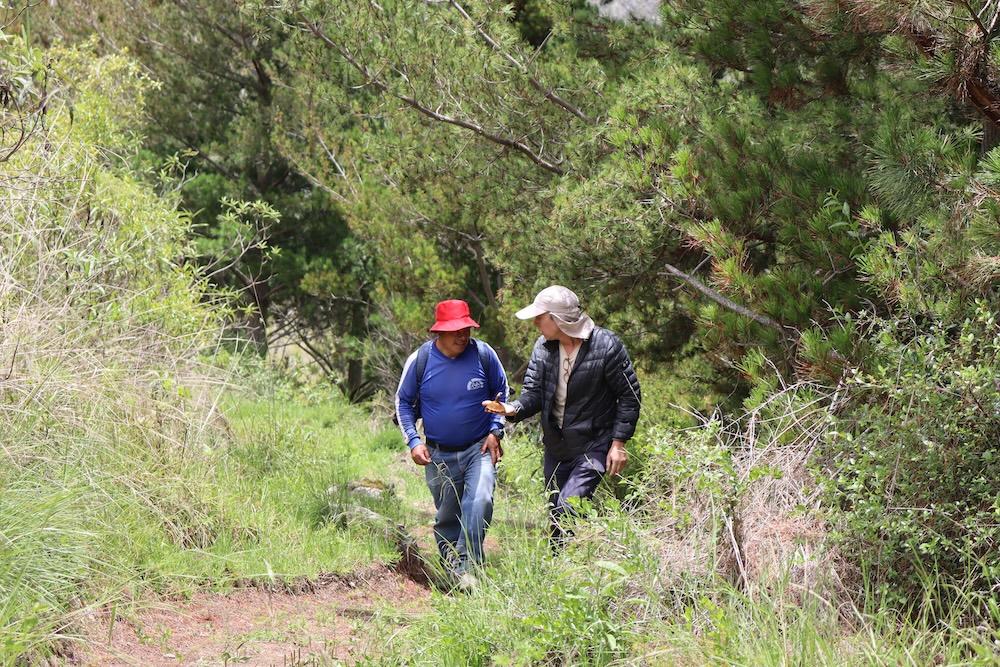
There are trails that are much more than just a path through the mountains. In the Machu Picchu Landscape, the trails that local communities walk every day are also the paths of those who have decided to protect what is theirs: their forest, their water, their history. Walking these trails means understanding that conserving Nature and preserving memory are, in many cases, one and the same act. Because caring for the forest also means caring for the history that lives among the trees. Two guardian communities, Misquiyaco and Piscacucho, demonstrate this step by step.
Misquiyaco: The Relict Forest That Is Also a Trail
In the Misquiyaco Peasant Community, community members organised to maintain their forest and their hiking trail. This is what we call “natural regeneration” in the field: guiding the forest so it can recover on its own, clearing the trails, and caring for the long-lived trees that sustain it. Here, the tasta (Escallonia myrtilloides) and the chachacomo (Escallonia resinosa) are species found in a Meso-Andean relict forest with a limited distribution, recognised as a Private Conservation Area and a refuge for birds and wildlife rarely found elsewhere.
But this trail also leads them toward better conditions. It is part of Route 6 of the Inca Trail Network, which connects the Salkantay Trail to the entrance to Machu Picchu. When this route is opened, the recreational value of Nature is enhanced, and that translates into improved well-being for the families who care for it. Thus, the very trail that protects the forest also opens opportunities for those who depend on it for their livelihoods.
Piscacucho: Forest and Ruins—Nature and History Intertwined
Closer to the Sanctuary, the Piscacucho Rural Community protects, strengthens, and restores its forests in a region where nature and history coexist. Archaeological remains stand among its reforested slopes—including what community members say is an ancient chullpa—reminding us that these landscapes contain layers of human and natural history.
Conservation here stems from organisation. The community has a fire brigade, since fires are the main threat to the forest, made up of both men and women, in which the president himself actively participates. This collective decision translates into concrete results. The president told us that during 2023 and 2024 they planted around 15,000 seedlings per year, with estimated survival rates of between 80% and 90% of the seedlings.
Piscacucho also highlights its natural assets. The community is working on a hiking trail that leads to its archaeological sites and a viewpoint overlooking Mount Verónica—a way to protect the forest while creating opportunities for its people. Conservation and history, walking hand in hand.
The path is similar: communities planning their future
Despite their geographical differences, both communities share something essential: they plan for their territory with a long-term perspective. Both have a “Plan de Vida,” and Piscacucho is already working to update its own, recognising that a living document provides better guidance for decisions regarding the forest, the community, and responsible development.
Both are also constantly seeking out new community-based initiatives. And that’s where the Regenera network provides support that goes beyond financial assistance: by strengthening capacities, governance, and autonomy. Because the goal is not just to provide resources, but to foster empowered communities capable of deciding and sustaining their own path.
Caring for the forest, caring for history
Misquiyaco and Piscacucho remind us that conservation is not an external imposition, but a personal decision that endures over time. Every trail that is maintained, every sapling that survives, and every brigade that is organised is a way of caring for both the forest and the memory of a unique landscape.
This work grows stronger as more people join in. Today, partners and companies committed to Peru’s future make this work possible through their contributions to Regenera. Joining this stewardship network means helping these communities continue to move forward, steadfastly, along the path they have chosen: that of protecting the true wealth of the Machu Picchu Landscape.
Tags
- Community
- Forest Guardians
- Andean forests
Related articles
- Stories from Earth
- Machu Picchu
Read articleRegeneration is achieved collectively and over the long term
Margony Palacios
- Stories from Earth
- Machu Picchu
Read articleGuardians who serve the nation: restoration and commitment in the Machu Picchu Landscape
Enrique Zuñiga