
Stories from Earth
El Aguajalito: A reforestation decision of 30 years bears fruit

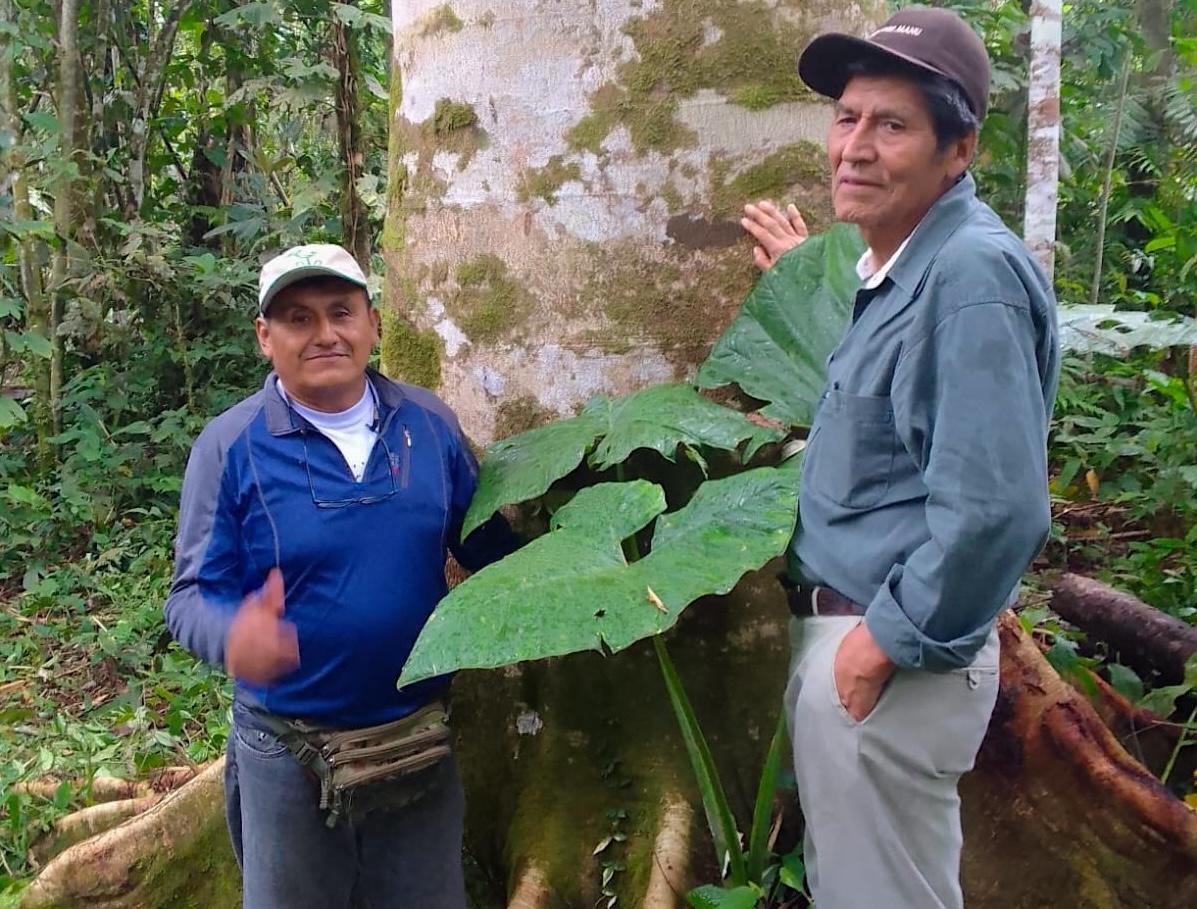
In the Manu Landscape, conservation does not always manifest through large signs or vast expanses of land. Many times, it happens quietly, on a private property, through everyday decisions sustained over decades.
More than 30 years ago, Modesto Challco decided to invest in the forest. On his property “El Aguajalito,” located in the Aguanos sector, he planted cedar trees (Cedrela odorata) as part of his commitment to restore and strengthen forest cover. At that time, there may not have been sophisticated metrics or indicators to measure its impact, but there was something simpler and deeper: a clear conviction about the value of the forest and the need to restore it.
Today, three decades later, that decision is beginning to show visible results.
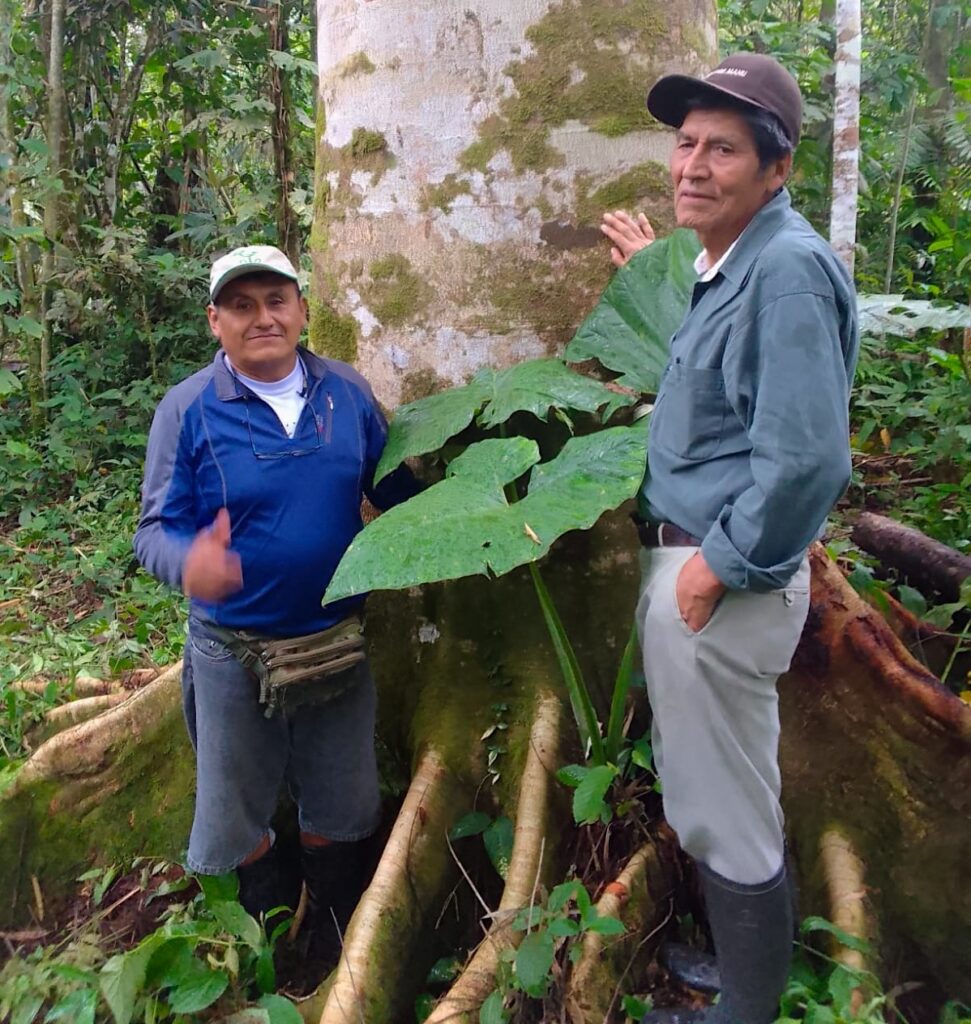
A pashaco rojo (Schizolobium sp.) planted for restoration three decades ago, at the same time as the Spanish cedars (Cedrela odorata). Modesto stands on the right.
Regeneration as a result
The cedars planted in the 1990s began producing their first seeds at around 27 years of age. During a recent cleaning of the property’s walking trails, Modesto found something that summarises three decades of work: a cedar sapling approximately two years old, the product of natural regeneration.
It was not a new assisted planting, but a process of natural regeneration: the forest ensuring its own succession.
“We are trying to restore the lost forest, helping to recover diversity and undertaking activities that contribute to its conservation. In this way, the forest can recover the important services it provides to us,” Modesto shares.
That small sapling is much more than a young tree. It is evidence that the system works—that the decisions made 30 years ago are producing measurable ecological outcomes today.
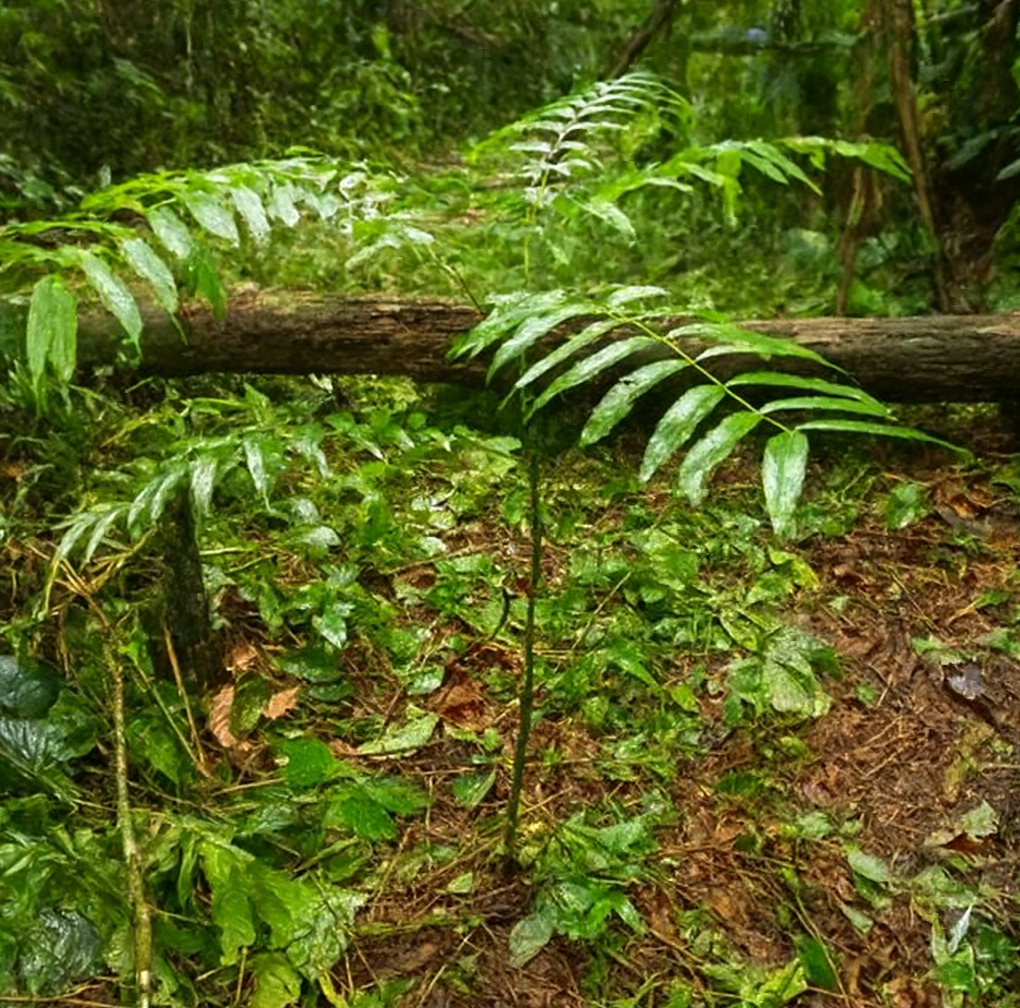
Natural regeneration of cedar, evidence of forest succession in El Aguajalito.
Private guardians: conserving with their own resources
In the Manu Landscape, as in many territories of Peru, private landowners face a reality different from that of communities or concessions. They do not always have access to funding programs or public visibility. Conservation entails investing time, physical effort, and their own resources.
And there is always the alternative of doing the opposite: deforesting, intensifying agriculture, or seeking quick income aligned with extractive models.
Modesto chose another path. Guided by his personal interest and connection with Nature, he decided to maintain forest cover, restore disturbed areas, and promote ecotourism grounded in environmental appreciation and education.
“Our alliance with Regenera makes our conservation efforts visible and recognised, and strengthens our goal of becoming connectors of Manu National Park and the Amarakaeri Communal Reserve.”
That individual decision has an impact that extends beyond his property and becomes part of a broader landscape conservation dynamic.
Small areas, great connectivity
In Amazonian landscapes, ecological connectivity is key. Major conservation hubs, such as Manu National Park and the Amarakaeri Communal Reserve, also depend on what happens in the intermediate areas.
Private properties, such as El Aguajalito, maintain forest cover that allows species movement, facilitates seed dispersal, reduces fragmentation, and sustains the connectivity necessary for the landscape to function as an integrated system.
Even relatively small areas can function as ecological bridges between larger conservation blocks, thereby strengthening biological corridors that maintain connectivity among major protected areas.
For this reason, at Regenera we work to support conservation at every scale. We do not believe that only large territories deserve recognition. We know that private landowners often do not have thousands of hectares—as some environmental markets require—but they do have something equally valuable: consistency and permanence over time.
Conservation is not always measured by size. It is also measured by commitment.
Results built over decades
That sustained commitment over time is reflected today in a concrete fact: the cedar sapling growing in El Aguajalito is not an isolated achievement of a single year.
In a context where we often seek immediate results, stories like Modesto’s remind us that Nature operates on long timeframes. Restoring, allowing succession, waiting for a tree to produce seeds, and observing natural regeneration are processes that require patience and vision.
The most solid environmental results are not built in a year. They are built over generations.
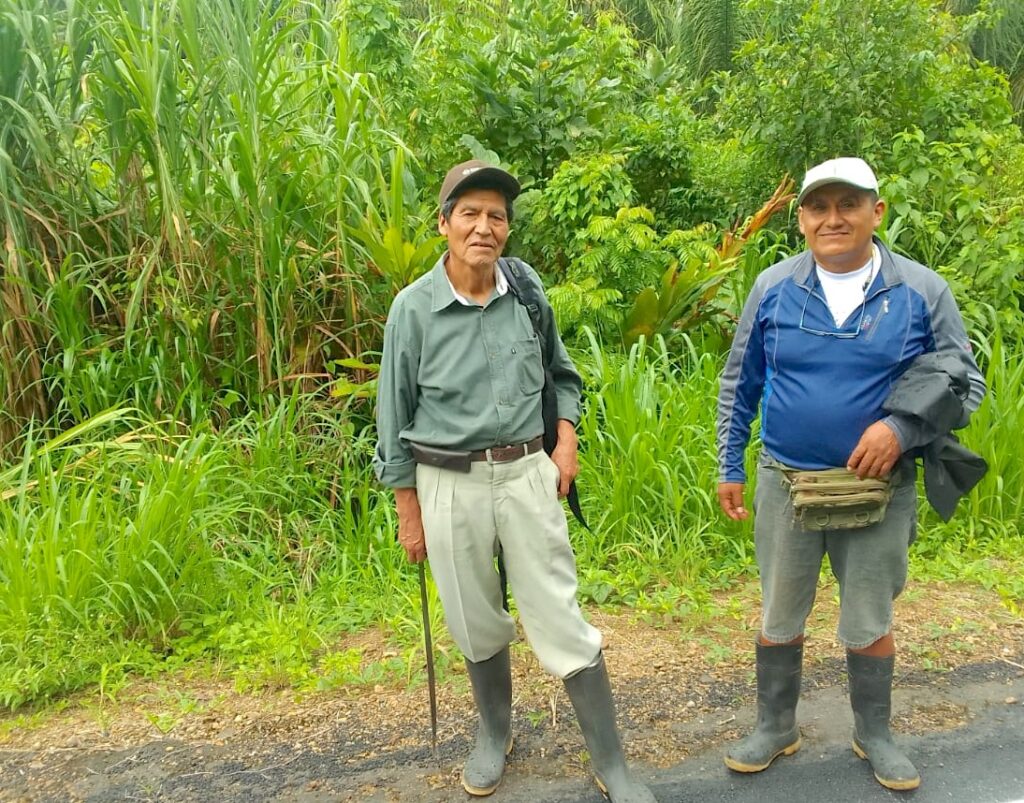
The lands of private guardians Modesto and Isidro are located in the Aguanos sector, in the Manu Landscape; both rely on their work in conservation and regeneration.
An individual decision that strengthens the landscape
At Regenera, we believe that every guardian, regardless of the size of their property, is part of a network that sustains the life of the landscape.
Modesto’s story shows that conservation is not simply about “refraining from action,” but about actively choosing to restore, protect, and project the forest into the future. The results now observed at El Aguajalito are not the product of a recent intervention, but of a vision sustained for more than three decades.
At a time when we seek to measure progress and outcomes, his experience reminds us that the most enduring impacts are not always immediate; they are built through consistency, patience, and long-term vision. Thirty years later, the natural regeneration on his property confirms that conservation is a decision that can transcend generations and strengthen the connectivity of the Manu Landscape from spaces that, although small in extent, are immense in commitment.
When an individual decision is sustained over time, it not only transforms a property—it contributes to the future of an entire landscape. And that future also depends on the decisions we make today.
Etiquetas
- Reforestation
- Forest Guardians
- Regeneration
Artículos relacionados
- Historias de la Tierra
- Manu
Leer artículoDiez años después, volvimos a donde todo empezó
Enrique Zuñiga
- Aliados en Acción
- Machu Picchu
- Manu
Leer artículo¿Cómo reducir el impacto de construir? La pregunta detrás un nuevo hotel en Machu Picchu
Margony Palacios
- Aliados en Acción
- Manu
- Machu Picchu