
Stories from Earth
Indigenous storytelling for Nature

The community of Shipetiari, in Regenera’s Manu Landscape, southeastern Peru, recently inaugurated stunning murals in their renovated community centre.
The work was carried out by artist Davis Torres, his colleague Felix, and the Xapiri Ground team, with the support of Servicios Ecosistémicos Perú and, above all, the majority of community members, both adults and children, who helped paint. The murals depict various inhabitants of the rainforest from which the Matsigenka have drawn inspiration to create iconographies that are woven into their ‘cushmas’, the typical tunic that all Matsigenka wear, especially in colder weather. This strong cultural link with nature reinforces the commitment of community members to the conservation of their forests and rivers.
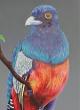
One of the animals showcased in the mural is the ‘kompero’. Community leader and primary school teacher Romelia Italiano shared with us its story:
A long time ago, in the rainforest, lived a young Matsigenka couple. The man went hunting and fishing, and the woman grew cotton and wove their cushmas.
As time went by, the man no longer brought her the best fish or the choicest pieces of meat.
One day, when she was at home working on a cushma, she heard a beautiful song. She looked up and saw a young man before her. He told her his name was Kompero.
Now, this man was really a bird, a trogon, with a glossy blue head, a vibrant red breast, and bright orange rings around his eyes. But the woman saw only a handsome man. They talked and he was very polite and friendly. After a while, he said goodbye and vanished into the forest.
A few days later, while her husband was out hunting, Kompero returned. They chatted about growing cotton and what she was planning to do later that day. She showed him the cushma she was working on and explained that it took two months to complete one, sometimes more: she was only halfway.
One morning he visited her while she was weaving the cushma in the doorway of her home. Kompero suggested to her that she could incorporate some pretty designs. First, he taught her how to replicate the barred black-and-white pattern on his tail (which she couldn’t see since to her he appeared as a man). He told her that the owner of the cushma would be able to sing as beautifully as a trogon and that all who listened would fall in love.
On subsequent visits he showed her other designs, each representing a different animal of the forest, and he explained that when each was woven into the fabric, she would gift the special talent of that animal to the wearer.
Time passed. Her husband came back from a hunting trip one evening, and because there was a chill in the air, he asked his wife for the new cushma. She gave it to him, and he noticed the strange patterns and wondered where they came from. He also thought that she seemed different, less interested in him.
Because the husband was suspicious of her, the next day he told his wife he had seen some peccaries and would try to hunt one for dinner, and he walked into the forest with his bow and arrow. But he didn’t go far. Just inside the forest he hid behind some vegetation and watched his house.
Soon he saw the kompero arrive. The bird hopped by his wife’s feet and sang. To his amazement, his wife seemed to be conversing with it. He watched her for a long time and all the while she chatted and laughed with the kompero. Eventually the bird flew away, and the husband pretended to return from an unsuccessful hunting trip.
Full of resentment, at sunrise the following morning, the husband took his special bird-hunting bow and arrows into the forest and shot the kompero, who was perched on a branch.
The woman heard Kompero cry out, “Help! Save me!”
She ran into the forest and searched for him desperately, only to find Kompero dying on the ground at her husband’s feet. She rushed to her friend and cradled his head in her hands.
The husband could not understand his wife’s grief. Why did she care so much, he asked her? It was only a bird.
The woman shouted at him, tears streaming down her face, and they had a big fight, and then each went their own way into the forest.
From that time onwards, the Matsigenka women have added intricate patterns to their cushmas.
The stories we tell influence our interpretation of and interaction with the world and therefore our experiences of living in this world. The vocabulary of children in countries like the UK is becoming impoverished of many words that are names of formerly iconic creatures or plants seen in the countryside. Words like kingfisher, bramble, otter, and conker. The loss of these words is a consequence of the loss of connection with nature. Or is it the other way round?
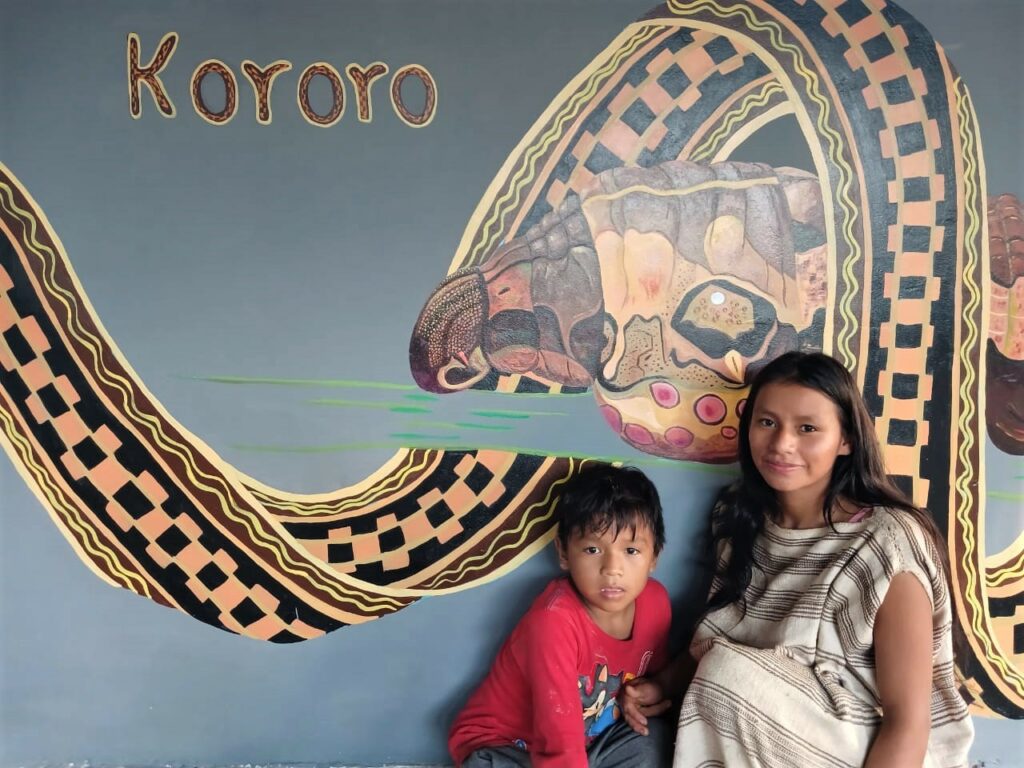
Similarly, the complex skill of cushma weaving is slowly fading in modern Matsigenka society. Community member Veronica Oyeyoyo is the cook of the Pankotsi Lodge, owned and managed by the community. The cushma she is wearing in the photo above was woven by her mother, with a pattern representing the edible and much appreciated ‘kororo’ caterpillar. Veronica tells us she has never learned to weave a cushma herself and so hasn’t been able to make one for her son, Jeison. This saddens her.
If the Matsigenka art of cloth weaving is lost, might the beloved animal characters in their weavings of words, also vanish? Will the Matsigenka, too, gradually lose connection with the forest beings who they consider their equals?
Etiquetas
- Nature connection
- Matsigenka
Artículos relacionados
- Historias de la Tierra
- Manu
Leer artículoDiez años después, volvimos a donde todo empezó
Enrique Zuñiga

- Aliados en Acción
- Machu Picchu
- Manu
Leer artículo¿Cómo reducir el impacto de construir? La pregunta detrás un nuevo hotel en Machu Picchu
Margony Palacios

- Aliados en Acción
- Manu
- Machu Picchu