
Regenerate Together
Ten years of learning from the forest: What the landscape taught a Landscape Partner

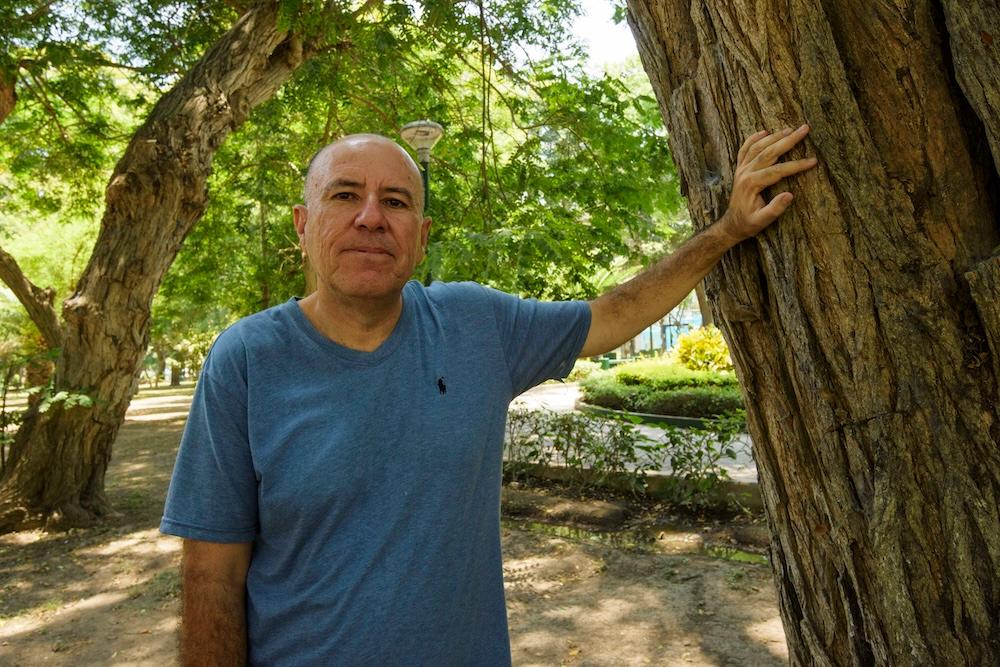
“You leave college thinking that the forest is a natural resource that needs to be given an economic value. Ten years later, I’ve come to understand that the forest already has value in and of itself.”
In 2011, Patricio Zanabria began working in the Paisaje Manu as part of séPerú, an organisation that would become Regenera’s first Landscape Partner. As a forestry engineer, his perspective was shaped by the idea that the forest was a resource that should be utilised as efficiently as possible. Over the years, that way of understanding the territory would undergo a profound transformation.
Caring for the forest can also promote well-being
Over the past ten years, Patricio’s understanding of conservation has evolved. As he gained firsthand insight into the relationships and knowledge the Guardians have built with the forest, his understanding of ecosystem services took on a new depth.
“Through my frequent contact with the Guardians of the Manu, I came to understand that they make use of the forest’s resources—such as wood, fruits, and fish—but that, for them, species are not merely resources: they are living beings. They have built relationships with them—sometimes marked by fear, as when they say that a giant tree can take revenge if it is cut down without respect; other times by gratitude, because they remember that it was the animals who taught their grandparents how to find salt. “That’s when I realised that the forest isn’t cared for solely because of what it gives us, but because it’s someone like us,” he explains.
This way of understanding the territory as a network of relationships leads the Guardians to view their stewardship as a practice of reciprocity. In this context, the recognition of ecosystem services seeks to acknowledge and value the stewardship role that communities already play in their territories, which helps strengthen their livelihoods.
However, this recognition is far from a simple path. Over the years, Patricio has also witnessed the immense challenges faced by Amazonian communities, whose territories are subject to multiple competing interests and pressures. Little by little, many of these communities find themselves caught up in market dynamics and must balance their livelihood needs, extractive activities that promise income at the expense of the forest, and their desire to maintain the historic relationship they have built with their territory.
“What Regenera is doing is showing the community that, by owning and caring for that forest, it can receive financial compensation,” explains Patricio.
For Patricio, this compensation is not intended to replace other economic activities, but rather to complement them. Communities need to diversify their sources of income in a way that is compatible with forest stewardship. In Shipetiari, for example, in addition to conserving their territory, they have begun to produce goods from forest resources and to develop tourism initiatives.
The invisible work of building bridges
One of Patricio’s main responsibilities as a Landscape Partner is to strengthen dialogue among communities, organisations, and those who choose to support the conservation of these territories. His work involves regularly visiting communities, sharing information, explaining new concepts, answering questions, and, above all, listening.
Because talking about ecosystem services isn’t always easy. Translating those ideas into the everyday reality of communities takes time, trust, and a physical presence. That’s why the role of the Landscape Partner is essential. “No one would explain these issues to them if there weren’t someone there to provide that support,” he says.
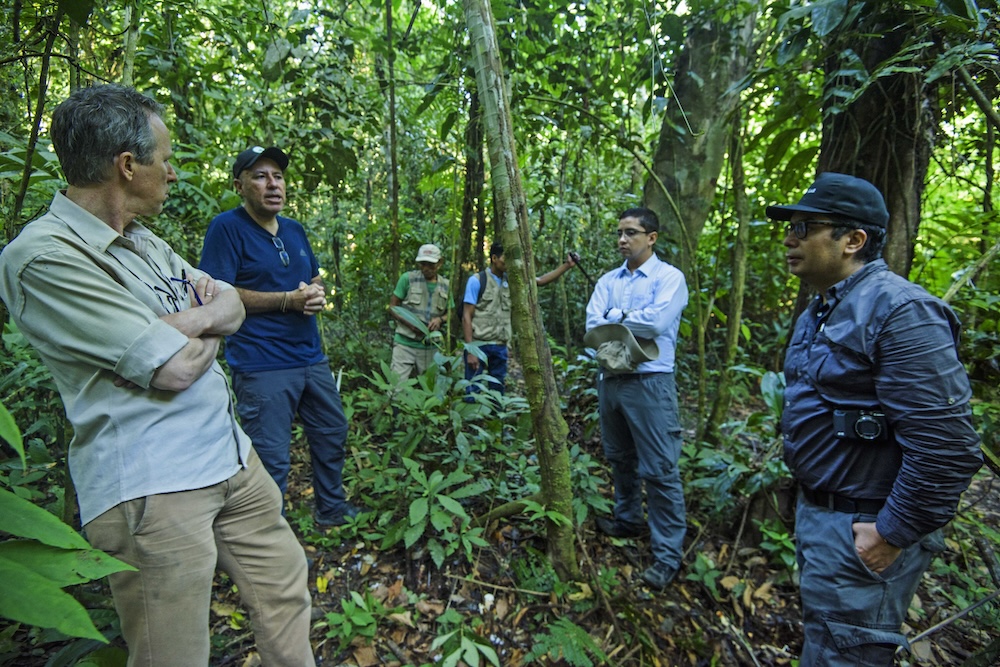
Patricio with Frank Hajek and other members of Regenera during a field visit to the Manu Landscape.
Reaffirm the decision to preserve
Over the past decade, it has become clear that the model proposed by Regenera starts from the right place: it was never about convincing communities to begin conserving, but rather about recognising those who had been doing so for years out of conviction. This is the case in Palotoa Teparo, where decades ago the community decided not to enter the logging business, even as other territories did so. In these contexts, financial recognition reinforces the decisions that have already been made.
In Shipetiari, for example, part of the funds received are used to recognise the work of community members who represent the community or participate in land monitoring activities, which helps cover the costs associated with dedicating time to the common good.
Looking ahead to the next ten years
But the work is far from over. In the Amazon, threats to these territories continue to grow. Mining, migration, and the cultural changes affecting younger generations pose new challenges for conservation.
For Patricio, the challenge is not to resist change, but to find ways for communities to strengthen their livelihoods without losing what gives them their identity. “The challenge remains to find a way to reconcile their culture with what the Western world has to offer, without losing what is most valuable,” he reflects.
There is also a need to strengthen partnerships among those working to protect landscapes. Building a shared vision among organisations, communities, and various stakeholders is not always easy. “Synergy is always difficult. It’s a reflection of our society,” he acknowledges.
After more than a decade travelling through Amazonian communities, what keeps Patricio in this job is not a methodology, nor a project, nor an indicator. It’s the people.
“In every community, there are men and women who work for the common good. People who put themselves on the line for everyone else. They deserve our support.”
That’s why, when an organisation asks him if it’s worth becoming a Landscape Partner, his answer is simple: “It’s not enough to just hear that this works. You have to come to the landscape. See it for yourself. Talk with the communities. Because nothing can replace the experience of being here.”
After ten years, Patricio’s greatest lesson is that conservation is, above all, about nurturing the relationships that make it possible. No project can replace the trust that is built by walking through the land, talking with communities, and staying over time. Because, more than projects, indicators, or markets, it is people who sustain Nature.
Etiquetas
- Sustainable living
- Forest Guardians
- Landscape Partner
Artículos relacionados
- Historias de la Tierra
- Manu
Leer artículoDiez años después, volvimos a donde todo empezó
Enrique Zuñiga
- Aliados en Acción
- Machu Picchu
- Manu
Leer artículo¿Cómo reducir el impacto de construir? La pregunta detrás un nuevo hotel en Machu Picchu
Margony Palacios
- Aliados en Acción
- Manu
- Machu Picchu