
Partners in Action
You’ve already calculated your carbon footprint—what’s next?

For many organizations, it all starts the same way: with a spreadsheet. Flights, electricity bills, fuel, waste, kilometers traveled. Data comes in from different departments, in different formats—sometimes incomplete, sometimes late, or inconsistent. Little by little, cell by cell, something that once seemed invisible begins to take shape: an organization’s climate impact.
That moment is important. Measuring a carbon footprint changes the conversation: we no longer talk in general terms about “being more sustainable” or “reducing our impact,” but instead we see concrete numbers, sources of emissions, and decisions that carry more weight than we thought. But an uncomfortable question also arises: So what do we do with this information now?
A spreadsheet is useful for calculating, organizing information, and preparing a report. What it doesn’t do well is manage what comes next, and in sustainability, that’s almost always the most important part: measuring is just the first step. Afterward, you have to understand, make decisions, follow up, and clearly explain what has changed, what’s missing, and what’s being done to improve. That’s where many companies fall short: they have a calculated footprint and a report, but no system for managing it or a clear path forward; they have data, but no simple way to revisit it, update it, and turn it into decisions.
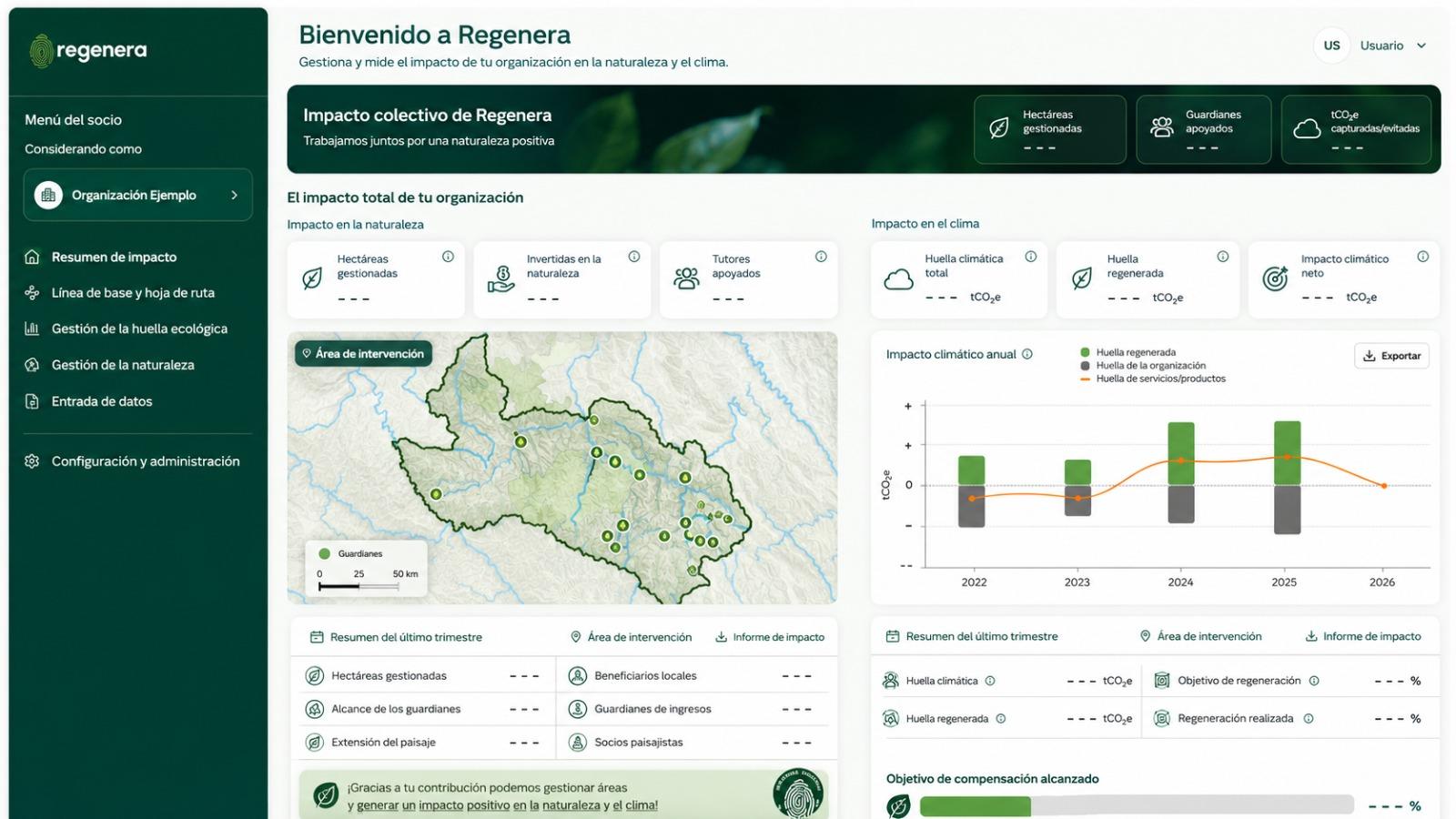
At Regenera, we’re working precisely in that area: the point where measurement stops being an annual exercise and starts becoming part of management. Our platform aims to help organizations see their climate and environmental impact in one place—not just as a final figure, but as a more complete story: emissions generated, impact regenerated, hectares under stewardship, guardians supported, protected landscapes, and progress over time.
That changes the way we view the carbon footprint. A company can review how much it emitted, but also how much of that impact is linked to specific actions in a given landscape; it can see its net climate impact, track its annual progress, and understand that behind every metric ton of carbon there are also forests, water, biodiversity, and people caring for their lands. The information is no longer locked away in scattered files: for a sustainability team, this means greater organization and traceability; for management, a clearer view of where to take action; for the sales department, the ability to communicate progress more clearly; and for customers and partners, a more transparent and easier-to-understand story of impact.
It’s not about making sustainability more complicated. On the contrary: it’s about ensuring that data serves a purpose beyond simply completing a report—that it helps us make better decisions, track progress, and identify where to reduce, where to regenerate, and how to link climate commitments to real actions in nature. Excel will continue to be useful, the methodology necessary, and technical expertise indispensable, but on their own, they are no longer enough to sustain climate management over the long term.
A carbon footprint shouldn’t be a snapshot you look at once a year, but rather a dynamic tool for learning, adjusting, and improving. That’s why the question is no longer just: Has your organization measured its carbon footprint yet? The question is: What are you doing about it?
Etiquetas
- Carbon footprint
- Management for Positive Impact