

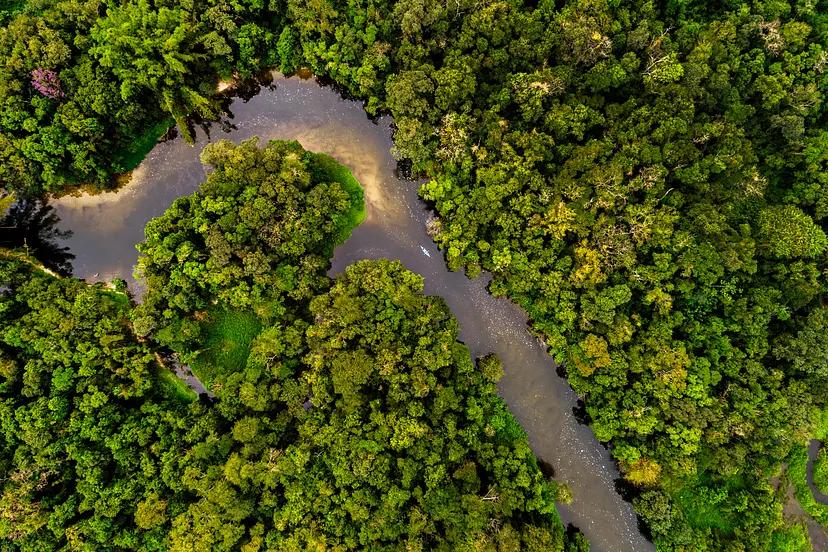
Forests are more than trees, they are life that bustles every second, spirits that guide, parents that care, sources of food, healing and shelter. For many people, forests are everything.
“When I grew up I went to Cusco to study heavy machinery management, I disassociated myself from my community, but when I returned and was able to join a conservation project I felt the call of my forest again and began to investigate medicinal plants… then, I left everything and dedicated myself to research and today as head of my community I do everything I can to conserve.” For Arnold Semperi, the young leader of the Matsigenka community of Palota-Teparo, in the Manu Landscape, working with plants was eye-opening and helped chart the path he follows today without hesitation. A path of conservation and protection of their community’s forests.

Arnold Semperi and his partner Pablo Chaveya, enjoy a hike in the forest of the Palotoa-Teparo community.
Two decades ago, the villagers of Palotoa-Teparo, a neighbour of the great Manu National Park, one of the most biodiverse regions on the planet, decided to stop cutting down their forests to sell timber and dedicate themselves to conservation. The result is visible: large shihuahuaco trees and their huge trunks have been spared from illegal logging, and the animals have returned to their forests, which they consider sacred.
A few kilometres further south, near the great Madre de Dios River, the villagers of Shipetiari have followed the same path and for almost a decade not a single tree has left their land, 27,000 hectares of pure forest. “For us trees are like people, when we walk through the forest we can feel them, they talk to us, tell us things and keep us going. When there are trees, there is food, there are materials to build, there is more water in the streams and the fish swim up there and we can fish for them… the forests are full of animals, and when you go there you can feel all that.” This is how Herlinda Italiano, treasurer of the community, describes the experience of a healthy forest.

Herlinda Italiano proudly shows off her community’s well-preserved forests.
Amazon forests, which from the air may appear to be a monotonous succession of trees, actually encompass a great diversity, such as riparian forests whose changing face depends on the whims of the river, or flood forests that can be covered by up to 10 meters of water each season creating one of the most productive ecosystems on the planet. Or the extensive aguajales that can cover thousands of hectares of a single species that even appear to have been planted. And the terra firme forests, the home of the great lupuna, the giants of the Amazon forest.
All this diversity is well known to the indigenous peoples who have inhabited and preserved them for thousands of years, not only because they provide them with everything they need to live, but also because they constitute the very essence of their identity. These forests are the abode of their gods and the starting point of a cosmovision that has much to teach us.
Tags
- Community
- Forest conservation
- Forest Guardians
Related articles
- Stories from Earth
- Manu
Read articleShipetiari: a community that chose to conserve its forest
Margony Palacios
- Stories from Earth
- Manu