
Stories from Earth
Indigenous-led initiatives in the Manu Landscape

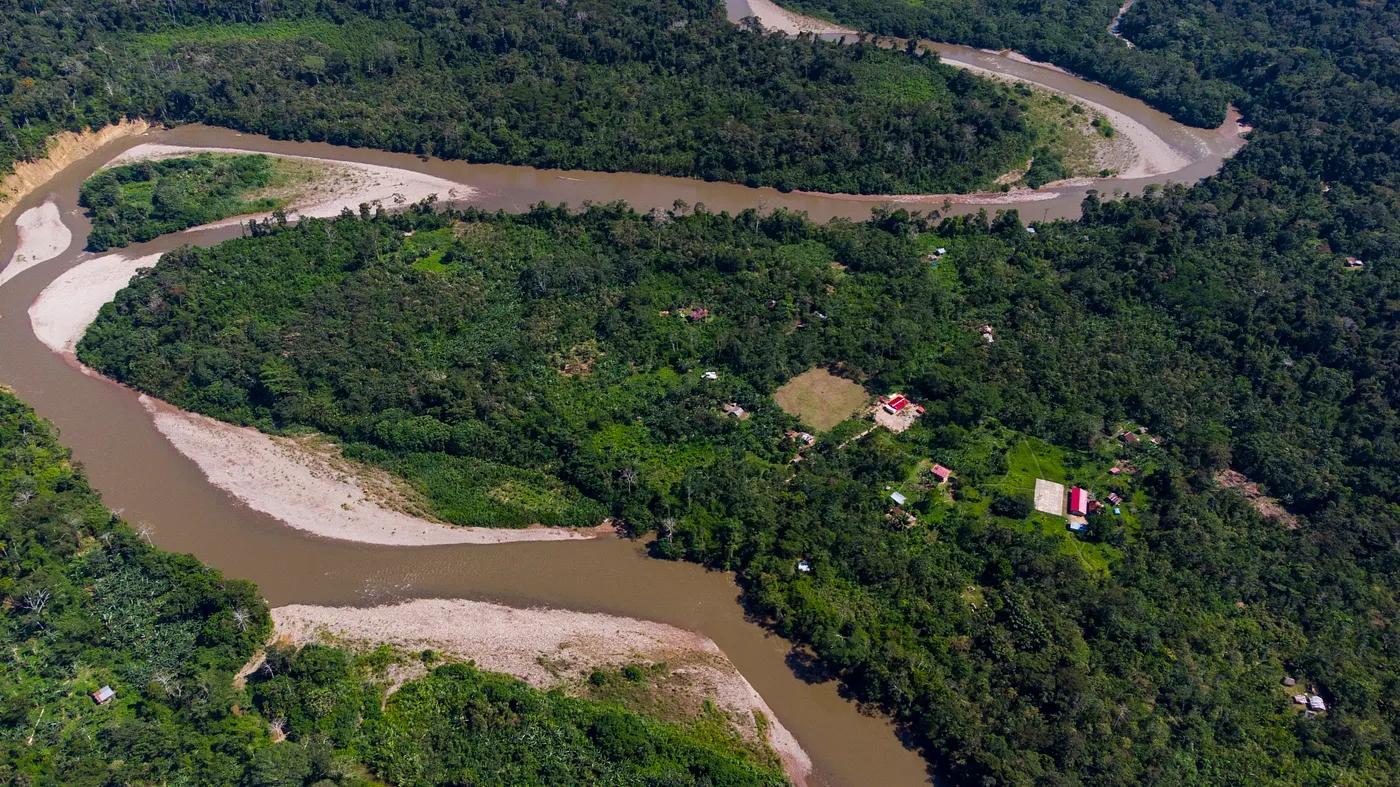
Featured image: The Palotoa River meanders around the Matsigenka community of the same name.
Located in the heart of the southeastern Peruvian Amazon, between the departments of Cusco and Madre de Dios, the Manu Biosphere Reserve is, without a doubt, one of the most biodiverse regions on the planet. Here, a group of indigenous communities of the Matsigenka ethnic group have decided to face the climate challenges of the present and, together with Regenera, are working day by day to light a better future.
“For us plants, trees are like people, in dreams we talk to them, they tell us things… that’s why I am committed to them, I have left everything to dedicate myself to taking care of the trees and learning from the plants.” This is how Arnold Semperi, 26-year-old head of the Palotoa-Teparo community, defines his relationship with his forest. In their community they made a brave decision: two decades ago they gave up the timber trade and closed their borders to deforestation. Today, as members of Regenera, they care for their trees and help people and companies offset their ecological footprint through their conservation work.

Arnold Semperi, chief of the Palotoa community, dedicated full time to the study of the medicinal plants of his forests.
Downstream of the Madre de Dios, very close to the confluence with the Manu River, the villagers of Shipetiari, also members of the Matsigenka ethnic group, are proud and confident of their decision to conserve their territory: 26,000 hectares of forest dedicated to protection, ecotourism and sustainable use of resources. Young, active and a lover of the forest, its treasurer, Herlinda Italiano, tells us about her commitment to conservation: “One of the most important things we have done as a community is to conserve our forests, so that our children and grandchildren can enjoy our territory… I like to take care of the forest because thanks to it we have animals, we take advantage of the fruits, there is an abundance of fish in the streams.“
As part of the provisions of their respective life plans – documents in which both communities plan their shared future – the communities of Palotoa-Teparo and Shipetiari have forest committees, through which they carry out permanent surveillance of their territories to remain alert of the growing threats to their forests – illegal loggers, drug traffickers or invaders – and thus comply with the conservation agreements with Regenera and other actors such as the National Forest Conservation Program with whom they work.

Herlinda Italiano, treasurer of the Shipetiari community, coordinates the monitoring of their forests.
For Pablo Chayeva, current resident of Palotoa-Teparo and member of the board of directors, the fact that the community did not cut down trees to sell was an incentive to settle. “I was born far away from here, in Javantiari and I have come here navigating the Piñi Piñi, looking for the community of Palotoa… because just like us here they do not cut down the big trees, only when you are going to build, not to sell, that is why I have stayed here and I am part of the board of directors to help the community.“
In addition to the strict conservation of their forests, the communities of the Manu Landscape that work with Regenera have tourism ventures, and have lodges that receive travelers from all over the world; Pusharo Lodge, in Palotoa-Teparo, and the Pankotsi lodge, in Shipetiari, have all the amenities, electricity, internet, and trails, platforms and experiences of experiential tourism that allow them to proudly show their ways of life and ancestral traditions.

Pankotsi ecotourism lodge in the community of Shipetiari.
Javier Ríos, member of the Shipetiari Tourism Committee, says that “tourism in our communities is important because it is an ally of conservation, we take care of our forests, we have animals, and tourists come to enjoy what we take care of.”
In addition to these conservation and tourism activities, there are other sustainable production systems such as handicrafts, fruit gathering, and responsible hunting and fishing, which allow the guardians of Manu to live a healthy life while conserving their forests, following the example and wisdom of their ancestors. An example of courage and commitment to the future of our shared home.
Tags
- Amazon
- Forest conservation
- Nature positive
Related articles
- Stories from Earth
- Manu
Read articleShipetiari: a community that chose to conserve its forest
Margony Palacios
- Stories from Earth
- Manu