

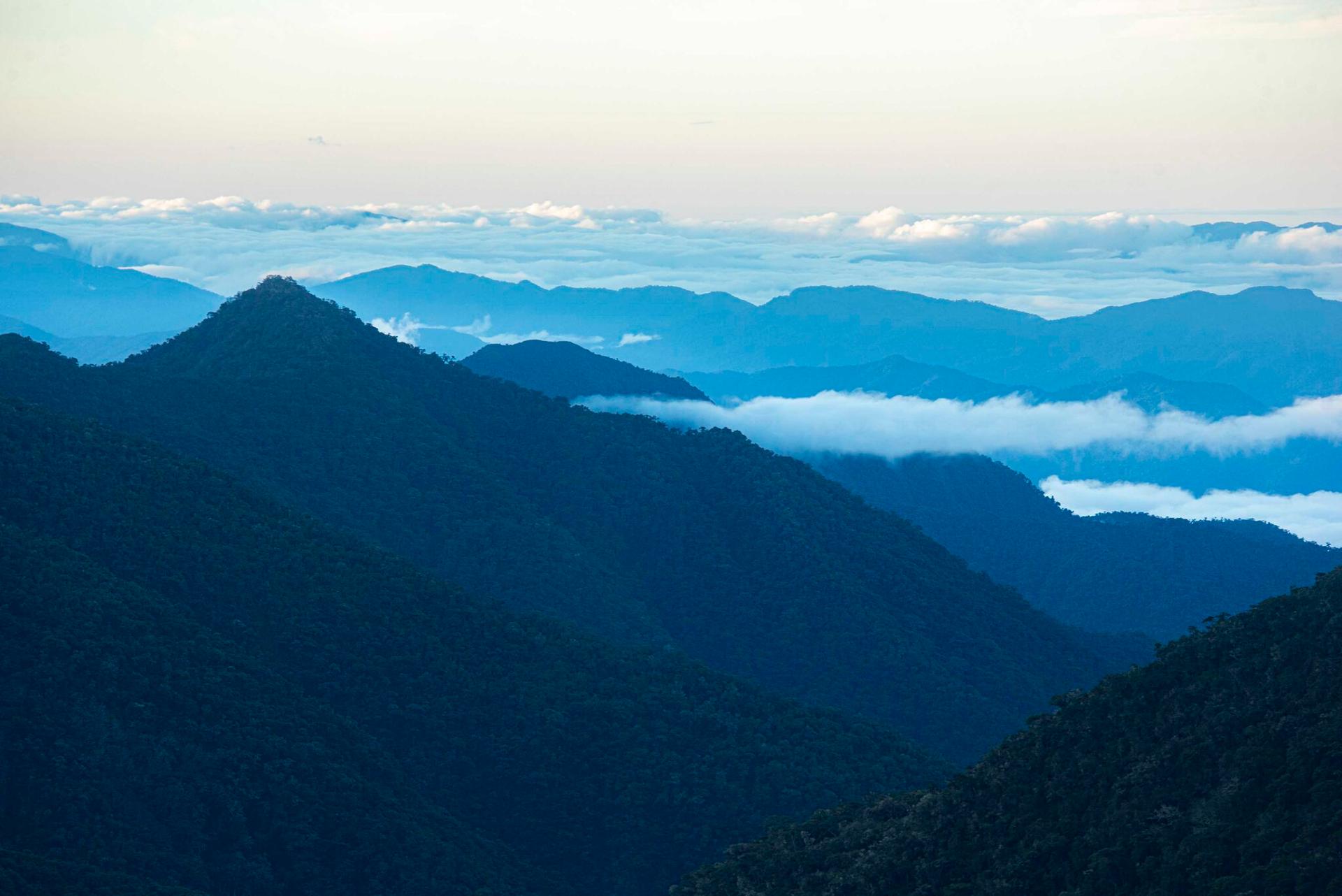
Paucartambo: Where the Andes meet the Amazon
In the heart of the Andes near Cusco, Peru, wrapped in clouds and surrounded by evergreen mountains, lies the Paucartambo Landscape, an important refuge for wildlife, and a territory inhabited since time immemorial by Andean-Amazonian cultures. Today, threatened on several fronts, its conservation has become a priority, and is the commitment of men and women who want a better future for Nature and for their families.
Shortly after dawn, with the air shrouded in dense mist slowly rising from the valley floor, small sounds become clear. The montane forest suddenly becomes a stage for a concert of colourful tanagers, tiny hummingbirds zooming through the branches like bullets, and the thick snores of woolly monkeys roaring through the canopy. But then, hidden in the clouds, comes a chorus that stands out from the rest. A series of shrieks, whistles, and calls overlap and begin to bounce through the leaves. The cock-of-the-rocks, a symbolic bird of Peru, have just begun their morning ritual at a lek, where they often put on vibrant displays that, in addition to singing, include dancing and showing off their fiery red plumage. This is undoubtedly one of the most impressive spectacles in the mountain jungle. And yet it is an ordinary sunrise in the heart of the Paucartambo forests.
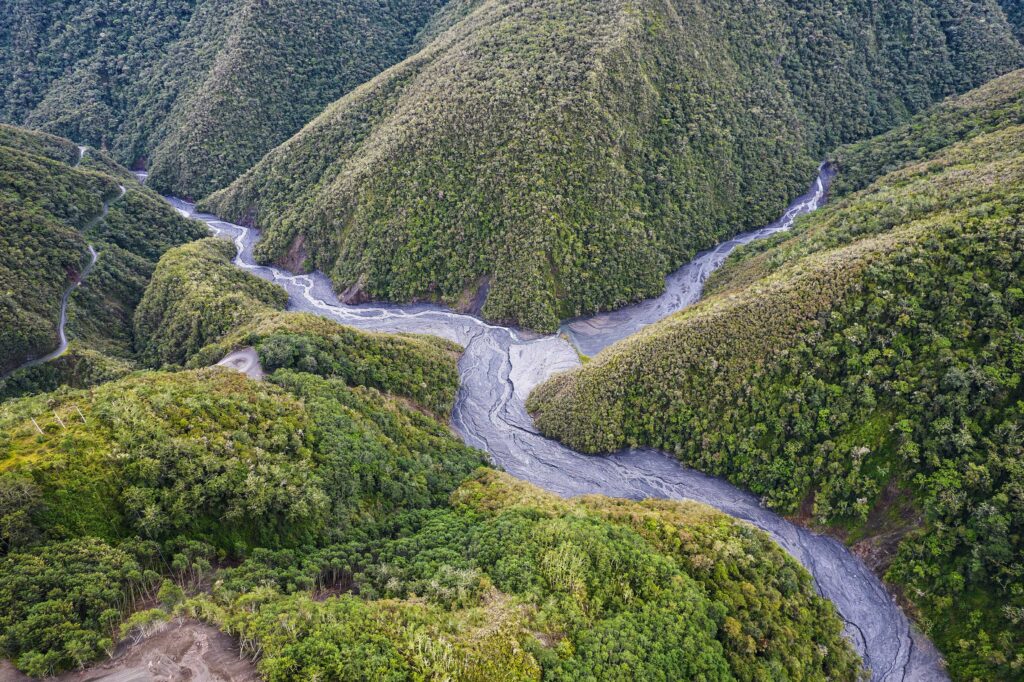
The Paucartambo Landscape forms the headwaters of the Madre de Dios River, one of the main tributaries of the Amazon.
Located in the northeast of the department of Cusco, the province of Paucartambo is Peru’s third largest, and since pre-Hispanic times was a junction of roads that linked the Andean region with the Amazonian forests of the eastern slope. This ancestral connection is reflected to this day in the traditions and festivities of the department, where dancers called “chunchos” -people from the jungle- form an important part of the celebrations.
For the Incas, Paucartambo was the gateway to a territory full of resources, where, according to Spanish chroniclers, the best coca leaf in the whole empire was produced. But it was also the territory of fierce jungle ethnic groups who put up a bloody fight. They were called Antis and the region where they lived was known as the Antisuyo.
For the ancient Cusco people, the mountain jungle was not only their supplier of the sacred coca leaf, but also an endless pantry of all kinds of products, from fruits and wood to shiny bird feathers that were used to make clothes and crowns. This is why they set out on numerous military expeditions to conquer and control the territory. Amazed by the vast, meandering Madre de Dios River, they named it Amarumayo, the “serpent river.”
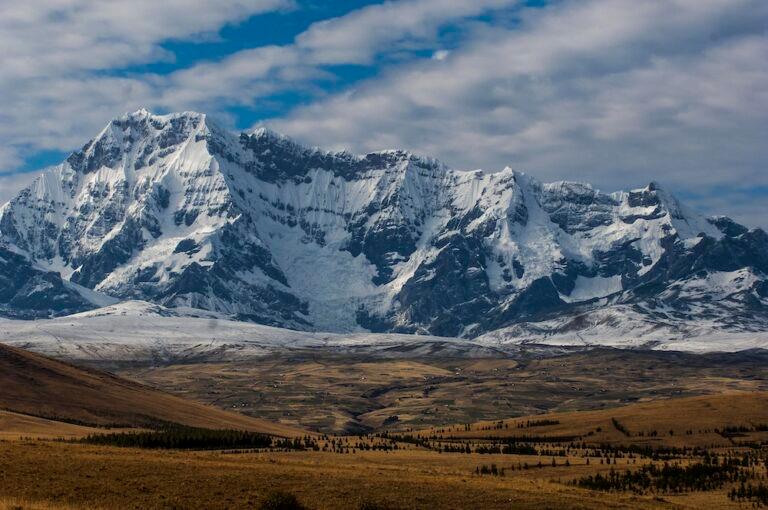
Travelling from Cusco to the heart of the province of Paucartambo , the route takes visitors through Andean agricultural valleys up to four thousand metres above sea level, to the cold punas dominated by ichu grasses and the queñual tree, and then descends vertiginously to montane forests, one of the most productive and diverse ecosystems on the planet, always following the course of the headwaters of the Upper Madre de Dios River, one of the main tributaries of the mighty Amazon.
Here, amidst the mist, a record-breaking biological diversity thrives. More than 2,000 species of butterflies, almost 600 species of birds, more than 70 species of mammals, and thousands of species of flora, including an enormous diversity of orchids, highlight the enormous ecological importance of this landscape.
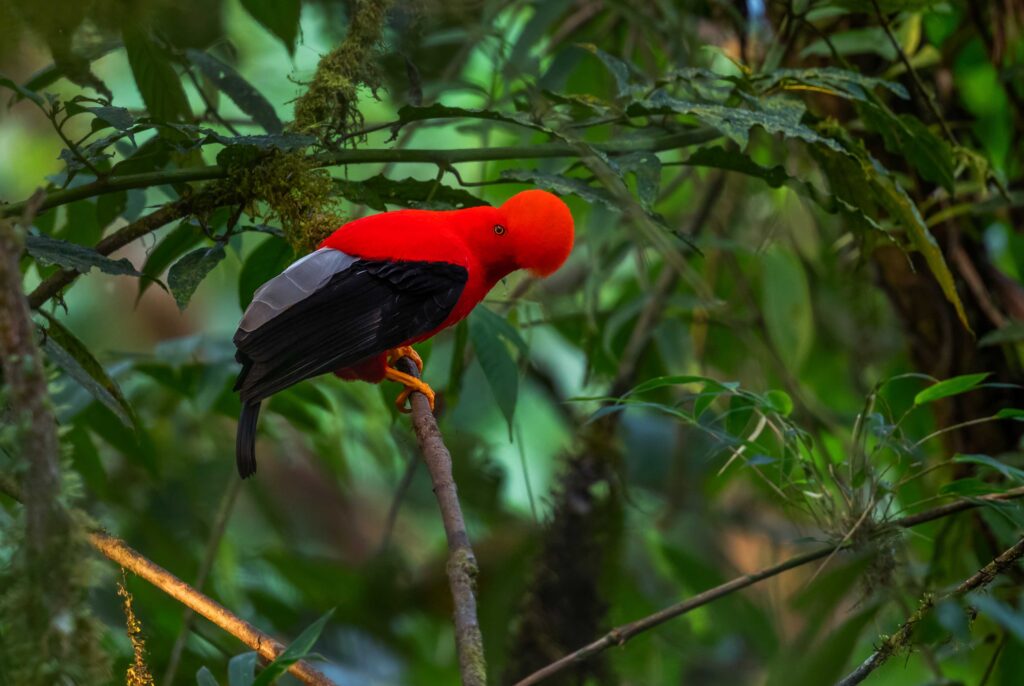
The cock-of-the-rock (Rupicola peruviana) is the symbolic bird of the montane forests of the eastern Andean slopes.
To this celebration of life must be added the ecosystem services provided by the landscape. The most important, without a doubt, is that it constitutes the headwaters of the Madre de Dios River, which forms a complex system of tributaries whose waters flow first into the Madeira River and then into the Amazon. Water that is also necessary to satisfy the needs of the more than ten thousand people who live in the upper and middle parts of the basin, most of whom are engaged in agricultural and livestock farming.
Guardians of the future
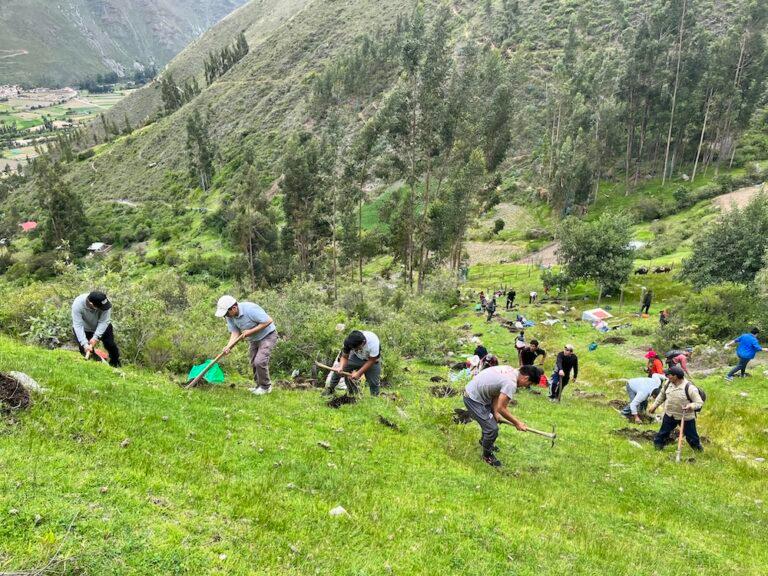
“I came to Asunción more than sixty years ago. Here I have worked with wood, I have farmed, I have planted coca – always legally – and my children were born here. I love these forests and that is why for several years now we have decided to invest in reforestation in our old farms. We have planted trees that, as you can see, are already several metres high. Because this is our land, and we are committed to taking care of it.” This is how Nazario Huamán sums up his experience living in the Paucartambo landscape. Having become a staunch defender of the forests, today he and his family are determined to become Guardians of Regenera and to protect their territory from deforestation and illegal activities that today threaten the region.
A few kilometres further on, in the village of Pilcopata, capital of the district of Kosñipata, there is a unique family whose odyssey is worthy of a novel. The Gilahuancos, Teodosio and Francisca, together with their daughters Gloria and Yesenia, are a clear example of the transformative power of Nature. Teo and Panchita, as they are known, arrived more than four decades ago from their native Puno to settle in the forest to start a new life. They both dedicated themselves to all kinds of trades, as loggers, farmers, cattle breeders, and bakers, until they learned about tourism and the opportunities it could generate for them. It was then that the couple decided to open the doors of the Gallito de las Rocas lodge, which over time has become a point of reference for the thousands of visitors who come to the region every year.
“Tourism changed our way of seeing things,” says Teodosio, sitting in front of his lodge while enjoying the coolness of the afternoon. “We came here forty years ago to look for a better future, and we have found it with our daughters in tourism and conservation.” Gloria, his eldest daughter, is a tourism specialist, a birdwatcher by passion and today owns a lodge in Chontachaca, the Manu Endemic Station. Yesenia, the youngest, is an architect specialising in sustainable bamboo construction. Together they manage, in addition to the lodge, a conservation concession of almost ten thousand hectares that they hope will become a magnet for scientific research.
Don Nazario, Teodosio, and Panchita are just a few of a growing network of defenders of Nature that today inhabit the Paucartambo Landscape. And they are determined to protect it.
Threatened land
The arrival of tourism more than two decades ago created opportunities, and today many entrepreneurs are transforming their properties to develop lodges, hummingbird-viewing points, ranches for agro-ecological and experiential tourism, as well as for adventure sports. However, with more than 80% of the population dedicated to agriculture and livestock, the Paucartambo Landscape faces serious threats.
In Peru, the area under coca leaf cultivation has increased alarmingly in recent years. With almost 100,000 hectares planted, it is estimated that 71% is in indigenous territories, buffer zones of protected areas, and rural communities. This is the case of Paucartambo, where the eastern slopes neighbour Manu National Park and the Amarakaeri Communal Reserve. The increase in the cultivation of coca for illegal purposes brings with it deforestation, violence, and corruption, which keep the defenders of Nature in check.
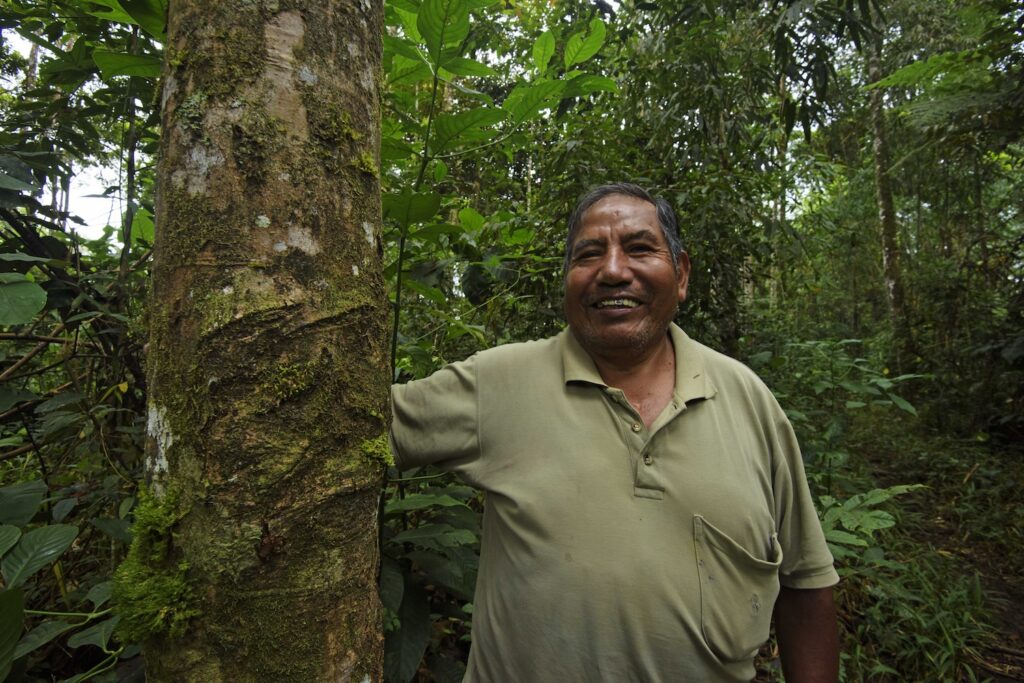
Nazario Huamán, a landowner in the Aguanal sector of Asunción, is a vigorous defender of his land.
Marc Dourojeanni, one of the fathers of Peruvian conservation, reports that: “A main concern of the inhabitants of the lower part of the district, whose land is flatter and therefore arable and where the urban centres of the valley -Pilcopata, Patria, Atalaya and others- are located, is the destruction of the vegetation in the higher parts of the basin. They fear, quite rightly, that this will have a negative impact on the water regime and the quality of the water on which they depend, and that it will also lead to increasingly intense landslides or huaycos, destroying road access and affecting lives and property, as well as damaging the magnificent landscapes that attract visitors.”
In addition to deforestation, illegal crops, and extensive cattle ranching, there are the increasingly aggressive effects of the climate crisis. Defending this stronghold of diversity and maintaining its services depends on creating networks involving communities, private landowners, non-governmental organisations, private enterprise, and academia, with the aim of recognising those who daily defend their lands and restore lost Nature. This is what the creation of Regenera’s Paucartambo Landscape aims to achieve. Together with private managers, such as Nazario Huamán, high Andean communities are joining in, such as the Q’eros nation that inhabits the upper parts of the basin. The common goal is to give back to Nature what it gives us so much. And to ensure the future of these marvellous forests, so that water and life continue to flow. Forever.

Tags
- Amazonía
- Bosques andinos
- Enfoque de paisaje
Related articles
- Regenerate Together
- Abancay
- Machu Picchu
- Regenerate Together
- Abancay
- Machu Picchu
Read articleThe environmental roadmap: how we accompany this process
Margony Palacios