

Regenera goes beyond carbon offsets and tree planting. We work directly with local communities and other partners to help them protect and manage the natural landscapes they call home. The more people involved in caring for a landscape, the better its chances of staying healthy, and the greater the social, environmental, and economic benefits for everyone. We call this our landscape approach. We currently work across six living landscapes in Peru, each home to both people and an extraordinary variety of plant and animal species.
Species as Symbols of Conservation
Some species have ecological roles or statuses that make them valuable as conservation ambassadors of their landscapes. Indicator species signal ecosystem health through their presence or absence. Frogs, for instance, are sensitive to pollution and indicate the presence of clean water. Umbrella species, like the jaguar, need such large territories that protecting them automatically shelters many other species sharing the same space. The charisma of flagship species, such as the Andean condor, helps win public support and funding for conservation. Keystone species, like the South American tapir, play such a critical role in their ecosystem that losing them could cause its decline or collapse. And endangered species, formally classified by the IUCN, face extinction without urgent intervention.
Landscape Species: Guiding Conservation at Scale
To complement our landscape approach, Regenera works with the concept of landscape species, animals whose wide-ranging habits and needs help guide conservation planning across an entire landscape. These are species that reflect the key natural and cultural values of the places they inhabit, and whose protection allows us to prioritise action where it will have the greatest impact.
We select sets of landscape species based on three criteria: they require large areas of habitat to survive; they play an important ecological, cultural, or socioeconomic role; and they face significant threats from human activity. Wherever possible, selected species also represent different environments — water, air, and land — as well both the plant and animal kingdoms, giving a fuller picture of a landscape’s health. Crucially, we also need reliable, georeferenced data on each species, so that their populations can be monitored and changes detected over time.
For Regenera’s Manu Landscape, an Amazon rainforest region of arguably the greatest biological and cultural diversity on Earth, we have selected three species that together represent its ecological richness and cultural significance:
The Spectacled Bear
The spectacled bear is the only bear native to South America, living in the cloud forests of the Andes. Its name comes from the pale rings around its eyes, markings that also inspire its scientific name, Tremarctos ornatus, meaning “decorated bear.” Solitary, shy, and rarely seen, it feeds on over 300 types of plants and is a remarkably agile climber, sometimes spending days in a single tree waiting for fruit to ripen.
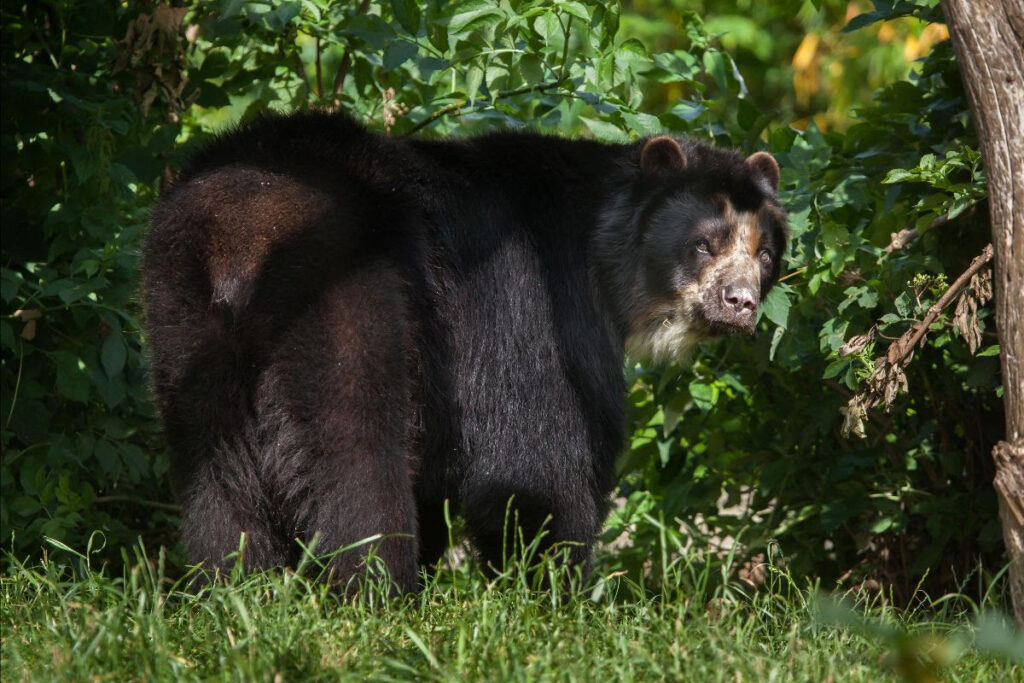
The Spectacled bear.
What makes the spectacled bear so ecologically important is its role as a seed disperser. As it travels long distances across the forest, seeds from the fruit it eats are spread through its droppings, helping to regenerate cloud forests and high Andean ecosystems. Yet its populations are under pressure from habitat destruction, poaching, and conflict with farmers whose livestock or crops it occasionally raids. Despite this, it remains one of the most iconic animals of the Andes — and, of course, the real-life inspiration for Paddington Bear.
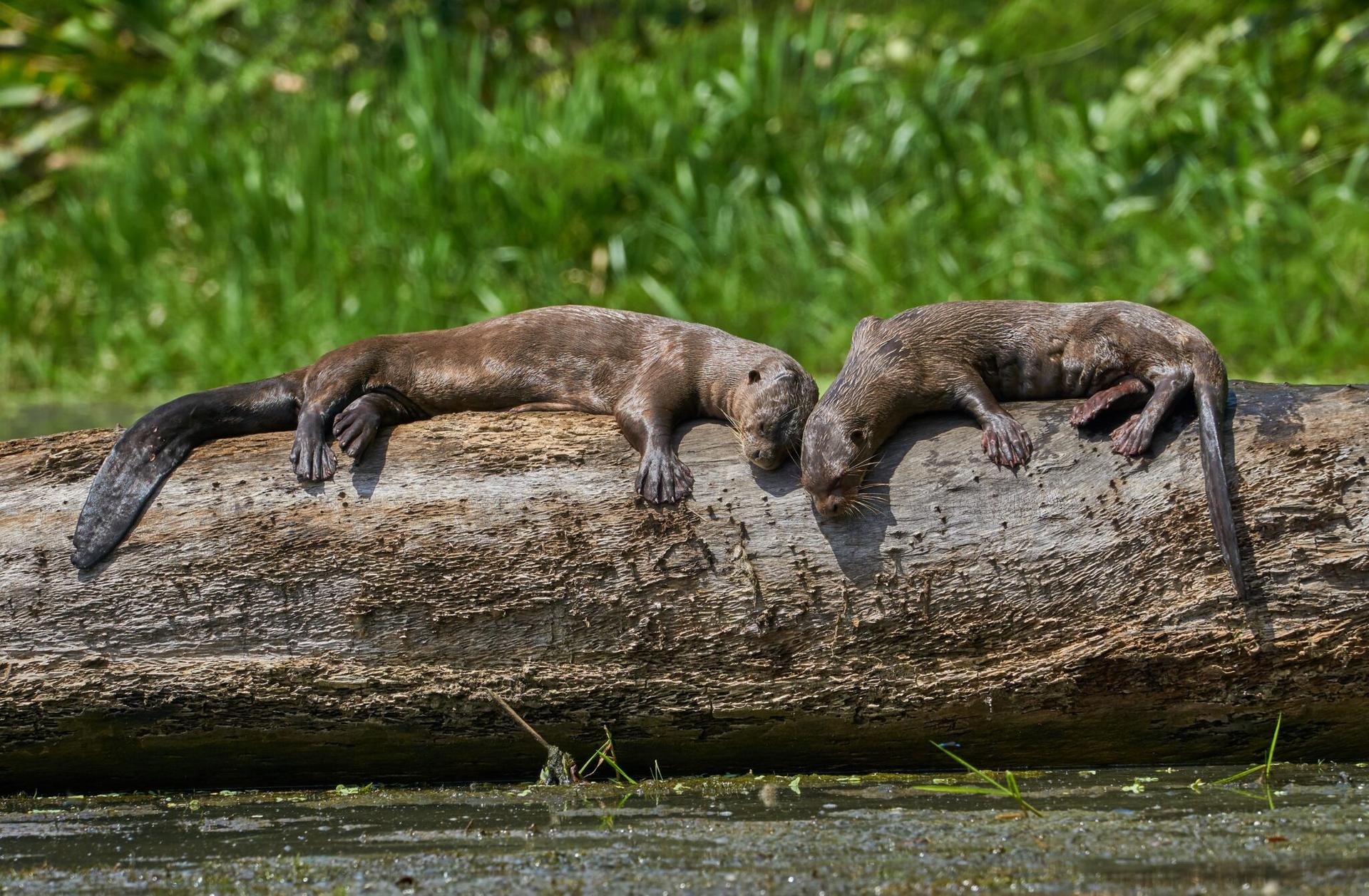
The Giant Otter
The giant otter (Pteronura brasiliensis) is one of the Amazon’s most fascinating animals. Known locally as the “river wolf,” it can grow to the height of a human and is the most sociable of the world’s thirteen otter species, living in vocal family groups of up to twelve individuals. Each giant otter can be identified from birth by the unique pale pattern on its throat, as individual as a fingerprint.
By regulating fish populations and shaping the banks of rivers and lakes through its burrowing and latrines, the giant otter plays an important role in the health of freshwater ecosystems. Protecting giant otters therefore means protecting the rivers, wetlands, and countless other species that depend on them. Heavily hunted in the past for its velvety fur, the giant otter is now a conservation success story in Manu, and one of the landscape’s most compelling wildlife spectacles.
The Cock-of-the-Rock
Peru’s national bird, the Andean cock-of-the-rock (Rupicola peruvianus) is one of the most visually striking birds in the world. The male has vivid, fiery plumage and a large disc-like crest, and performs elaborate displays in communal arenas — bouncing, bowing, wing-beating, and calling — to attract females. After mating, the female nests alone under rocky overhangs, incubating her eggs and rearing her young without assistance.
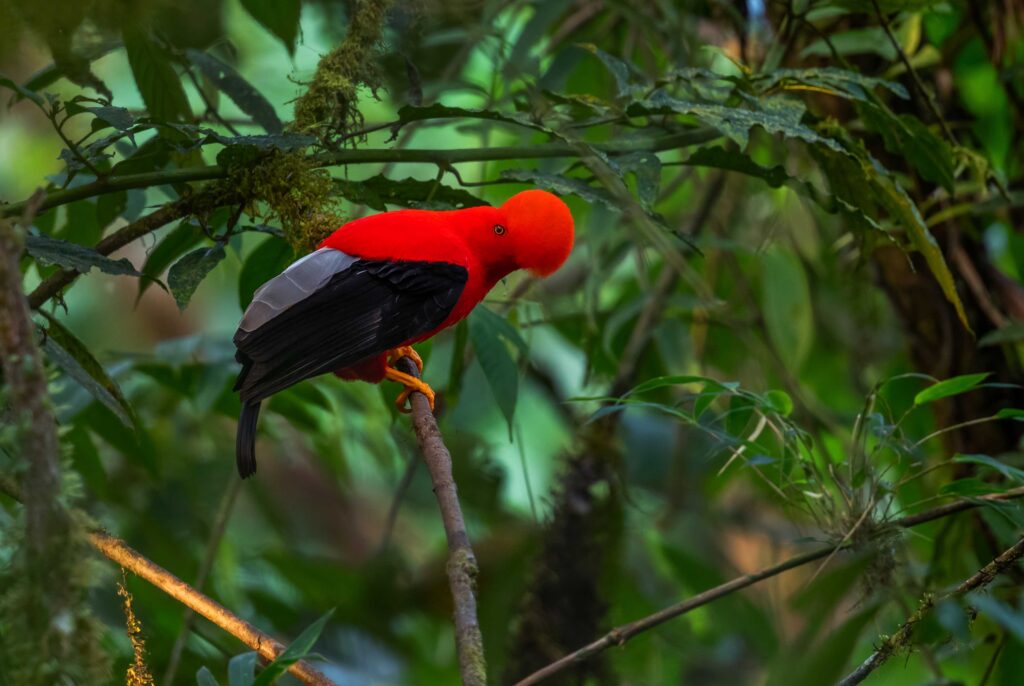
The Cock-of-the-rock.
Found in cloud forests at altitudes of 500 to 2,400 metres, the cock-of-the-rock is a flagship species for the Andean ecosystem. Its cultural significance as a national symbol and its popularity with birdwatchers make it a powerful ambassador for conservation, helping to generate the tourism and public support that benefit the whole landscape.
Taken together, the spectacled bear, the giant otter, and the cock-of-the-rock do more than represent the Manu Landscape’s extraordinary biodiversity — they help us understand it, monitor it, and make the case for protecting it. Each species tells part of the landscape’s story: a forest kept alive through the wanderings of a bear, a river system held in balance by a family of otters, and a mountainside brought to life by the display of a brilliant bird. By following where these animals need to go, we can better understand what we must protect — and why it matters.
Tags
- Landscape approach
- Landscape species
- Biodiversity
Related articles
- Regenerate Together
- Abancay
- Machu Picchu
Read articleThe environmental roadmap: how we accompany this process
Margony Palacios
- Regenerate Together
- Abancay
- Machu Picchu
- Regenerate Together
- Abancay
- Cañete
Read articleFour keys to understanding why regeneration is necessary
Margony Palacios