
Regenerate Together
Four keys to understanding why regeneration is necessary

Ailton Krenak, a leader of the indigenous movement in Brazil, raises a profound criticism of the idea of protected areas — and of the landscape approach to conservation that Peru and the world urgently need. He points out that, in modernity, we have learned to conserve
only fragments of pristine land, as if they were showcases that allow us to remember what the planet was like in the past: a sort of free sample of the Earth.
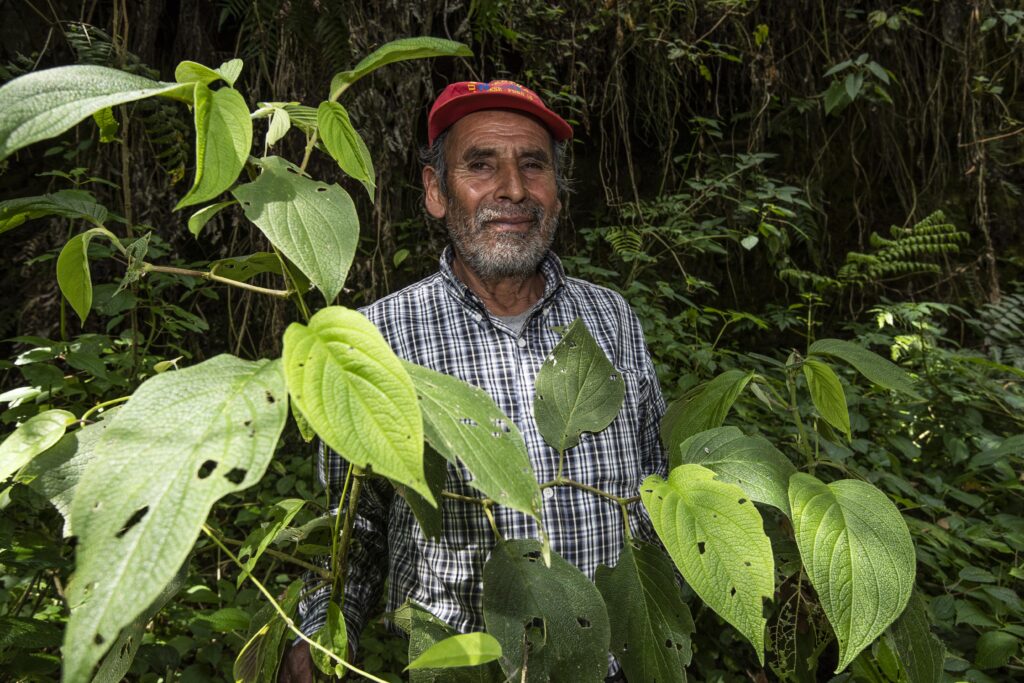
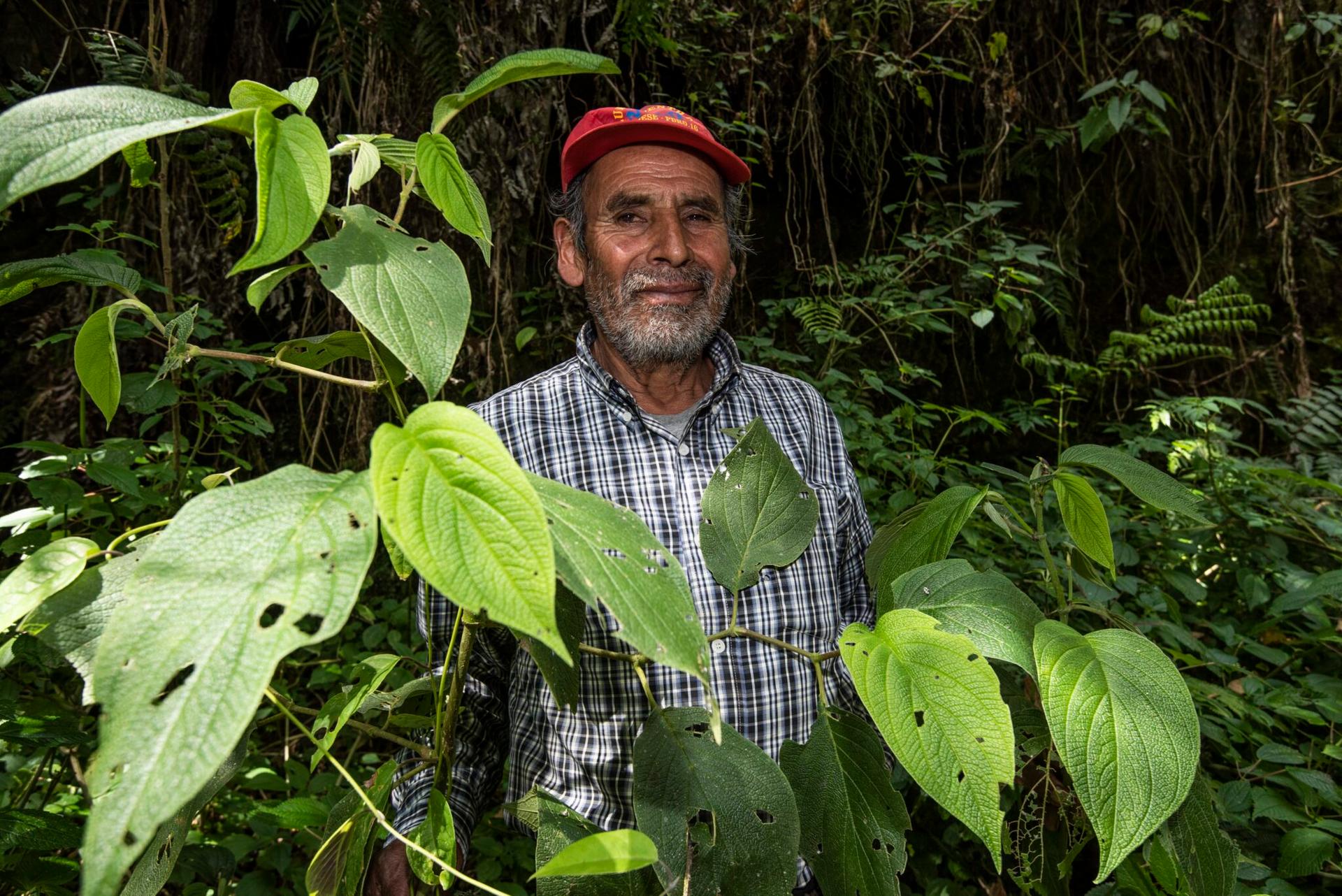
Sabino Barretón, Guardian of the Abancay Landscape and great connoisseur of medicinal plants, posing next to a matico.
This view inevitably leads us to think of regeneration as a necessary, active and reciprocal act with the territory we inhabit. A paradigm shift that invites us to imagine alternatives, to build other possible worlds through collective action.
At Regenera, we are moving towards a model in which companies not only provide goods and services, but also contribute positively to the planet. Therefore, our services are not conceived as a simple service, but as a path of transformation. Here are some keys to understanding this:
Opening Ecological Corridors Between Protected Areas in Peru
We are moving forward with the vision of creating ecological corridors that enable connectivity between flora and fauna. This approach is crucial for better landscape governance, as Nature does not function in isolated compartments.
This is why our Guardians in the field organise themselves, bring together new communities and individuals, and weave a real line of defence against the many threats to our natural heritage. This work allows those who wish to care for Nature to make common cause, recognise each other and share a purpose. This ability to create bonds to defend a shared territory is the basis for regeneration.
You can learn more in this note.
The Landscape Approach: An Integral View of Nature and Conservation
A landscape brings together multiple actors: communities, organisations, public institutions, companies and civil society. Articulating this framework is key to achieving truly sustainable development.
“The landscape approach is thinking beyond a protected natural area, a community or an endangered species. It is working to make things work together in a given territory. The aim is for different actors – NGOs, rural and native communities, the State and organised civil society – to move towards a shared vision of conservation and development,” explains Frank Hajek, director of Regenera.
This integral vision allows us to understand that regeneration does not occur at a single point, but throughout the network of relationships that sustain life in the landscape.
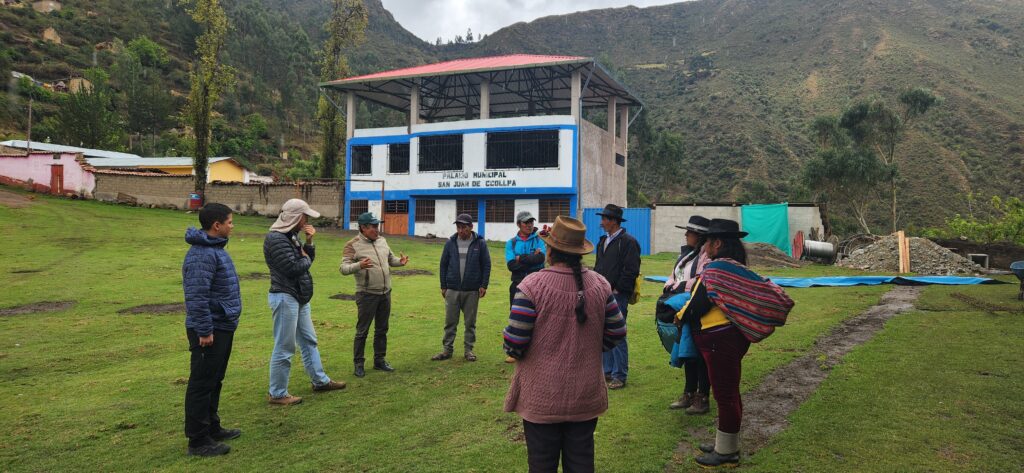
Abancay Landscape annual meeting 2025.
Recognising those who are on the front line
Our Guardians or land managers are a key part of making this work possible. They are people and communities committed to the regeneration of the forests, who live and care for the territory on a daily basis, often under complex conditions.
Working with them not only strengthens conservation and restoration processes, but also recognises the value of local knowledge, community experience and the active defence of life in the territories.
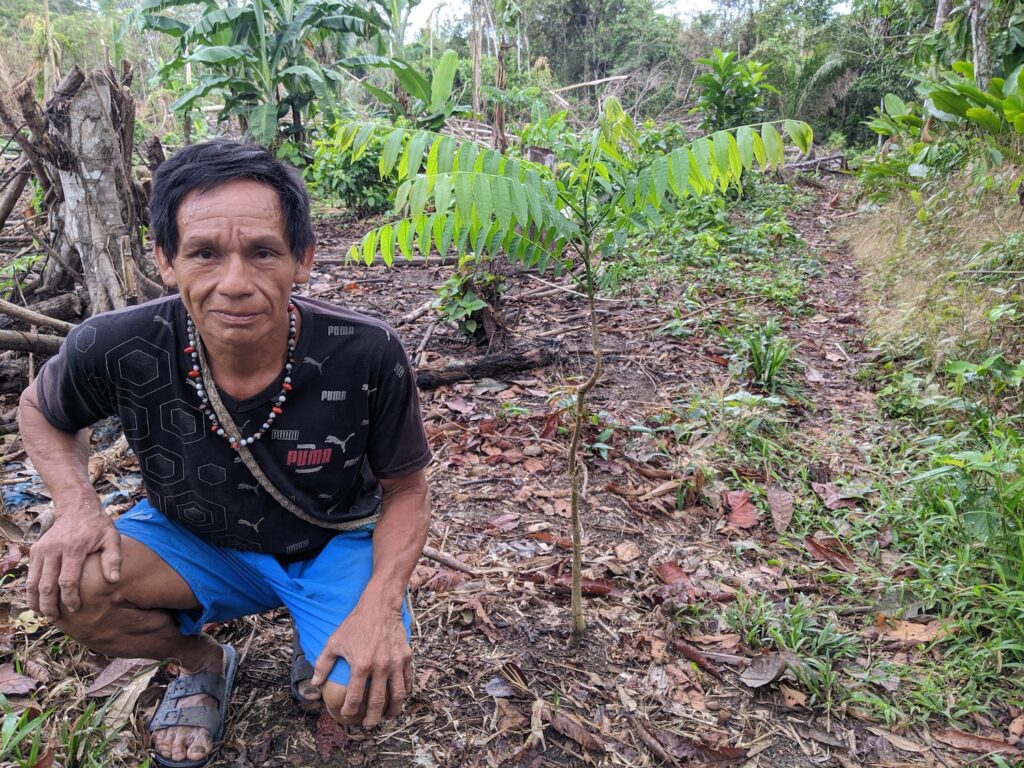
Andrés Sapona, Shipetiari community member and former Manu park ranger, next to a cedar tree recently planted in his agroforestry farm.
Moving beyond compensation: the urgency to heal
Today, more than ever, we advocate that it is not enough to offset our footprint. The climate and ecological crisis requires us to go one step further: to start healing the planet. This is why we encourage our partner organisations to regenerate 20% more than their footprint (overcompensation), as a concrete gesture of co-responsibility and a way to inspire others to act for Nature and the climate with real commitment.
Working with Regenera is a journey in which partner companies learn about their real impact through an analysis of their ecological footprint, then build a roadmap to improve that impact in a sustainable way over time, with concrete indicators and steps.
Finally, communicating this process is indispensable because it positions companies as conscious leaders, gives them added value and, above all, amplifies an urgent message: regeneration is not an option; it is a shared responsibility.
Tags
- Forest Guardians
- Landscape approach
- Ecological corridors
- Overcompensation
Related articles
- Regenerate Together
- Abancay
- Machu Picchu
Read articleThe environmental roadmap: how we accompany this process
Margony Palacios
- Regenerate Together
- Requena
- Abancay