

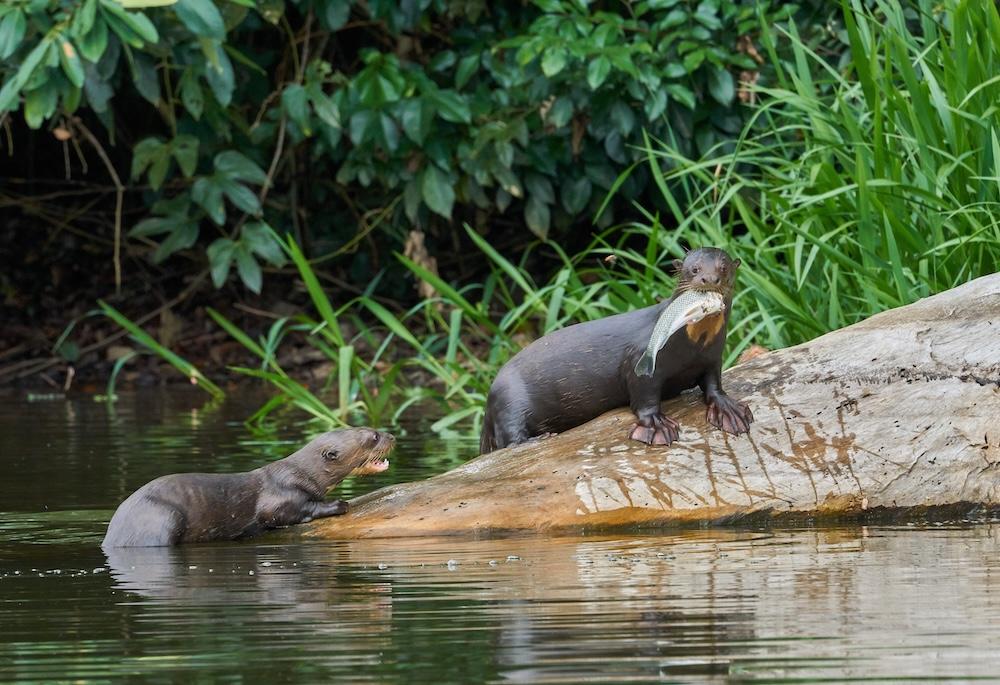
Tourism is the main economic activity currently being promoted in protected areas, the stronghold for giant otters, and to help mitigate conflict between giant otters and fishermen in other rural areas. Experience in Peru has shown that tourism and giant otters can coexist harmoniously, if the former is managed to respect the needs of the latter.
Giant otters thrive in large oxbow lakes with plenty of fish and high, path-free shorelines for building dens and latrines. If tourism took these habitat requirements into account, not only would giant otters benefit by living uninterrupted lives, but our chances of observing these wonderful animals for long periods in their natural habitat would also increase. Such an extraordinary experience would bring us back to the rainforest time and again.
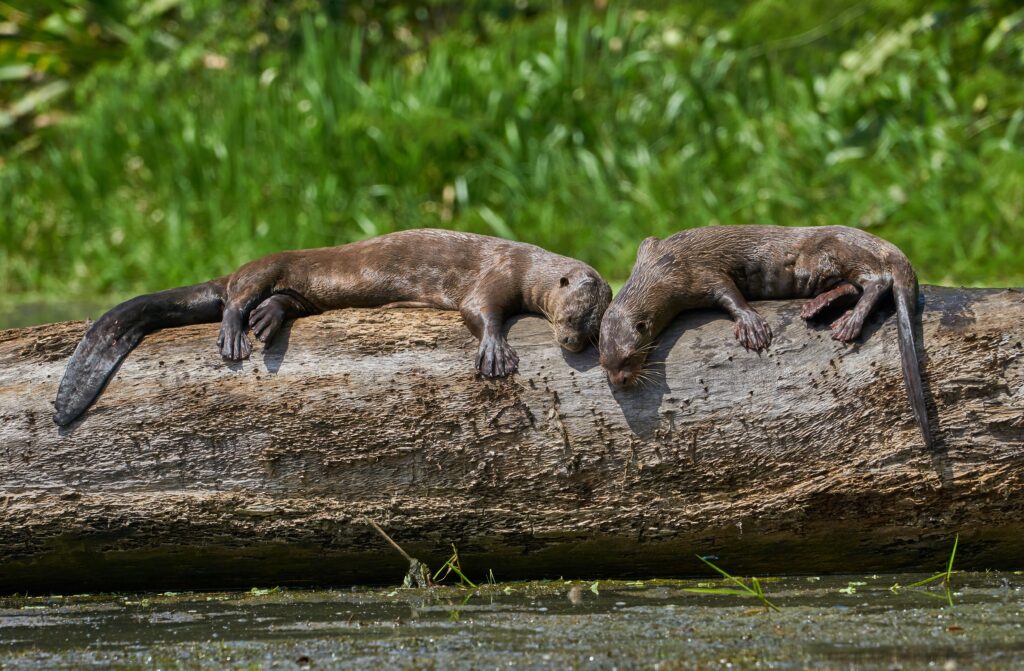
So, what can we do as responsible tourists, guides, and tour operators? By learning to interpret their behaviour and giving otters space, we can reduce the risk of disturbing them. Certified guides should familiarise themselves with giant otter biology and behaviour, participate in guide training opportunities, and take responsibility for educating tourists about protected area regulations, their potential impact on otters, and appropriate conduct.
When giant otter viewing is carried out from boats, a minimum observation distance of 50 metres between the otters and tourists should be maintained, and binoculars and telescopes should be used to improve observation quality. Using double-hulled canoes or catamarans provides greater stability and therefore better viewing and photographic opportunities. They can also accommodate larger tourist groups, thereby reducing boat traffic, and move more slowly than single-hulled canoes, making it harder to chase otters. A booking system can be implemented that limits excursions to time slots of a maximum duration. The catamaran should be rowed along a fixed route that respects established otter refuge areas.
Tourism operators should not build lodges directly on the lakeshore, and paths should be kept at least 50 metres inland from the shoreline. In addition to developing alternatives to lake excursions, low-impact observation points, such as hides and towers, should replace boats where feasible. Tourists should expect their guide and tour operator to adhere to these recommendations and choose tour operators with a proven record of nature conservation.
Here’s how you can help as a tourist or as a representative of the tourism sector:
As a tourist
As a well-informed and understanding visitor, I recognise that my visit may affect giant otters, and I respect the regulations in place to protect them. I do not view these regulations as unnecessary restrictions. I prefer to travel with a recommended eco-tour organiser and highly value a good travel guide. I will inform my fellow travellers and, if necessary, remind my guide of the regulations. I donate to support research and conservation projects in the areas I visit.
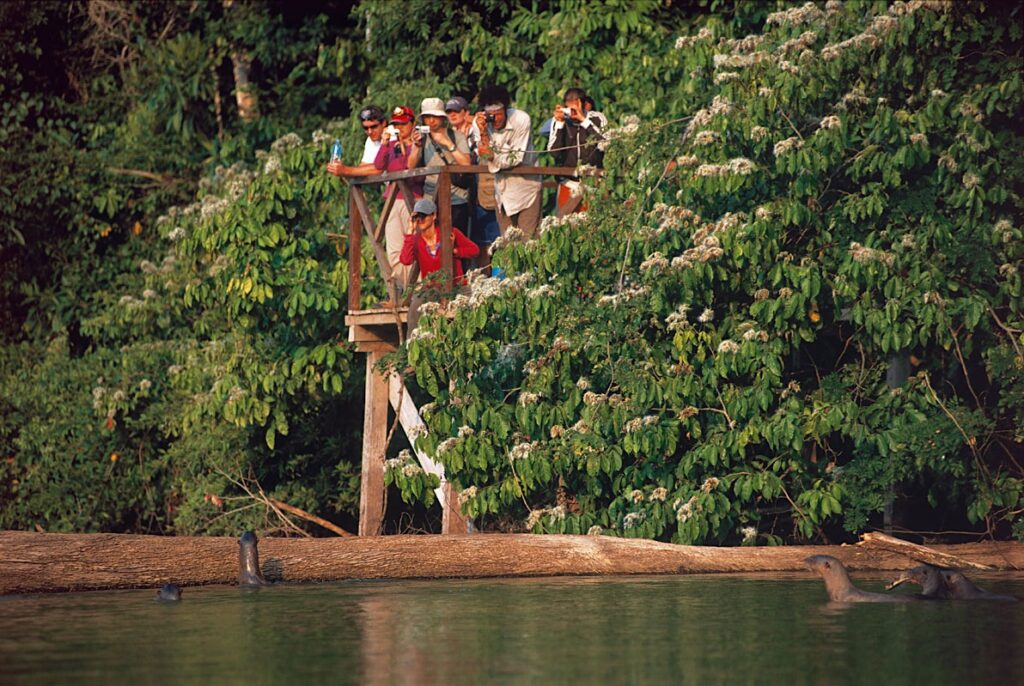
Tourists observe a family of giant otters from a platform in Cocha Salvador, Manu National Park.
When I return home, I know my personal actions and choices may indirectly affect giant otters. I accept responsibility for this impact and resolve to do all I can to help. So I avoid buying hardwood furniture and gold jewellery, invest only in proven green companies, reduce or eliminate my meat consumption (especially beef), use public transport or an electric car, cut down on international air travel, and join a conservation organisation active in the Amazon region. I elect politicians who do the same and find ways to make my voice heard and my talents count. I recognise that human resource consumption is the single greatest threat to nature, but also that we can drive significant positive change.
As a tourist guide
I am well-versed in tropical rainforests and wetlands and participate in tourist guide training workshops. My goal is to introduce visitors to the beauty and value of the rainforest’s unique ecology, as well as the problems and threats it faces. I explain the rules that apply to protected areas and encourage my clients to follow them. I never pursue giant otters in my canoe, even if my tour group asks, nor do I call to them or approach their dens too closely. I respect protected areas and prefer to watch them from a platform or tower to avoid disturbing these rare animals.
As a tour operator
I ensure all my guides are well-trained and certified. I respect protected-area regulations and decline clients’ special requests that violate them. I try to involve local people in my enterprise. I use transportation that is as environmentally friendly as possible. I make sure my tours leave no waste behind and that all waste is brought back into town. When planning and conducting my tours, I stay in close contact with the area’s scientists and park rangers. This allows me to deliver great tours while protecting Nature. I support research projects by offering scientists free or at-cost stays at my lodges.
Provided we understand and accept that giant otters, like us, need space and tranquillity—especially during their breeding season—tourism and giant otter conservation are not only compatible; they can be mutually beneficial.
Tags
- Responsible tourism
- Nature positive
- Wildlife
Related articles
- Regenerate Together
- Abancay
- Machu Picchu
- Regenerate Together
- Abancay
- Machu Picchu
Read articleThe environmental roadmap: how we accompany this process
Margony Palacios