Regenerate Together
Conserving forests of the high Andes

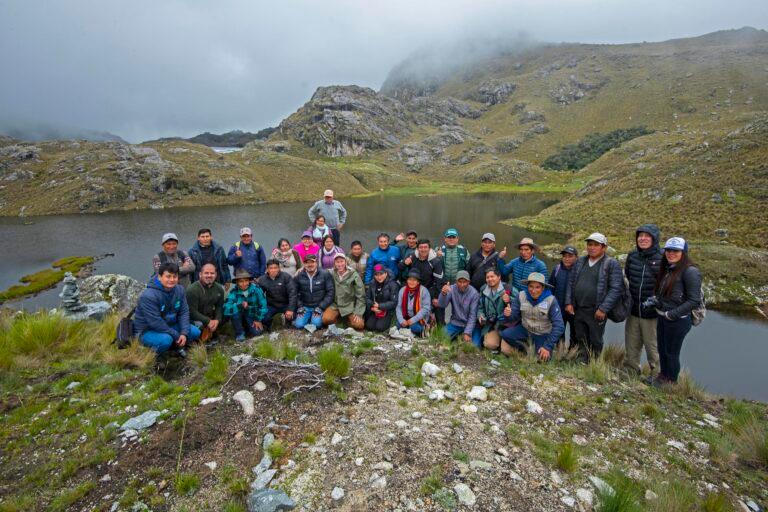
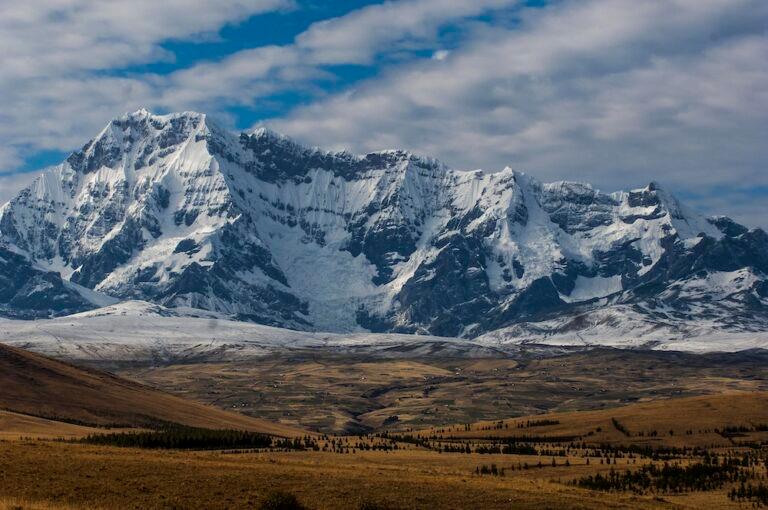
Andean forests constitute an important ecosystem and are home to a great variety of flora and fauna that for millennia have developed diverse adaptations to survive in one of the most hostile environments on the planet. Although they have been irrationally exploited for centuries, their remnants are being protected due to the great importance of the ecosystem services they provide.
Through the cool dawn air, the high-pitched chatter of a bird announces the arrival of a new day. Barely visible among rough branches of ancient, twisted queñual trees, this elusive forest dweller waits for the sun to emerge before beginning its morning round in search of insects, aphids, and the sweet nectar secreted by the Gynoxys shrubs.
Suddenly, the sun floods the space and the dew –frozen by low temperatures of the blue hour– begins to refract the light and makes every leaf and every moss shine, a dazzling vision that gives the high altitude forests a magical, fairytale-like halo.
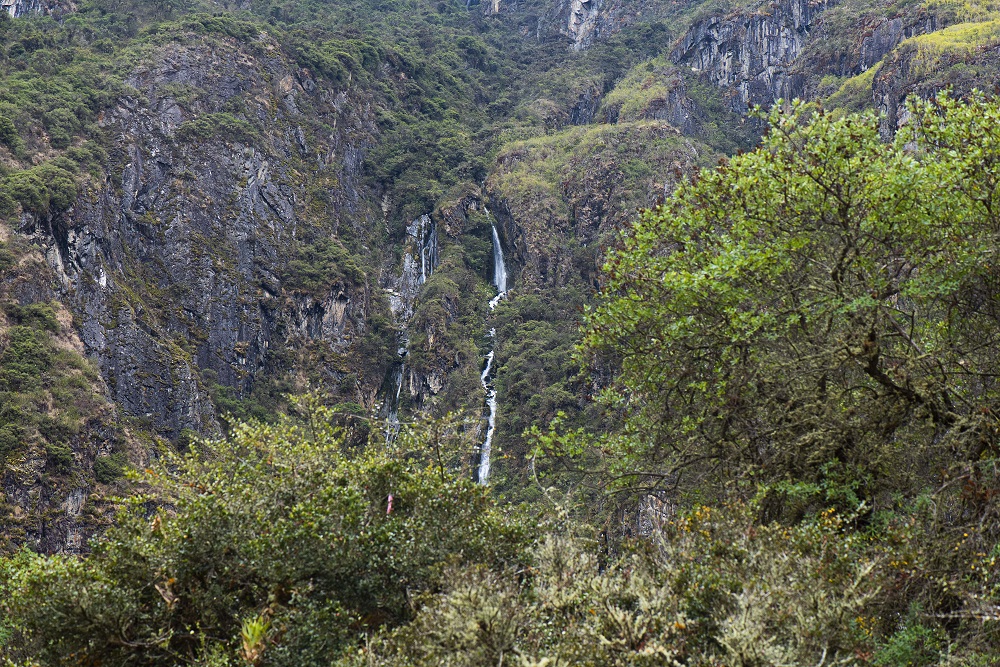
Able to thrive at more than three thousand metres above sea level, the high Andean forests are survivors of the lush vegetation cover that covered a large part of the Andes before the Spanish conquest. This is the home of the famous queñual tree, species of the Polylepis genus, whose Latin name perfectly describes their most notable characteristic: “many layered”. The trunk and branches are covered by thin sheets, as thin as butterfly wings, protecting the tree and sap from low temperatures. There are 28 species of these trees, and one, the ‘tarapacana’, is capable of growing at an altitude of more than 5,000 metres. Another star inhabitant of these regions is the ‘quishuar’, whose leaves have natural mirrors on their undersides that allow them to refract the intense light that could damage them.
Other symbolic species of these relict forests are the ‘chachacomo’, the ‘kolle’, the ‘japru’ and the ‘yareta’, which are home to a wide diversity of mammals and birds, such as the Andean puma and bear, the gray deer, the coati, the vizcacha, as well as colourful and fast hummingbirds.
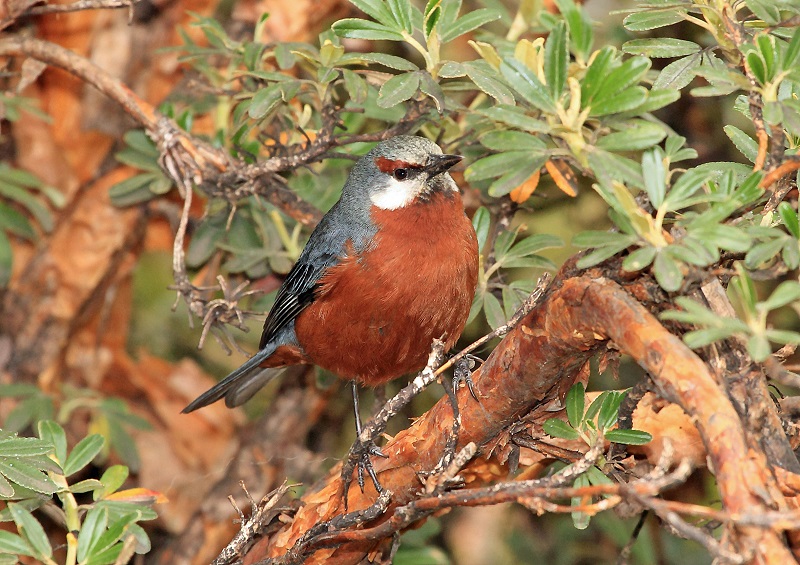
Giant conebill, Cajas, Ecuador. ©Nigel Voaden, source: Wikipedia
Roberto Kommeter, a specialist in natural resources and climate change at the National Agrarian University of La Molina, in Lima, explains that: “The Andes have been climbed, with greater skill than man’s, by the forest ecosystems that have spread over them from the border with Ecuador to the border with Bolivia, passing through the Huancabamba depression. These have been silent witnesses, through thousands of years, of how Andean cultures have used their goods and services, cornering them to the steepest and most inaccessible areas. Man has taken away their best lands to plant his crops, but they remain faithful, offering their most precious fruits: water, energy (firewood), food (fruits), medicinal plants, and views, among others. It is estimated that Andean forests currently occupy only 5% of their original surface.”
High Andean forests currently cover an area of 27,435 ha, while the ‘altimontanos’ –which are located at lower altitudes– cover 1’526,373 ha, according to estimates provided by Kommeter. He also reports that: “Andean forests accumulate carbon in the vegetation that develops on the ground, up to an average of 40 tonnes per hectare. It is also one of the ecosystems with the highest content of organic carbon in the soil, becoming an important reserve. All this biomass allows them to buffer erosion, thus protecting watersheds and regulating the water cycle.”

As part of its work to conserve and maintain ecosystem services, Regenera works in the Abancay Landscape with two rural communities, San Igancio de Kiuñalla and San José de Karqueque, who protect 2,280 hectares of Andean forests, in addition to 103 hectares under restoration. These forests, neighboring the Ampay National Sanctuary, as well as the lands of other communities, provide important ecosystem services, such as water supply for the city of Abancay, slope stabilization to prevent landslides and avalanches, and carbon sequestration, among others.
Protecting Andean forests is a bet for the future. Climate change, forest fires, the expansion of the agricultural frontier, and other threats are looming over them. It is time to act, if we wish to preserve for future generations these natural jewels that touch the sky.
Etiquetas
- Forest conservation
- Andean forests
- Forest Guardians
Artículos relacionados
- Regeneramos Juntos
- Abancay
- Machu Picchu
Leer artículoLa hoja de ruta ambiental: cómo acompañamos este proceso
Margony Palacios