
Regenerate Together
Our Landscape approach: Regenerating lands together with those who live there

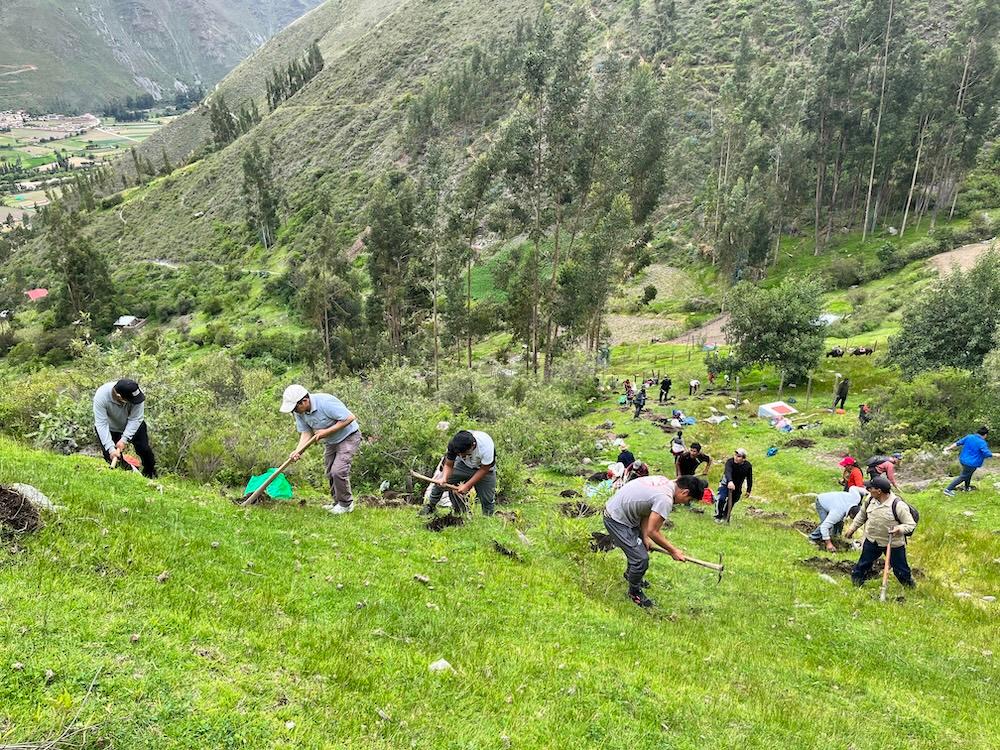
One of the greatest challenges of regeneration is getting all the stakeholders who live in, use, or influence a given area to work toward a shared vision of conservation and development. At Regenera, we call this way of understanding and supporting these areas our Landscape Approach.
As Gabriel Herrera explained on this blog on our website, rather than focusing solely on the restoration of specific ecosystems, this approach seeks to ensure the long-term sustainability of a region. To this end, it is essential to bring together communities, organisations, local governments, businesses, and other stakeholders operating within the same area, recognising that the health of ecosystems and human well-being are deeply interconnected.
The question that guides this work is simple, yet fundamental: Restore for whom?
For decades, many conservation models have tended to separate people from Nature. However, experience shows that protecting a landscape is only possible with the help of those who know it, live in it, and depend on it. It is local communities that possess knowledge accumulated over generations about how to interact with the land, make use of its resources, and maintain its balance.
For this reason, the Landscape approach recognises that regeneration must go hand in hand with better living conditions for people. It is about understanding how land is used, which economic activities sustain communities, and how these communities can develop without compromising ecosystem health.
In many regions, this involves strengthening traditional practices that already incorporate regenerative principles. In the Amazon, for example, chakra systems use crop rotation cycles that allow the soil to rest and replenish its nutrients, preventing the degradation associated with intensive agricultural models. Similarly, proper grazing management can contribute to the recovery of ecosystems rather than causing their deterioration.
Landscapes where regeneration is already taking place
According to Enrique Zúñiga, Landscape Lead at Regenera, although every landscape presents unique challenges, they all demonstrate that people can become the key allies in the regeneration and conservation of ecosystems.
Manu: Balancing governance and agriculture
In Manu, the communities maintain a close relationship with the forest and carry out constant monitoring due to the vast expanse of their lands. There, forest regeneration relies on both active forest management and traditional agricultural practices.
Families work their plots on a rotational basis, allowing the soil to recover before it is cultivated again. This is complemented by a strong community-based approach that seeks to strengthen local governance and develop life plans that maintain a balance between human needs and ecosystem conservation.
Machu Picchu: Tourism, restoration, and fire prevention
In the areas surrounding Machu Picchu, many families rely on tourism as their main source of income. This has fostered a relationship of stewardship with the environment, since caring for Nature means caring for the local economy.
Communities carry out cleanup efforts, trail maintenance, and regenerative pruning, which help reduce the risk of wildfires. These actions help control the buildup of dry vegetation and minimise potential damage to ecosystems. In addition, they promote reforestation and the recovery of degraded areas by planting native species.
Within this landscape, organisations such as Valle Sagrado Verde work alongside the guardians of the territory on forest fire prevention efforts. Part of this work involves monitoring risk conditions and sharing information to enable communities to make safer decisions about the use of fire—a practice that has historically been part of certain agricultural activities. This joint effort aims to reduce accidental fires and foster a more harmonious coexistence between human activities and ecosystems.
Abancay: Organising the territory to preserve it
Abancay is an example of how land-use planning can contribute to regeneration. In these landscapes, which have been profoundly transformed by human activity, community-based efforts make it possible to clearly define which areas are designated for conservation, which for agriculture, and which for population growth.
Also noteworthy are initiatives such as the Natural Heritage Reserves (REPANA), which have enabled the protection of high-Andean wetlands and grasslands through community agreements that restrict livestock access to particularly fragile ecosystems. The difference between protected areas and degraded areas is now clearly visible in the landscape.
Conserving these ecosystems not only protects local biodiversity but also preserves essential environmental services, such as water regulation and water storage for communities.
Paucartambo: Conservation as a way to learn
In Paucartambo, conservation also serves an educational purpose. The area lies in a transition zone between the high mountains and the rainforest, making it an ideal place to understand the diversity of Andean-Amazonian ecosystems.
Through local initiatives, students and visitors can learn firsthand in the field about how forests function and the importance of their conservation. Experience shows that building knowledge is also a way to protect landscapes.
Requena: An economy based on the living forest
In Requena, regeneration is closely linked to the sustainable use of forest resources. Local communities have developed agreements to regulate fishing, specifying which species to catch, in what quantities, and at what times of the year.
In addition, they promote economic activities related to non-timber forest products and ornamental fish farming, demonstrating that income can be generated without resorting to forest degradation. These initiatives are complemented by ongoing monitoring and surveillance of the territory.
A shared task
The Landscape approach recognises that regeneration depends on multiple stakeholders. In some areas, such as Abancay, coordination with public institutions is essential to sustaining long-term conservation efforts. In others, community organisations take on a more leading role in managing and protecting ecosystems.
What all these cases have in common is the belief that people are not separate from Nature. On the contrary, they possess knowledge, practices, and skills that make them indispensable allies in its conservation.
At a time when ecosystems are facing increasing pressures, caring for landscapes also means strengthening the communities that live there. It is these communities that are on the front lines of protecting these lands, and in doing so, they help preserve the ecosystem services on which we all depend.
The role of humans in regenerative landscapes is not merely to prevent damage. It also involves contributing their knowledge, their organisational skills, and their commitment to the land. After all, those who know these places best are the ones who have learned to live with them over generations. And it is precisely these people who today have the potential to lead the regeneration that our ecosystems need.
Etiquetas
- Nature positive
- Landscape approach
Artículos relacionados
- Regeneramos Juntos
- Abancay
- Machu Picchu
- Regeneramos Juntos
- Abancay
- Machu Picchu
Leer artículoLa hoja de ruta ambiental: cómo acompañamos este proceso
Margony Palacios