

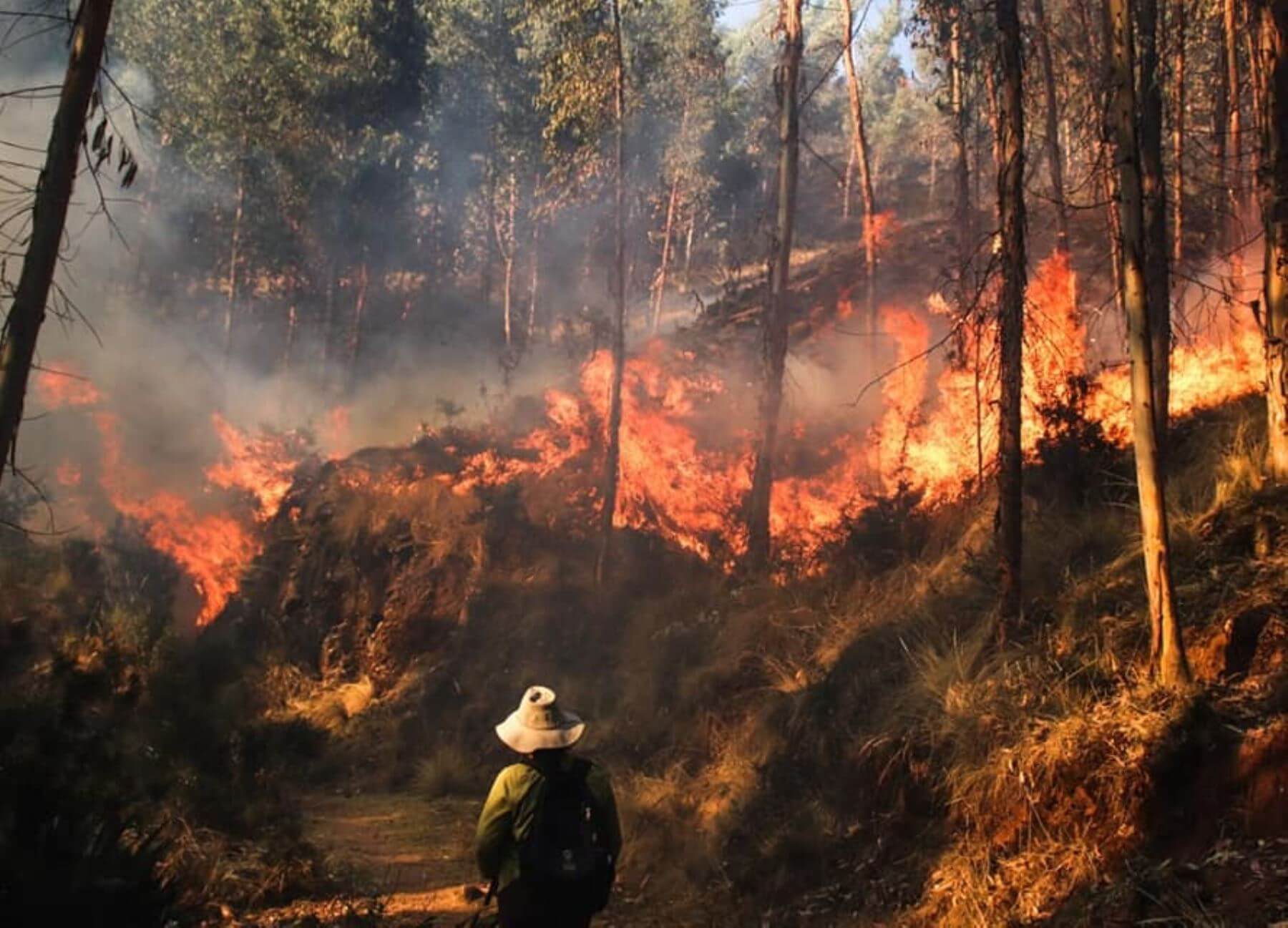
The recent burning season in Peru has so far left a terrifying toll: 20 people dead, 165 injured and thousands of hectares of farmland and natural cover lost in 20 regions of the country. Without a multisectoral public policy in charge of tackling the problem, community organisation becomes an opportunity to stop this scourge.
The months of July to September mark the peak of the dry season in Peru’s mountains and jungle. While waiting for the rains, rural men and women prepare their farms for the planting of crops that will be nourished by the rains that begin in October and November. In the Amazon, the burning of forests is done in order to open new farms or fields for livestock, one of the main sources of greenhouse gas emissions.
These fires, due to wind, prolonged drought and intense dryness, often get out of control, setting fire to neighbouring areas or spreading to forested areas, generating fires of great magnitude such as those that have been recorded this past season. According to information from Global Forest Watch, so far this year there have been more than 3,400 fire alerts in the country, a figure 32% higher than in 2023. The report also states that the area of burned forest is 62% higher than in 2019.
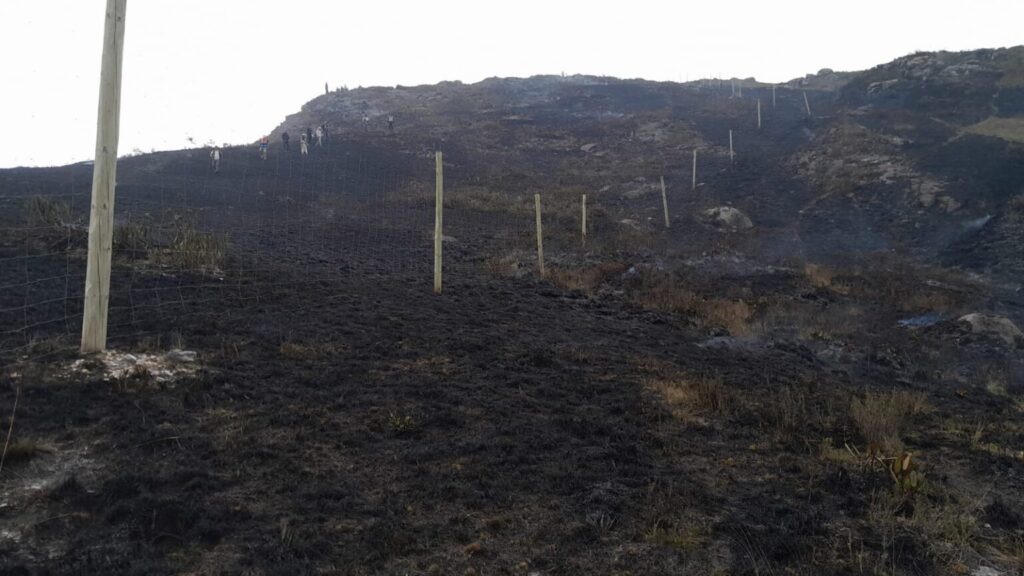
Cutervo National Park in Cajamarca. Photo: SERNANP
The regions most affected in 2024 were Amazonas, San Martín, Ucayali, Áncash, Loreto and Cajamarca. Of these, only the first three have been declared in emergency by the government. Although this measure, as well as the proposal for a law to control and mitigate forest fires, is a step forward by the state, prevention is vital if we want to avoid a situation like the one we have experienced this year. And citizen action is a key part of this.
A clear example is that of the Regenera Landscape of Requena, located in the heart of the northern Peruvian Amazon, south of Iquitos, the regional capital and neighbour of the Matsés National Reserve. The commitment of its Guardians to the care of their territory has ensured that so far no fires have been recorded. A prolonged drought – the worst in four decades – is affecting the northern Amazon, leading to the spread of fires in this region. However, the coordinated work of communities such as Wicungo and Nueva Esperanza has managed to control a situation that is devastating thousands of hectares in Loreto.
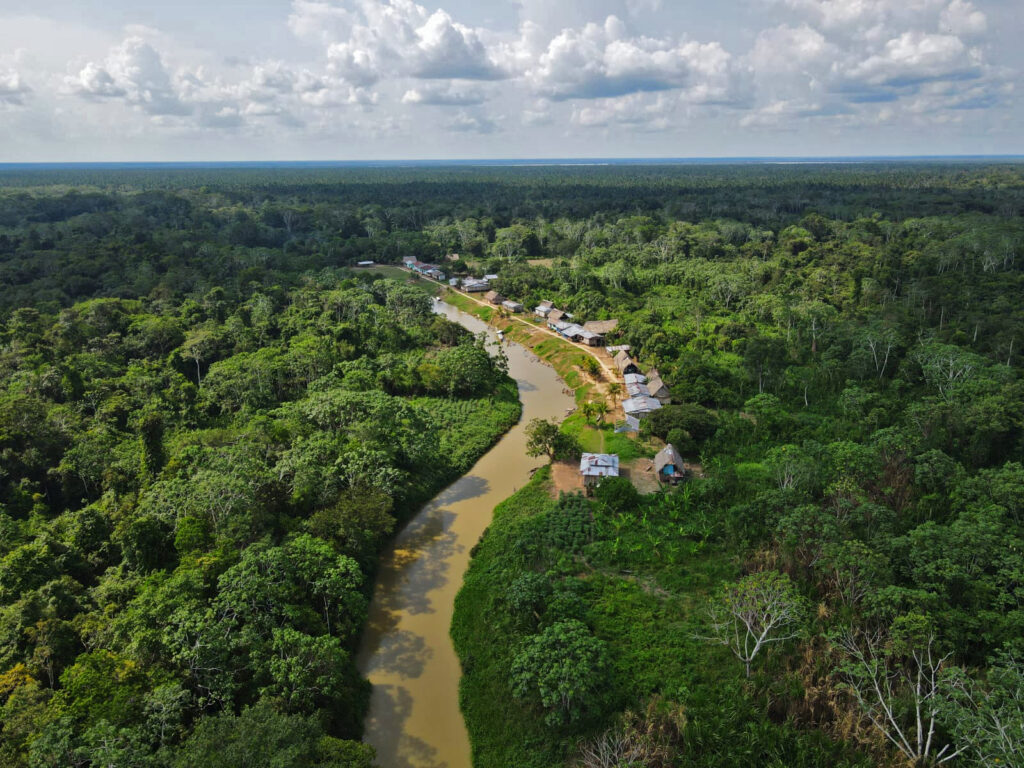
Wicungo community, on the banks of the Tapiche River, in the Requena Landscape.
The climate crisis is forcing us to be ever more vigilant about forest fires. Increasingly prolonged droughts and lack of water resources will expose forests and other natural areas to fire with increasing intensity. Citizen action, conservation of forests, and fair compensation for those who care for them is a good recipe for the future.

Etiquetas
- Forest fires
- Collective action
Artículos relacionados
- Regeneramos Juntos
- Abancay
- Machu Picchu
- Regeneramos Juntos
- Abancay
- Machu Picchu
Leer artículoLa hoja de ruta ambiental: cómo acompañamos este proceso
Margony Palacios