
Stories from Earth
Regeneration is achieved collectively and over the long term

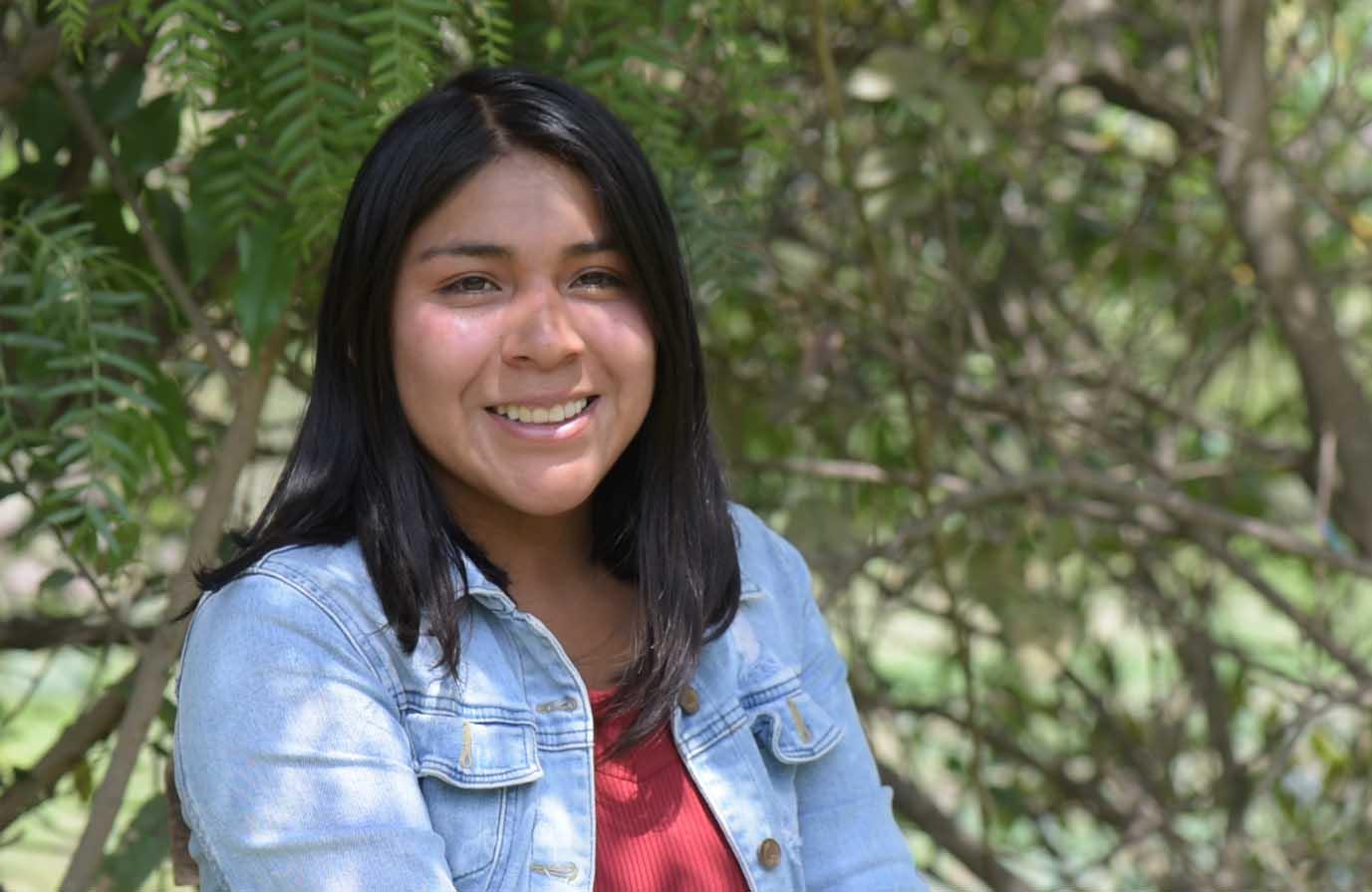
For the Machu Picchu Landscape, caring for Nature is not the responsibility of a single organisation. It requires organised communities, public institutions, local organisations, and partners who can pool their efforts and sustain them over time.
This is one of the clearest lessons from the work of Valle Sagrado Verde, an initiative that works alongside communities in the districts of Calca, Cusco, and Ollantaytambo, within the Machu Picchu Landscape, to promote integrated territorial management in partnership with local communities. Its relationship with Regenera began two years ago, but it builds on a much broader process. For the past six years, both organisations have been working with the community of Piscacucho, where collective action has gradually given rise to new forms of organisation and land stewardship.
“Today, we live in a society where everyone follows their own path. But every institution has its strengths, and we cannot do everything ourselves. We can have a much greater impact if we work together,” explains Ana Luz Benites, coordinator of Valle Sagrado Verde (main photo).
Bringing people together to make change last
For Valle Sagrado Verde, one of Regenera’s greatest strengths has been its ability to bring different stakeholders together around a common purpose and foster connections that allow efforts to extend beyond isolated initiatives.
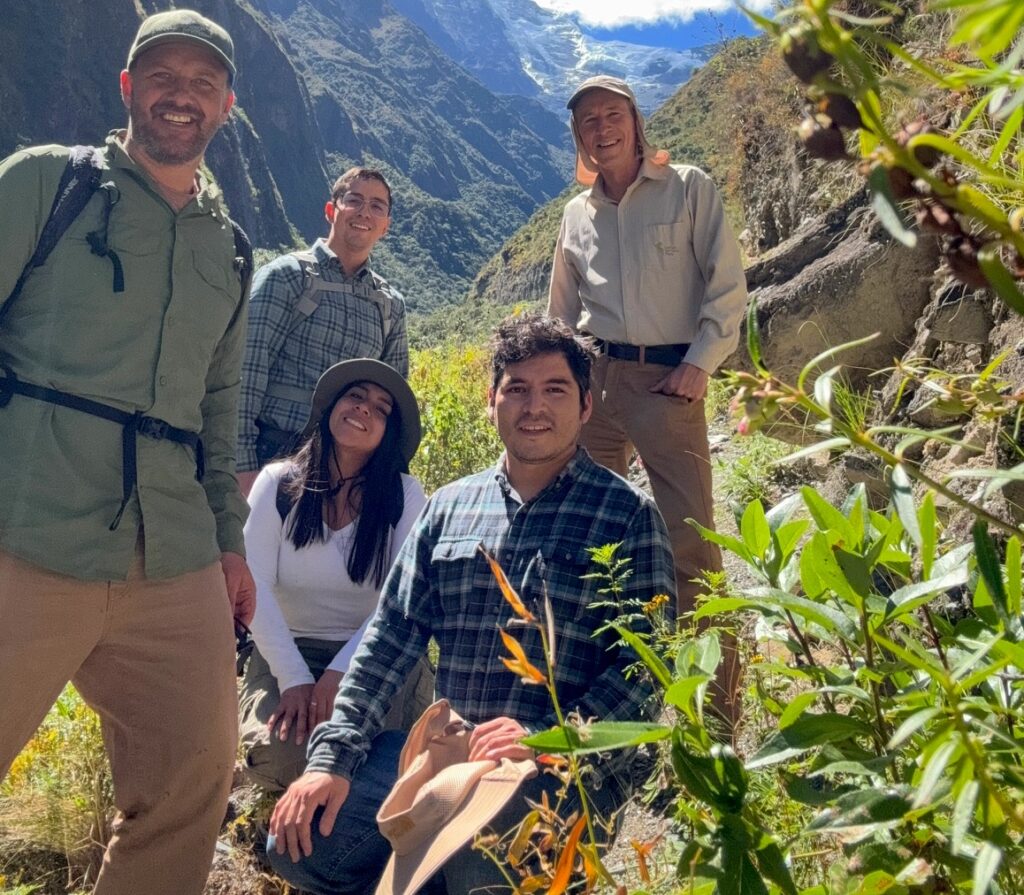
The Regenera and Valle Sagrado Verde teams during a field visit.
Through this collaboration, Valle Sagrado Verde has joined as a Landscape Partner, building on commitments made by communities and strengthening residents’ capacity to carry out their own decisions. Its team supports the development of life plans for 36 communities, helping residents define how they want to manage, protect, and shape the future of their lands. The aim is to ensure that these processes do not depend solely on an external organisation, but instead enable communities to strengthen their own capacities and build relationships with local partners who can support them along the way.
From emergency response to a culture of prevention
One of the processes that best illustrates this transformation began during the pandemic. When tourism came to a standstill, Valle Sagrado Verde established a tree nursery and set out to plant 30,000 native trees in Ollantaytambo.
However, as the initiative progressed, the team realised that wildfires could undo all their efforts. The year 2022 was particularly critical due to the prevalence of fires in Peru and Latin America. During that period, approximately 25 fires were recorded in Ollantaytambo. In response, Valle Sagrado Verde began working with communities and local authorities to establish and strengthen community fire brigades.
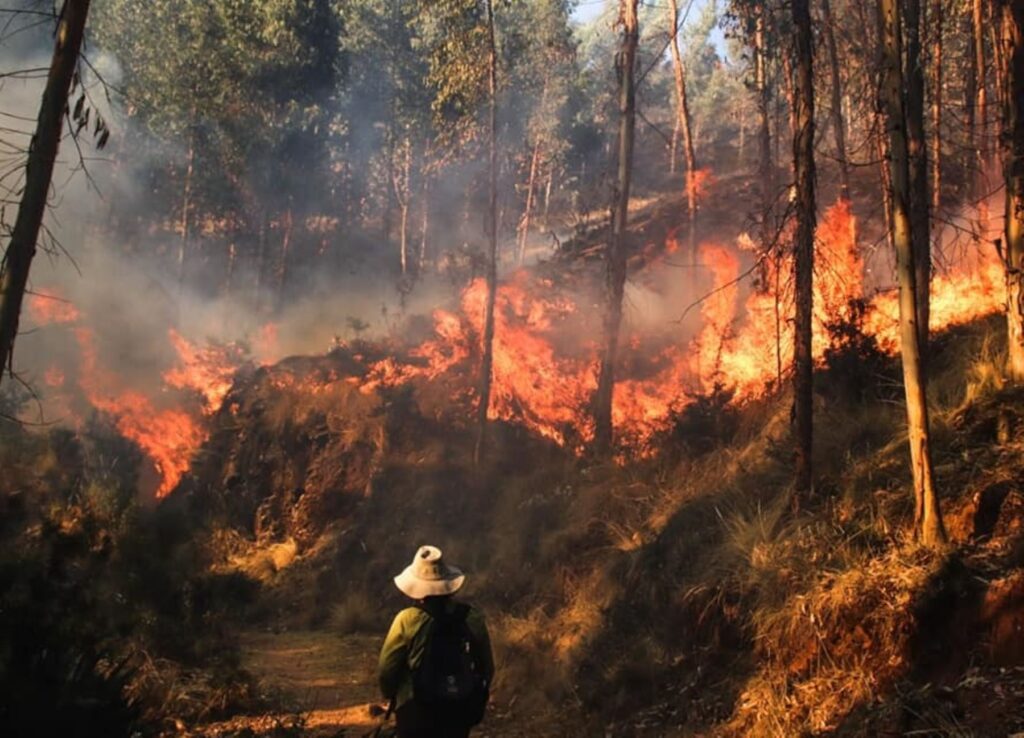
Wildfire in the Valle Sagrado Verde landscape.
What began as an emergency response gradually evolved into a broader process of cultural transformation in how people relate to fire. In 2022, 15 brigades were formed. By 2024, that number had risen to 25, and this year the initiative has reached 32 brigades.
Yet beyond the number of brigades, the most valuable change lies in how communities are beginning to relate to fire. “Back in 2022, nobody reported anything. Fires were simply part of the season. Now there is much greater awareness and understanding of what fuels fires,” says Benites.
In a context of global heating, with temperatures expected to rise and periods of drought potentially intensifying wildfires, learning how to prevent them is also a way of learning to adapt. The goal is not to eliminate fire, since it is part of communities’ everyday lives. It enables people to cook, keep warm, and carry out various daily activities. The challenge is to strengthen the knowledge and practices that allow people to use fire safely and responsibly.
Today, communication groups enable residents to report fires and give advance notice when they need to carry out controlled burns, helping to avoid unnecessary alarms. Prevention is thus beginning to become part of everyday decision-making and a shared responsibility.
When change is built by many
The experience of the Sacred Valley shows that profound transformations do not happen in isolation. They require time, trust, and, above all, the recognition that no single stakeholder can do everything alone. For the Valle Sagrado Verde team, this is precisely one of Regenera’s greatest strengths: its ability to connect efforts, bring partners together, and create the conditions for more organisations to contribute to community development and the stewardship of their territories.
The challenge now is to ensure that these lessons continue to be passed down from generation to generation. That life plans translate into concrete decisions, and that communities continue to strengthen their ability to decide how they want to live in and protect their landscapes. Because when efforts come together, change becomes something that belongs to everyone.
Subscribe to our monthly newsletter and learn more about our work!
Etiquetas
- Forest fires
- Landscape Partner
- Regenera celebrates 10 years
Artículos relacionados
- Historias de la Tierra
- Machu Picchu
Leer artículoLa regeneración se logra en colectivo y a largo plazo
Margony Palacios
- Aliados en Acción
- Machu Picchu
Leer artículoStrategik x regenera: una alianza por la Naturaleza
Margony Palacios
- Aliados en Acción
- Machu Picchu
- Manu
Leer artículo¿Cómo reducir el impacto de construir? La pregunta detrás un nuevo hotel en Machu Picchu
Margony Palacios