

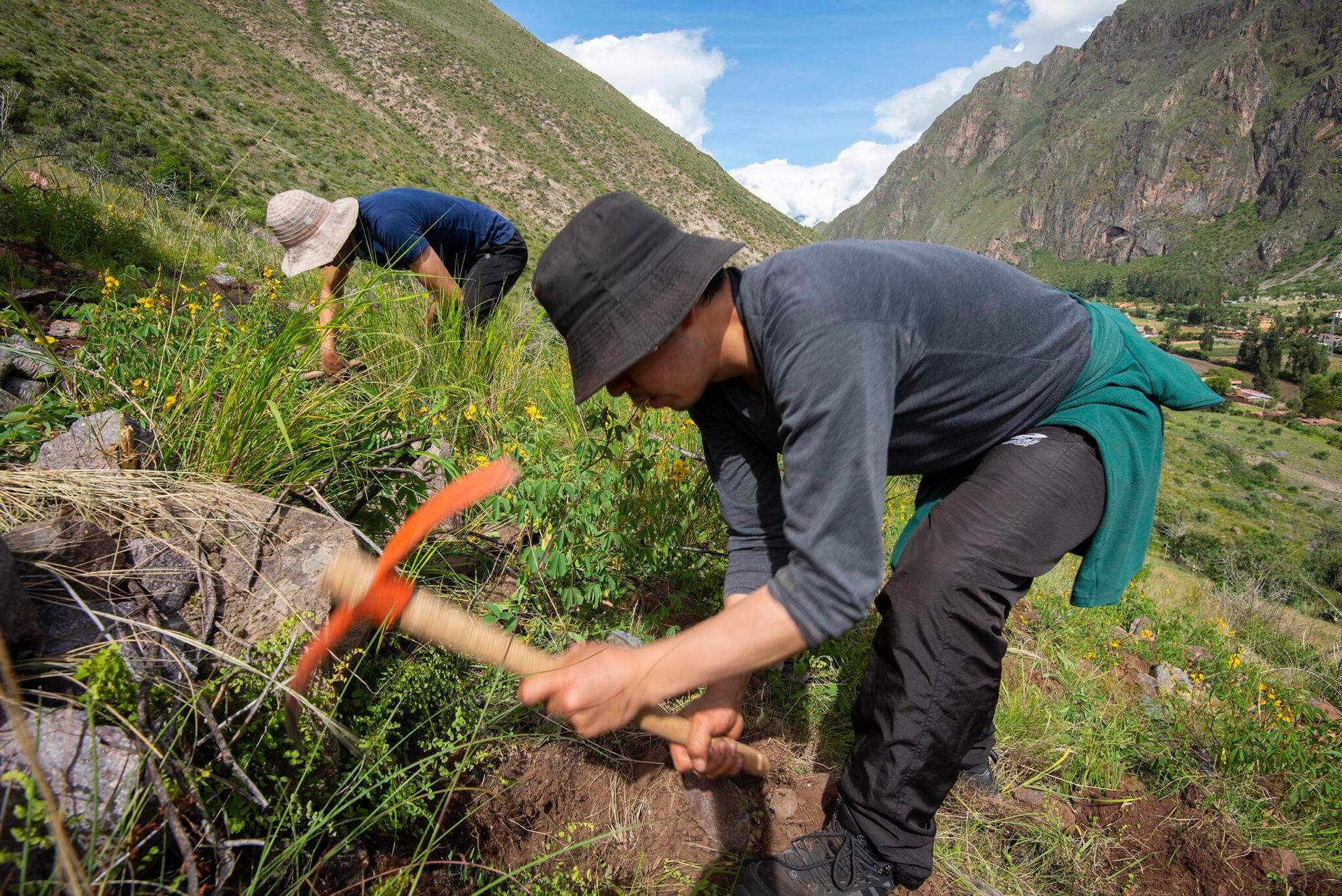
Andean forests, which in pre-Hispanic times covered a large part of the Andean slopes, play a very important role in the high altitude ecosystem. Not only do they provide stability to the soil, preventing erosion and natural disasters, but they are also home to a rich biological diversity and, above all, play a key role in the capture and generation of water.
In 1996, researchers Jon Fjeldsa and Michael Kessler estimated that the extent of queñual (Polylepis sp.), one of the most representative and fragile high Andean trees, extended up to 1,000 km2 in Peru, and 5,000 km2 in Bolivia. But predation reduced these figures to 10% in Bolivia and between 2 and 3% in Peru. In addition to the loss of key ecosystem services that these native forests provide, there is an alarming fact: 97% of the avifauna and 88% of the mammals reported for this type of forest are on the IUCN Red List of Threatened Species (Information extracted from Constantino Aucca, in the publication Peru, land of birds (2024). In prep.)
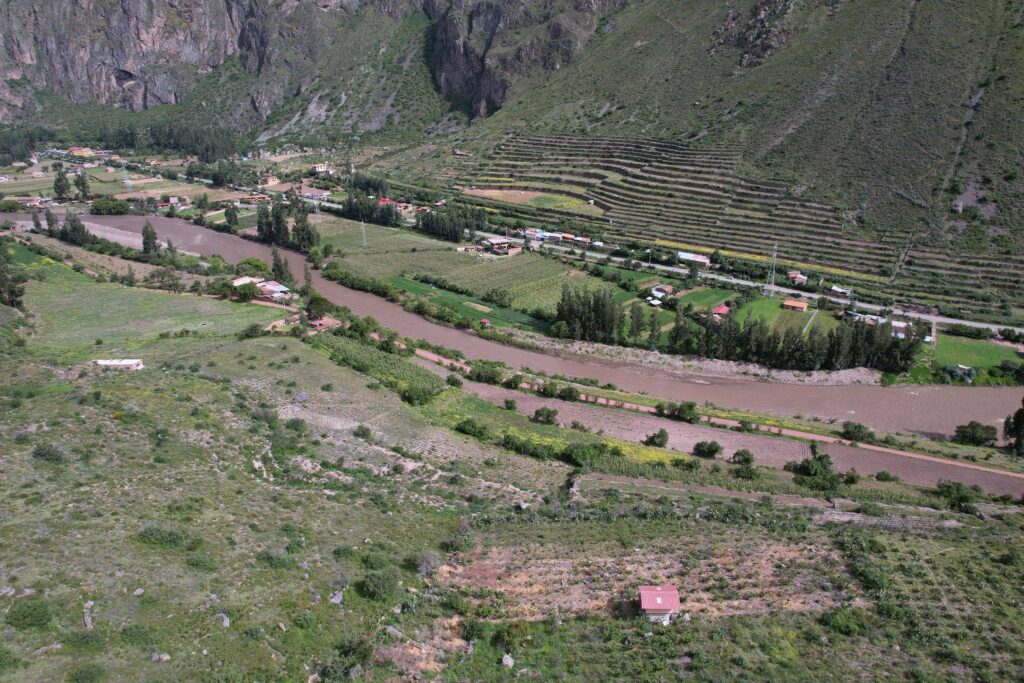
Aerial view of the Sacred Valley of the Incas
And we are talking about a single genus of tree. There they are, clinging to survival, other species such as the kolle, tasta, chachacomo and unca, whose presence is increasingly rare in the mountains of Peru. Deforestation or replacement by faster-growing and more commercially valuable species such as eucalyptus and pine, climate change, as well as a lack of governance, have pushed the invaluable native forests to the higher parts of the watersheds, where some patches or relicts still exist.
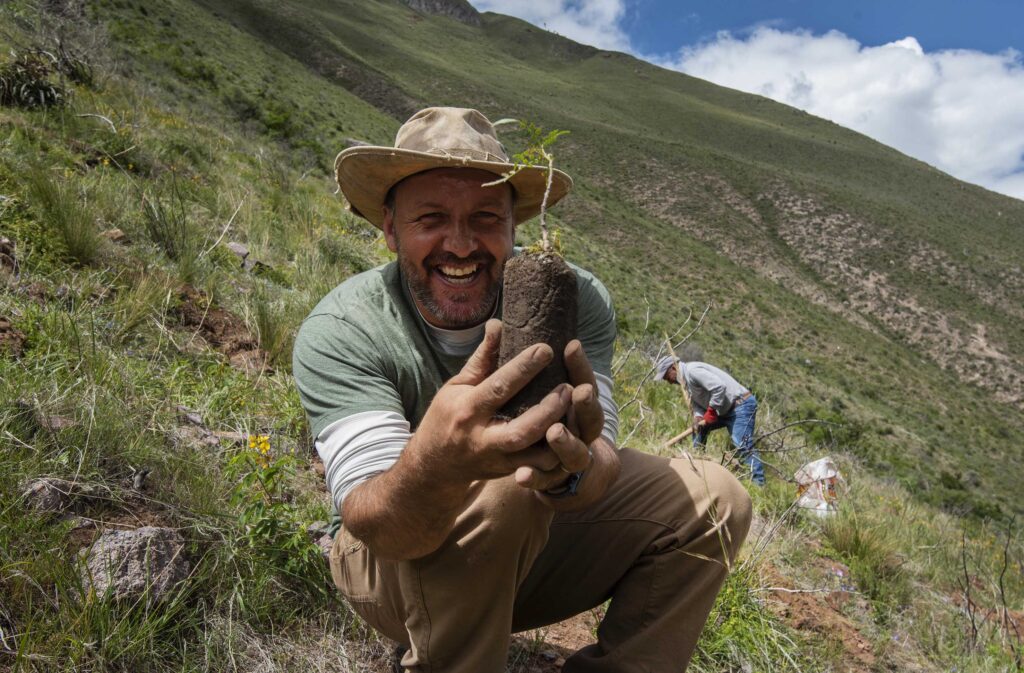
Joaquín Randall, Reforestation Sacred Valley
In Regenera’s Machu Picchu Landscape, partner organization Valle Sagrado Verde has set an ambitious goal: to reforest the slopes of one of Peru’s cultural and natural icons, the Vilcanota River Valley. From its headquarters in the town of Ollantaytambo, Joaquín Randall, its founder and tourism entrepreneur, comments that “One of our main tasks is to restore the native tree cover that the slopes of our sacred valley used to have. As a result, we have more water in our system, and thus we are avoiding droughts, there are also fewer landslides that affect the population centers so much, because the forested slopes are more stable. And finally, we are mitigating the effects of the climate crisis.”
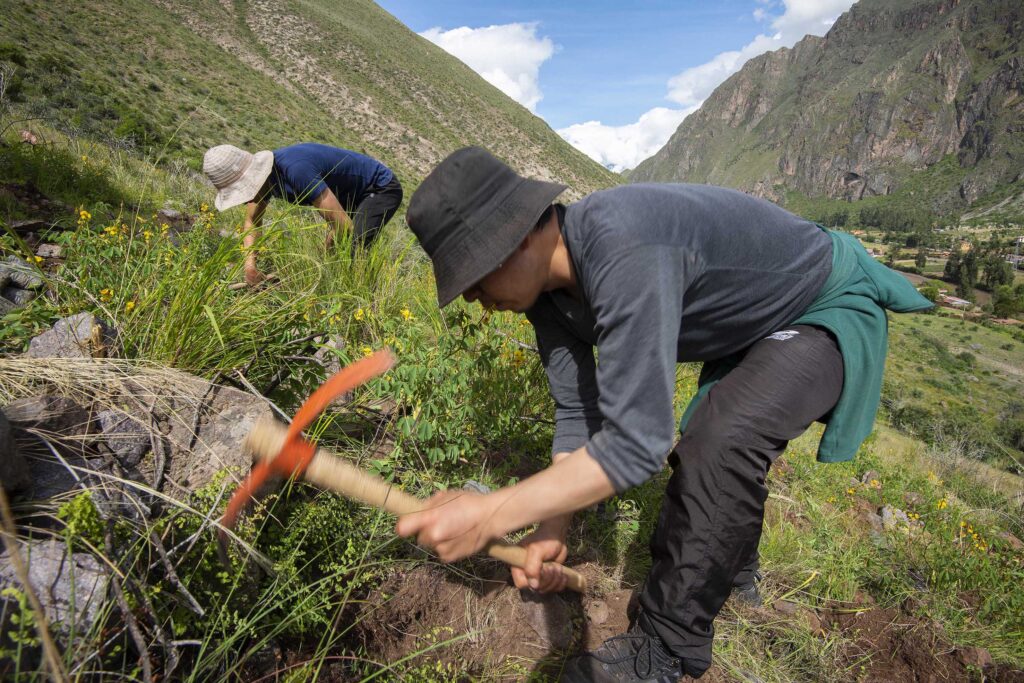
Community members of Cachicata during reforestation work
Valle Sagrado Verde has been working hand in hand with farming communities since 2020. Ana Luz Benítez, coordinator of this initiative tells us that “We are a program dedicated to the protection and restoration of natural areas in our region. We work hand in hand with local government, private institutions and communities, providing the tools and resources necessary for society to more efficiently manage its environment, ensuring a greener future for all.” In addition to reforestation with native species and the planting and harvesting of water, Valle Sagrado Verde carries out regenerative pruning campaigns, which strengthens the reforested species, and has a forest fire prevention component, with volunteer brigades, training and awareness-raising among the population.
At Regenera, we support the reforestation actions carried out by Valle Sagrado Verde, through the contribution of companies such as Antigua Casona de Cusco, and by actively participating in the campaigns carried out in the surrounding communities. In this way we strengthen our commitment with our allies in each landscape and regenerate nature, which today more than ever needs our support.
Etiquetas
- Andean forests
- Reforestation
- Valle Sagrado Verde
Artículos relacionados
- Historias de la Tierra
- Machu Picchu
Leer artículoLa regeneración se logra en colectivo y a largo plazo
Margony Palacios
- Aliados en Acción
- Machu Picchu
Leer artículoStrategik x regenera: una alianza por la Naturaleza
Margony Palacios

- Aliados en Acción
- Machu Picchu
- Manu
Leer artículo¿Cómo reducir el impacto de construir? La pregunta detrás un nuevo hotel en Machu Picchu
Margony Palacios