

A landscape is composed of multiple types of land occupation and land use, such as villages, communities, agricultural land, extractive activities, among others.
Seeing beyond the forest
At Regenera, we work with an integral vision of Nature. Hand in hand with guardian communities, public entities, the private sector, and organised civil society, we carry out integrated conservation that actively involves all actors present in each place, in each landscape, where we work.
Finding solutions to reconcile human occupation of a territory with nature conservation objectives and the sustainable use of resources is one of the great challenges we must face when confronting the climate crisis we are currently experiencing. As Terry Sunderland points out in the bulletin Forests in the news, from the Center for International Forestry Research: “Given the extensive human footprint, there are very few landscapes in the world that have not been influenced by ourselves or our brethren… our landscapes are very much the living representation of our civilisation in various forms… The landscape approach, in short, when related to conservation, agriculture and other land uses, seeks to address increasingly complex and pervasive environmental, social and political challenges that cut across traditional management boundaries.”
Not one but many voices
The occupation of a territory is the result of a long historical process. As the National Geographic Institute of Spain points out: “The way in which human beings occupy a territory expresses their economic system, their culture and how they relate to nature. The processes of territorial occupation vary over time, as each society uses resources and transforms the territory in a different way.”
Thus, within the same landscape we can find native communities that have ancestral claims over their territory and resources; population centres or cities established in modern times; concessionaires of public lands dedicated to productive activities such as agriculture, livestock, and mining; natural areas protected by the State or by natural persons; among other diverse forms of land use.

In each landscape there are various extractive activities, such as logging or mining, which have strong impacts on the ecosystem.
It is on this territorial basis that all the various mechanisms of state administration such as municipalities and regional governments, as well as administrative and supervisory bodies operate. Alongside them we have grassroots organisations made up of members of civil society, such as indigenous federations, trade unions, and defence fronts. And working with these we have non-governmental organisations that operate in the landscape through projects or initiatives of various kinds.
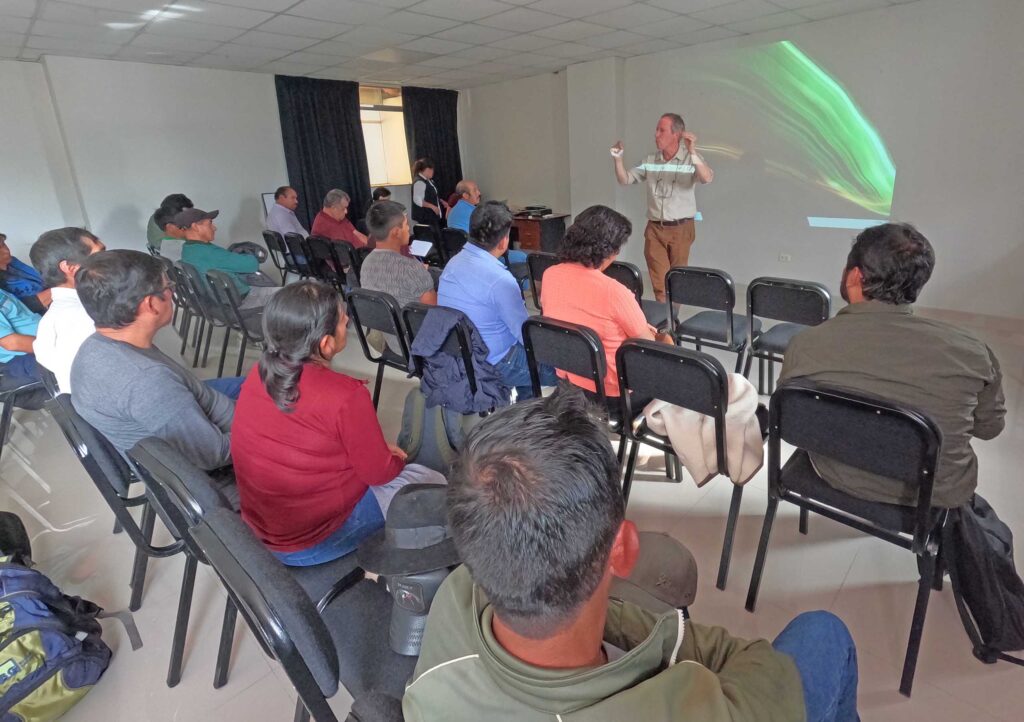
Working in coordination with all landscape stakeholders is essential for the conservation and restoration of ecosystems that Regenera supports in each landscape.
Articulating the work of actors within a landscape is therefore key to achieving sustainable development. “The landscape approach is to think beyond a protected natural area, a community, or a threatened species. It is working to make things function together in a given landscape. The aim is for different actors – NGOs, native communities, the state, and organised civil society – to work towards a shared vision of conservation and development.” This is how Frank Hajek, director of Regenera, defines our integrated vision.
In the Abancay Landscape, for example, Regenera works hand in hand with the technical partner CEDES Apurímac, a non-governmental organisation with more than thirty years of experience in its region. CEDES, in turn, works in an articulated and permanent manner with various public and private institutions, and hand in hand with the guardian communities to implement long-term conservation of resources and Nature. A concrete result of this joint action is the recognition of the Abancay Model Forest, achieved thanks to the shared work of all actors involved in the region.
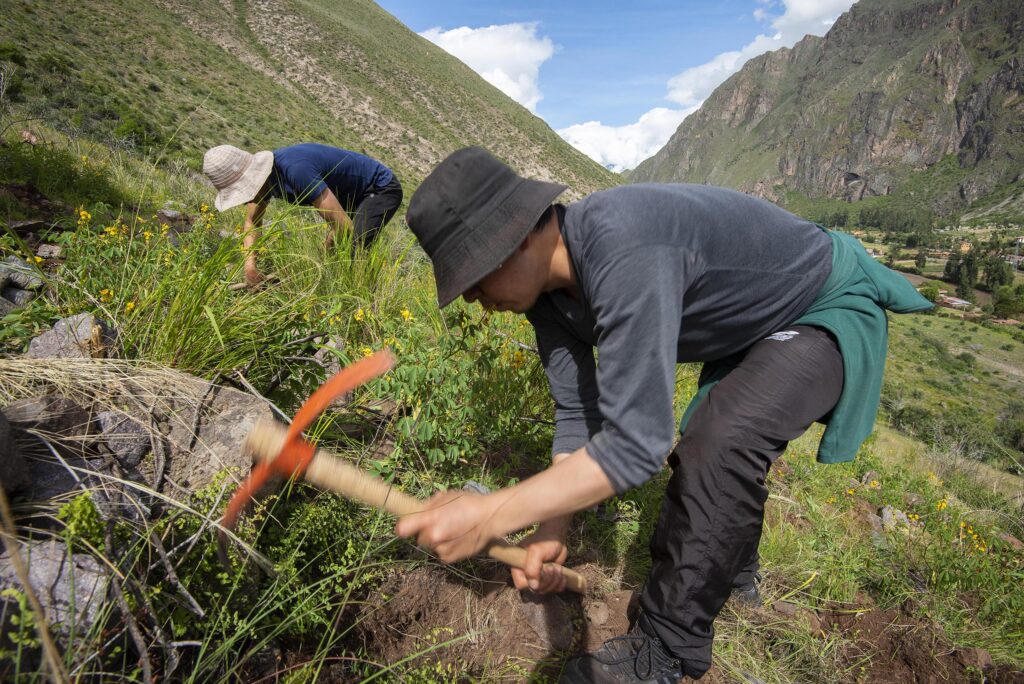
Regenera’s landscape approach seeks to harmonise human activities with the conservation of natural ecosystems and biodiversity.
Patricio Zanabria, Regenera’s landscape coordinator and member of SePerú states that: “For Regenera, landscapes are cared for in their integrity. It is not worthwhile for only the Guardians to conserve, if a little further on there are fires that endanger the integrity of the landscape. Regenera’s landscape approach is based on two things: a concrete territorial occupation and at the same time a connotation of identity and involvement of different actors.”
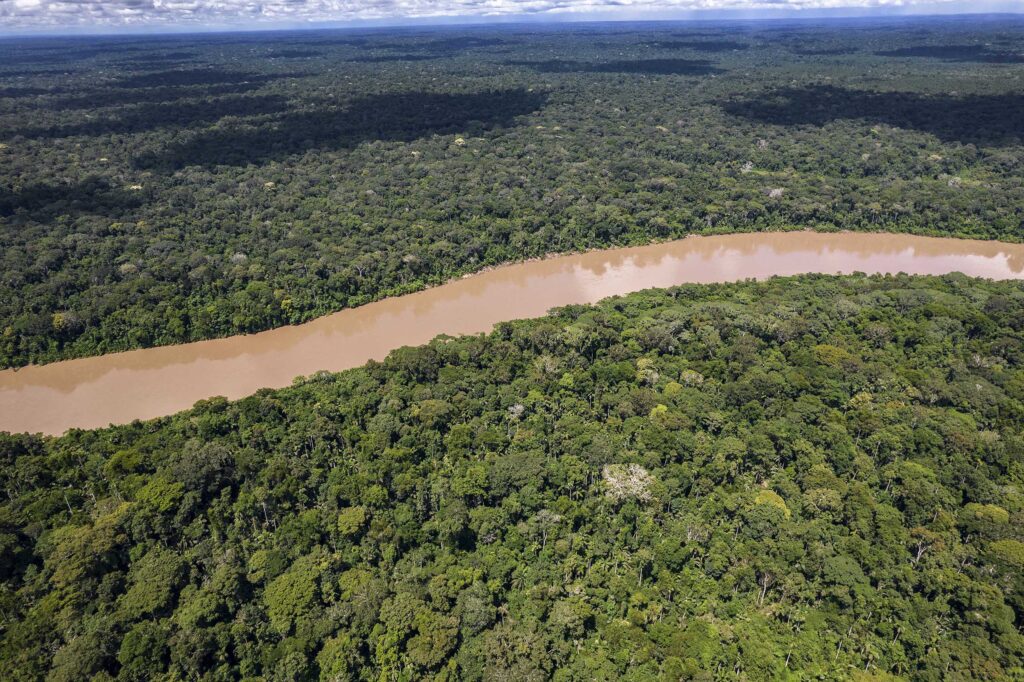
The aim of landscape work is to preserve Nature and the services it provides, such as water, soils, carbon sequestration, spirituality and resources.
Sawyer et al. developed ten principles for a landscape approach that aim to ‘provide tools and concepts for allocating and managing land to achieve social, economic and environmental objectives in areas where agriculture, mining and other productive land uses compete with environmental and biodiversity objectives.” These principles include continuous learning and adaptive management; the search for common concerns; multi-stakeholder work involving different stakeholders; a multi-scale approach; transparent and concerted work; participatory and user-friendly monitoring; among others.
For Regenera, the objective of work focused at the landscape level is to provide sustainability over time to the territory where Guardians are settled. And this is only possible through coordination with all those involved: villagers, entrepreneurs, concessionaires, state officials, parents and teachers, farmers, and miners. Only then can we achieve the goal: to heal and restore the Earth. Together.

2.Sawyer et al. (2012). Ten principles for a landscape approach to reconciling agriculture, conservation, and other competing land uses. In: https://www.pnas.org/doi/pdf/10.1073/pnas.1210595110
Tags
- Landscape approach
Related articles
- Regenerate Together
- Abancay
- Machu Picchu
Read articleThe environmental roadmap: how we accompany this process
Margony Palacios
- Regenerate Together
- Abancay
- Cañete
Read articleFour keys to understanding why regeneration is necessary
Margony Palacios
- Regenerate Together
- Requena
- Abancay